Cytoregulation Research, Elgin, ON K0G 1E0, Canada.
Molecules. 2014 Jun 19;19(6):8334-49. doi: 10.3390/molecules19068334.
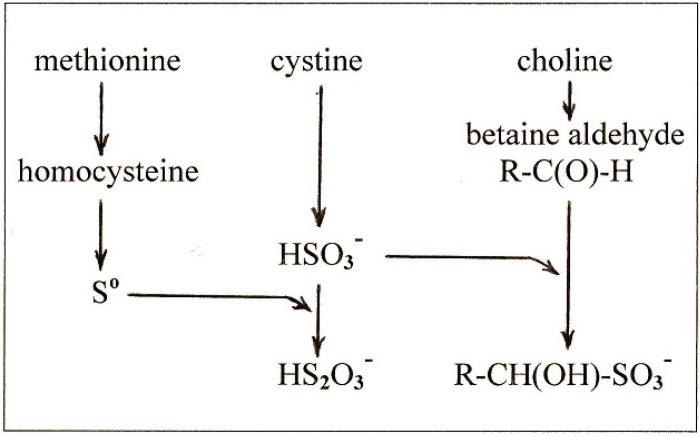
The relationship of sulfur amino acids to diet-induced fatty liver was established 80 years ago, with cystine promoting the condition and methionine preventing it. This relationship has renewed importance today because diet-induced fatty liver is relevant to the current epidemics of obesity, non-alcoholic fatty liver disease, metabolic syndrome, and type 2 diabetes. Two recent papers provide the first evidence linking sulfane sulfur to diet-induced fatty liver opening a new perspective on the problem. This review summarizes the early data on sulfur amino acids in fatty liver and correlates that data with current knowledge of sulfur metabolism. Evidence is reviewed showing that the lipotropic effect of methionine may be mediated by sulfane sulfur and that the hepatosteatogenic effect of cystine may be related to the removal of sulfane sulfur by cysteine catabolites. Possible preventive and therapeutic strategies are discussed.
80 年前就已经确定了含硫氨基酸与饮食性脂肪肝之间的关系,半胱氨酸会促进这种疾病,而蛋氨酸则可预防它。由于饮食性脂肪肝与当前肥胖症、非酒精性脂肪肝疾病、代谢综合征和 2 型糖尿病的流行息息相关,因此这种关系在今天又变得至关重要。最近的两篇论文首次提供了将硫磺酸与饮食性脂肪肝联系起来的证据,为该问题提供了一个新视角。本文综述了早期关于脂肪肝中硫氨基酸的相关数据,并将这些数据与当前的硫代谢知识联系起来。有证据表明,蛋氨酸的抗脂肪肝作用可能是由硫磺酸介导的,而半胱氨酸的肝脂肪生成作用可能与半胱氨酸代谢产物去除硫磺酸有关。本文还讨论了可能的预防和治疗策略。