Karsten Ulf, Holzinger Andreas
Institute of Biological Sciences, Applied Ecology and Phycology, University of Rostock, Albert-Einstein-Strasse 3, 18059 Rostock, Germany.
Functional Plant Biology, Institute of Botany, University of Innsbruck, Sternwartestraße 15, 6020 Innsbruck, Austria.
Biodivers Conserv. 2014;23(7):1845-1858. doi: 10.1007/s10531-014-0653-2. Epub 2014 Mar 2.
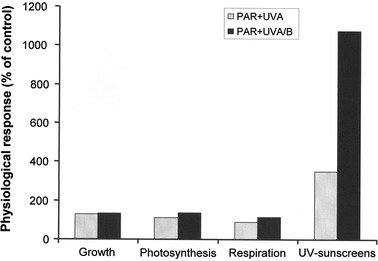
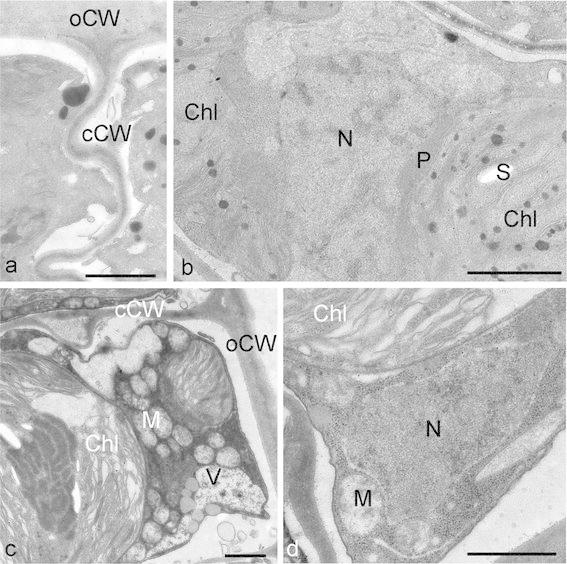
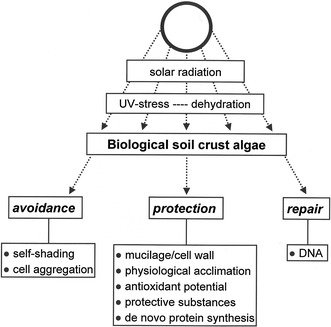
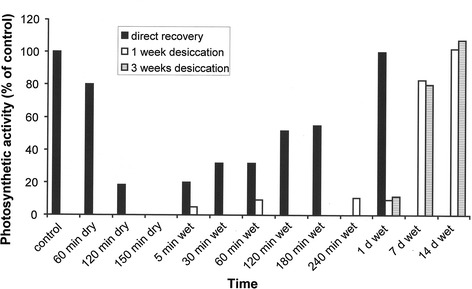
Green algae are major components of biological soil crusts in alpine habitats. Together with cyanobacteria, fungi and lichens, green algae form a pioneer community important for the organisms that will succeed them. In their high altitudinal habitat these algae are exposed to harsh and strongly fluctuating environmental conditions, mainly intense irradiation, including ultraviolet radiation, and lack of water leading to desiccation. Therefore, green algae surviving in these environments must have evolved with either avoidance or protective strategies, as well as repair mechanisms for damage. In this review we have highlighted these mechanisms, which include photoprotection, photochemical quenching, and high osmotic values to avoid water loss, and in some groups flexibility of secondary cell walls to maintain turgor pressure even in water-limited situations. These highly specialized green algae will serve as good model organisms to study desiccation tolerance or photoprotective mechanisms, due to their natural capacity to withstand unfavorable conditions. We point out the urgent need for modern phylogenetic approaches in characterizing these organisms, and molecular methods for analyzing the metabolic changes involved in their adaptive strategies.
绿藻是高山栖息地生物土壤结皮的主要组成部分。绿藻与蓝细菌、真菌和地衣一起,形成了一个先锋群落,对后续的生物至关重要。在其高海拔栖息地,这些藻类面临着恶劣且剧烈波动的环境条件,主要是强烈的辐射,包括紫外线辐射,以及缺水导致的干燥。因此,在这些环境中生存的绿藻必须进化出回避或保护策略以及损伤修复机制。在本综述中,我们着重介绍了这些机制,包括光保护、光化学猝灭以及高渗透压以避免水分流失,并且在某些类群中,次生细胞壁具有灵活性,即使在水分有限的情况下也能维持膨压。这些高度特化的绿藻由于其天然的耐受不利条件的能力,将成为研究耐旱性或光保护机制的良好模式生物。我们指出迫切需要现代系统发育方法来表征这些生物,以及分子方法来分析其适应策略中涉及的代谢变化。