Kim Kyeoung-Hwa, Lee Jaehyouk, Han Jun Hyun, Myung Soon Chul
Research Institute for Translational System Biomics, Chung-Ang University College of Medicine, Seoul, Korea.
Department of Urology, Hallym University Dontan Sacred Heart Hospital, Hwaseong, Korea.
Korean J Urol. 2014 Jun;55(6):417-25. doi: 10.4111/kju.2014.55.6.417. Epub 2014 Jun 16.
The present study aimed to determine the role played by β-defensin 124 (DEFB124) in the innate immunity of prostate epithelial RWPE-1 cells during bacterial infection.
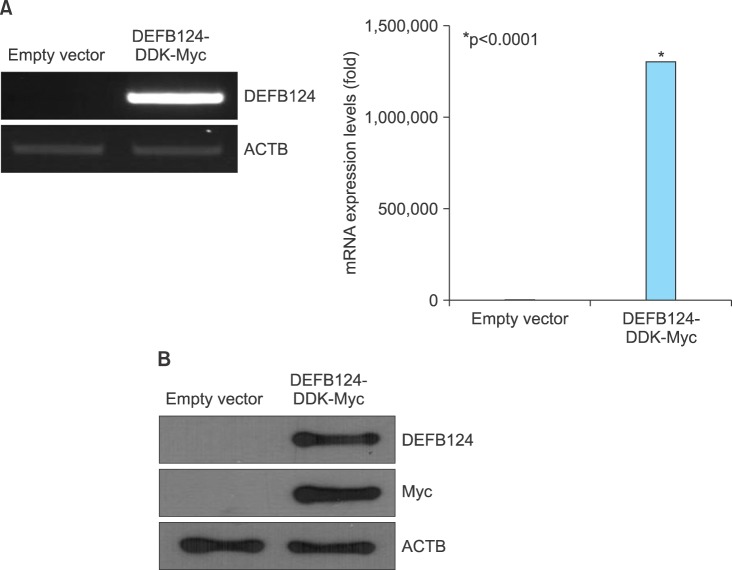
The expression of DEFB124 was examined by quantitative real-time polymerase chain reaction (PCR), Western blotting, and immunocytochemistry. Enzyme-linked immunosorbent assays and quantitative real-time PCR were performed to determine the production of cytokines and chemokines. Western blotting and chromatin immunoprecipitation studies were performed to assess the interaction between DEFB124 and nuclear factor-kappa B (NF-κB) in peptidoglycan (PGN)-stimulated RWPE-1 cells. By chemotaxis assay, we assessed the effect of DEFB124 on the migration of monocytes.
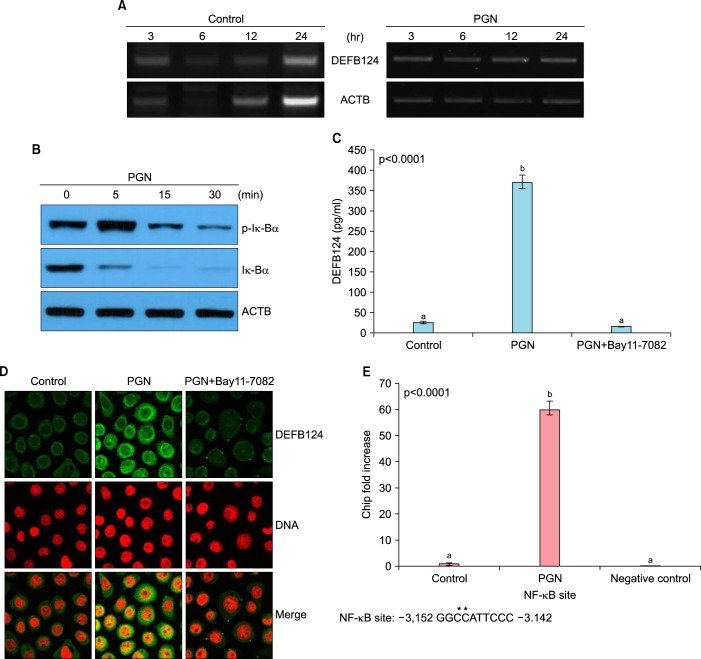
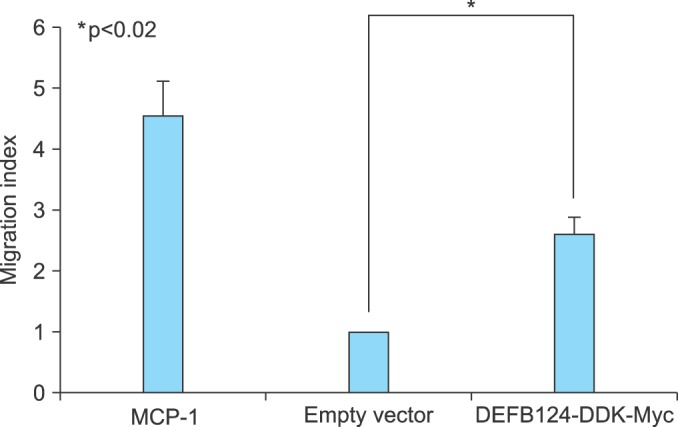
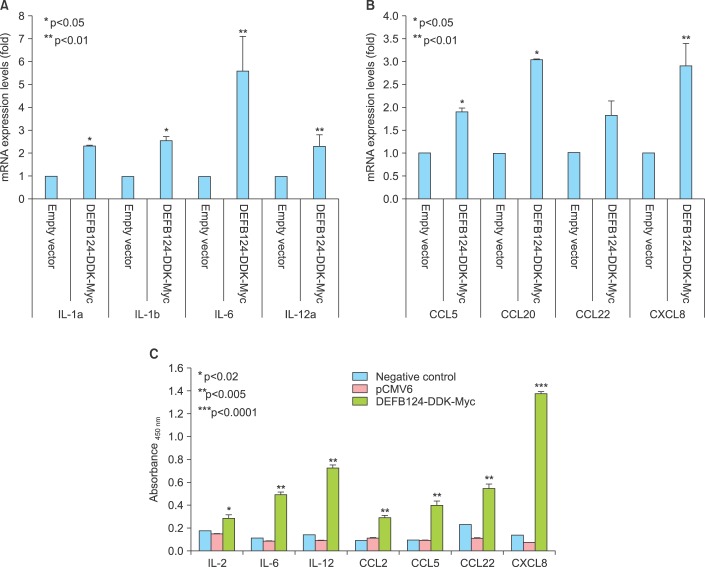
Exposure to PGN induced DEFB124 upregulation and NF-κB activation through IκBα phosphorylation and IκBα degradation. Bay11-7082, an NF-κB inhibitor, blocked PGN-induced DEFB124 production. Also, NF-κB was shown to be a direct regulator and to directly bind to the -3.14 kb site of the DEFB124 promoter in PGN-treated human prostate epithelial RWPE-1 cells. When DEFB124 was overexpressed in RWPE-1 cells, interestingly, the production of cytokines (interleukin [IL] 6 and IL-12) and chemokines (CCL5, CCL22, and CXCL8) was significantly increased. These DEFB124-upregulated RWPE-1 cells markedly induced chemotactic activity for THP-1 monocytes.
Taken together, these results provide strong evidence for the first time that increased DEFB124 expression via NF-κB activation in PGN-exposed RWPE-1 cells enhances the production of cytokines and chemokines, which may contribute to an efficient innate immune defense.
本研究旨在确定β-防御素124(DEFB124)在细菌感染期间前列腺上皮RWPE-1细胞固有免疫中所起的作用。
采用定量实时聚合酶链反应(PCR)、蛋白质印迹法和免疫细胞化学法检测DEFB124的表达。进行酶联免疫吸附测定和定量实时PCR以确定细胞因子和趋化因子的产生。采用蛋白质印迹法和染色质免疫沉淀研究评估肽聚糖(PGN)刺激的RWPE-1细胞中DEFB124与核因子κB(NF-κB)之间的相互作用。通过趋化性测定,我们评估了DEFB124对单核细胞迁移的影响。
暴露于PGN通过IκBα磷酸化和IκBα降解诱导DEFB124上调和NF-κB激活。NF-κB抑制剂Bay11-7082可阻断PGN诱导的DEFB124产生。此外,在PGN处理的人前列腺上皮RWPE-1细胞中,NF-κB被证明是DEFB124启动子-3.14 kb位点的直接调节因子并直接与其结合。有趣的是,当DEFB124在RWPE-1细胞中过表达时,细胞因子(白细胞介素[IL] 6和IL-12)和趋化因子(CCL5、CCL22和CXCL8)的产生显著增加。这些DEFB124上调的RWPE-1细胞对THP-1单核细胞具有明显的趋化活性诱导作用。
综上所述,这些结果首次提供了强有力的证据,表明在暴露于PGN的RWPE-1细胞中通过NF-κB激活增加DEFB124表达可增强细胞因子和趋化因子的产生,这可能有助于有效的固有免疫防御。