Sun Hualin, Gong Yanpei, Qiu Jiaying, Chen Yanfei, Ding Fei, Zhao Qing
Jiangsu Key Laboratory of Neuroregeneration, Co-Innovation Center of Neuroregeneration, Nantong University, Nantong 226001, Jiangsu, China.
Int J Mol Sci. 2014 Jun 20;15(6):11126-41. doi: 10.3390/ijms150611126.
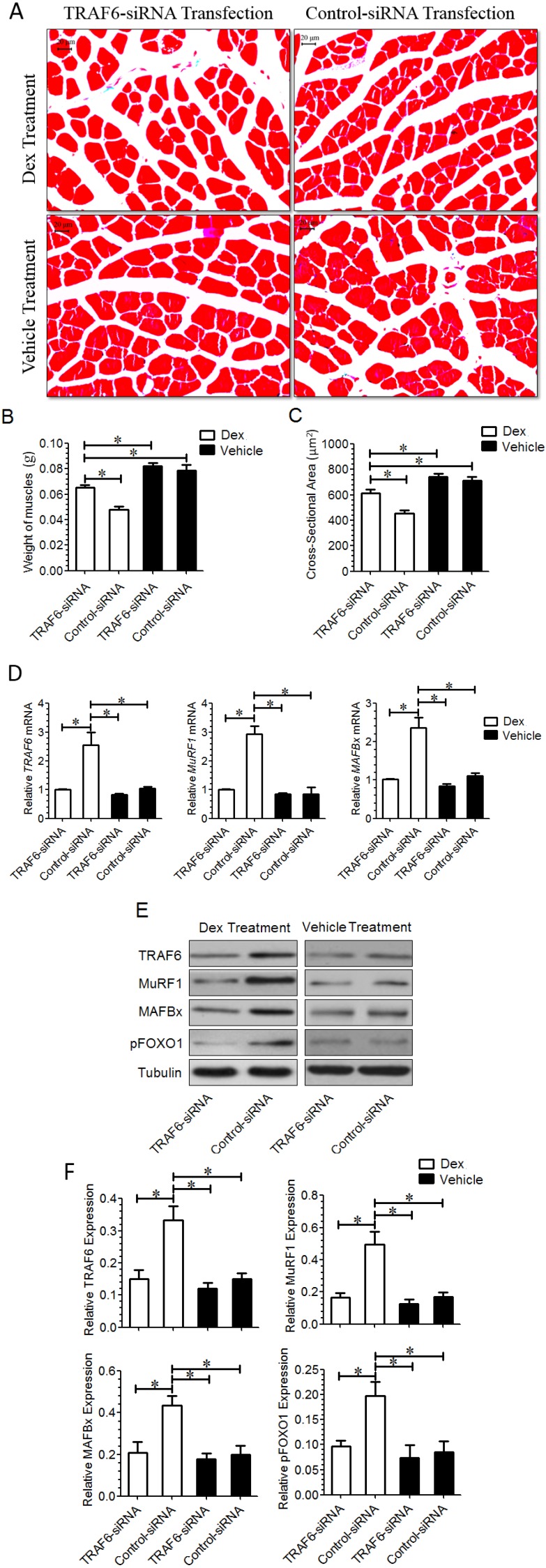
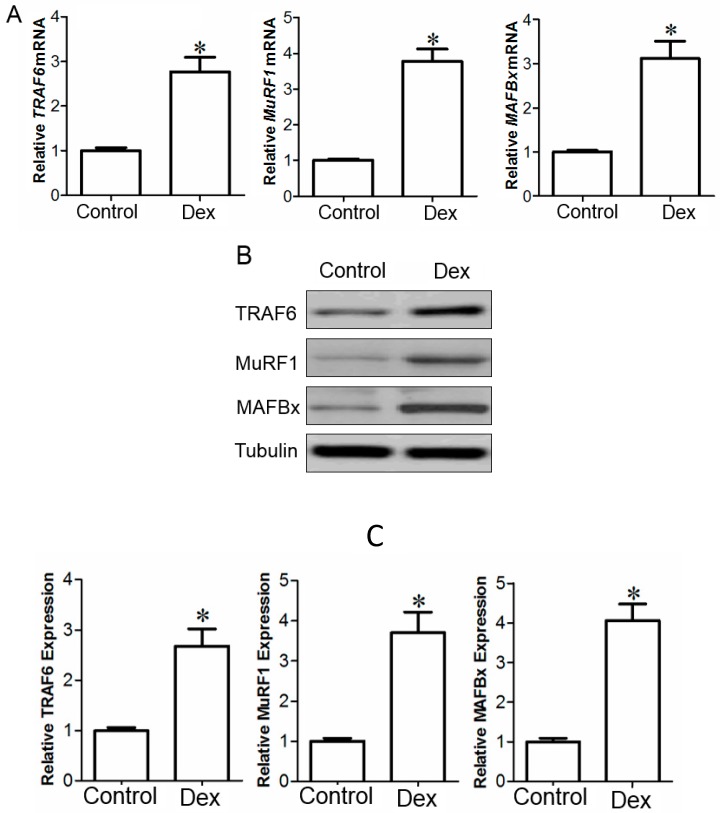
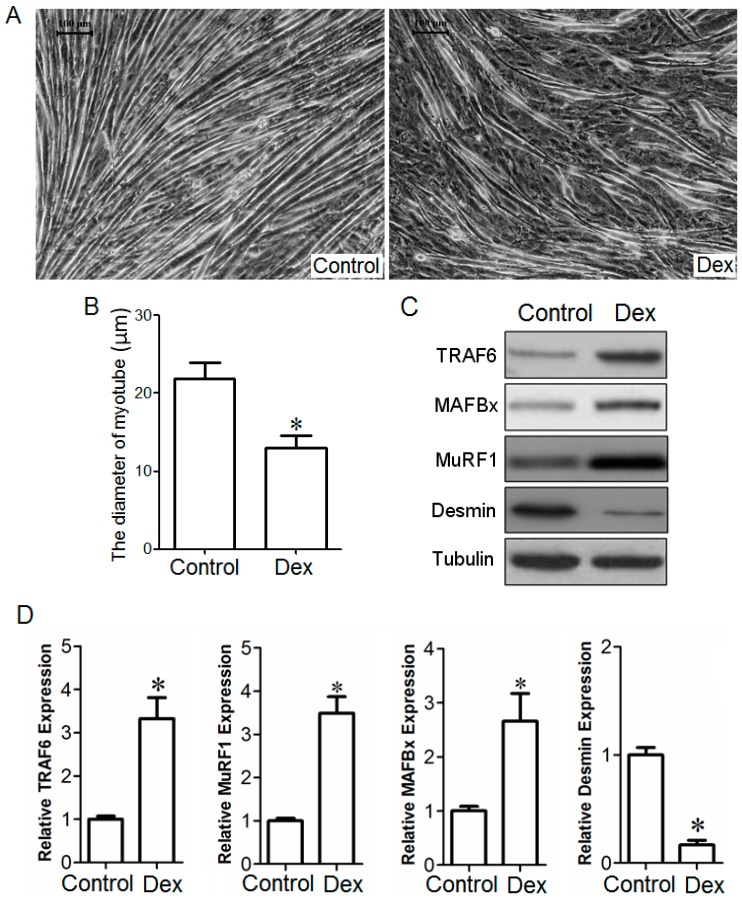
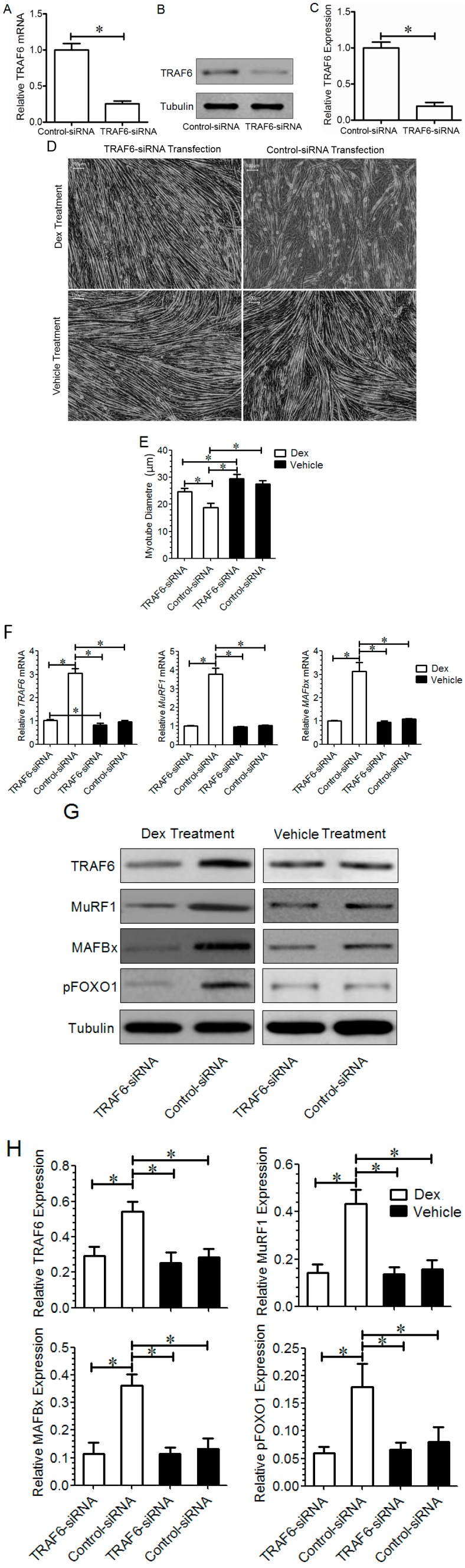
Tumor necrosis factor receptor-associated factor 6 (TRAF6), a unique E3 ubiquitin ligase and adaptor protein, is involved in activation of various signaling cascades. Recent studies identify TRAF6 as one of the novel regulators of skeletal muscle atrophy. The role of TRAF6 in glucocorticoid-induced muscle atrophy, however, remains to be elucidated. In this study, we show that TRAF6 and its downstream signaling molecules, muscle atrophy F-box (MAFBx) and muscle ring finger 1 (MuRF1), were all upregulated in dexamethasone-induced atrophy of mouse C2C12 myotubes or mouse tibialis anterior (TA) muscle. To further investigate the role of TRAF6 in dexamethasone-induced muscle atrophy, TRAF6-siRNA was used to transfect cultured C2C12 myotubes or was injected into the TA muscle of mice respectively, and we note that TRAF6 knockdown attenuated dexamethasone-induced muscle atrophy in vitro and in vivo, and concomitantly decreased the expression of MuRF1 and MAFBx. Our findings suggest that a decreased expression of TRAF6 could rescue dexamethasone-induced skeletal muscle atrophy through, at least in part, regulation of the expression of MAFBx and MuRF1.
肿瘤坏死因子受体相关因子6(TRAF6)是一种独特的E3泛素连接酶和衔接蛋白,参与多种信号级联反应的激活。最近的研究将TRAF6确定为骨骼肌萎缩的新型调节因子之一。然而,TRAF6在糖皮质激素诱导的肌肉萎缩中的作用仍有待阐明。在本研究中,我们发现TRAF6及其下游信号分子,即肌肉萎缩F盒蛋白(MAFBx)和肌肉环指蛋白1(MuRF1),在小鼠C2C12肌管或小鼠胫前肌(TA)的地塞米松诱导萎缩中均上调。为了进一步研究TRAF6在地塞米松诱导的肌肉萎缩中的作用,分别使用TRAF6-siRNA转染培养的C2C12肌管或注射到小鼠的TA肌肉中,我们注意到敲低TRAF6可减轻地塞米松在体外和体内诱导的肌肉萎缩,并同时降低MuRF1和MAFBx的表达。我们的研究结果表明,TRAF6表达降低至少部分通过调节MAFBx和MuRF1的表达来挽救地塞米松诱导的骨骼肌萎缩。