Szczepański Adam, Saeed Khalid
AGH University of Science and Technology, Faculty of Physics and Applied Computer Science, 30 Mickiewicza Av., PL-30059, Krakow 004812, Poland.
Sensors (Basel). 2014 Jun 20;14(6):11031-44. doi: 10.3390/s140611031.
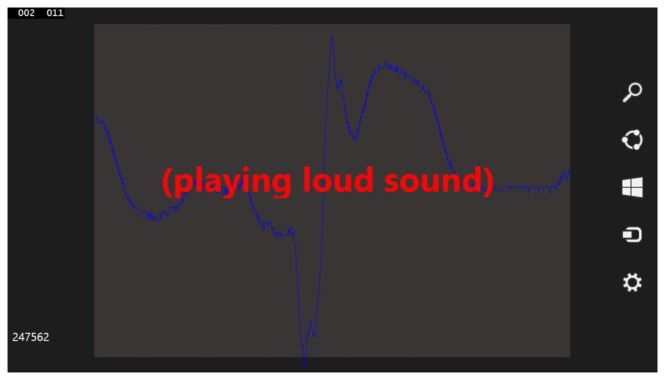
With the rapid increase in computational power of mobile devices the amount of ambient intelligence-based smart environment systems has increased greatly in recent years. A proposition of such a solution is described in this paper, namely real time monitoring of an electrocardiogram (ECG) signal during everyday activities for identification of life threatening situations. The paper, being both research and review, describes previous work of the authors, current state of the art in the context of the authors' work and the proposed aforementioned system. Although parts of the solution were described in earlier publications of the authors, the whole concept is presented completely for the first time along with the prototype implementation on mobile device-a Windows 8 tablet with Modern UI. The system has three main purposes. The first goal is the detection of sudden rapid cardiac malfunctions and informing the people in the patient's surroundings, family and friends and the nearest emergency station about the deteriorating health of the monitored person. The second goal is a monitoring of ECG signals under non-clinical conditions to detect anomalies that are typically not found during diagnostic tests. The third goal is to register and analyze repeatable, long-term disturbances in the regular signal and finding their patterns.
随着移动设备计算能力的迅速提升,近年来基于环境智能的智能环境系统数量大幅增加。本文描述了这样一种解决方案,即在日常活动期间对心电图(ECG)信号进行实时监测,以识别危及生命的情况。这篇兼具研究与综述性质的论文,阐述了作者先前的工作、在作者工作背景下的当前技术水平以及上述所提出的系统。尽管该解决方案的部分内容在作者早期的出版物中有所描述,但整个概念连同在移动设备(一台带有现代用户界面的Windows 8平板电脑)上的原型实现首次完整呈现。该系统有三个主要目的。第一个目标是检测突发性快速心脏故障,并将被监测者健康状况恶化的信息告知其周围的人、家人和朋友以及最近的急救站。第二个目标是在非临床条件下监测心电图信号,以检测在诊断测试中通常不会发现的异常情况。第三个目标是记录和分析常规信号中可重复的长期干扰,并找出其模式。