Zou Wei, She Jianwen, Tolstikov Vladimir V
California Department of Public Health, 850 Marina Bay Parkway, Richmond, CA 94804, USA.
Tailored Therapeutics, Eli Lilly and Company, Lilly Corporate Center, DC 0714, Indianapolis, IN 46285, USA.
Metabolites. 2013 Sep 11;3(3):787-819. doi: 10.3390/metabo3030787.
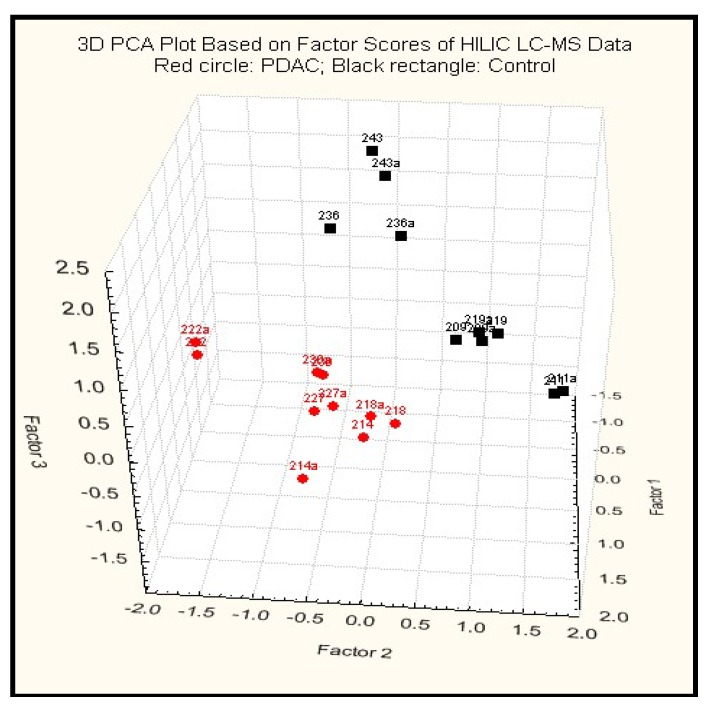
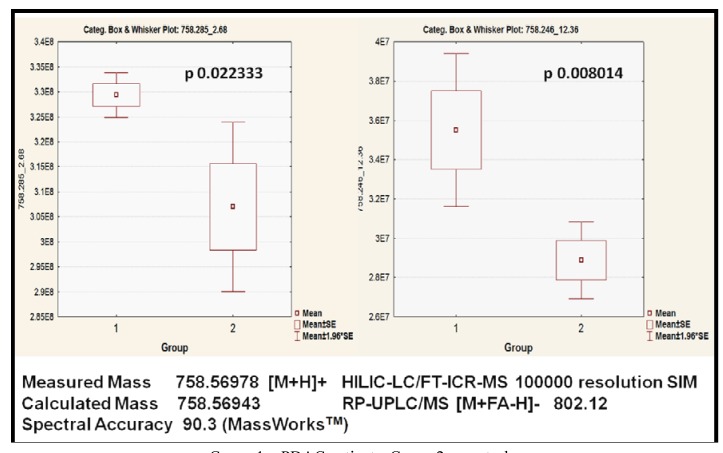
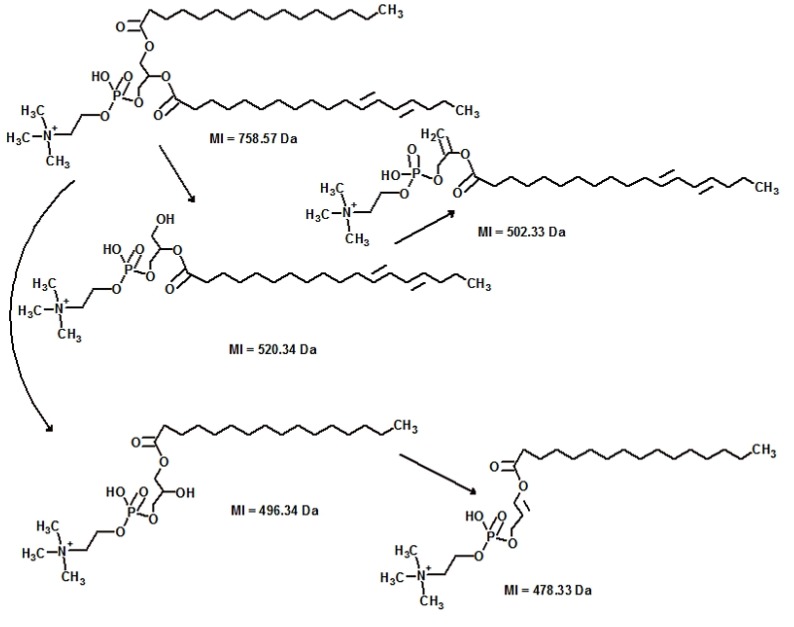
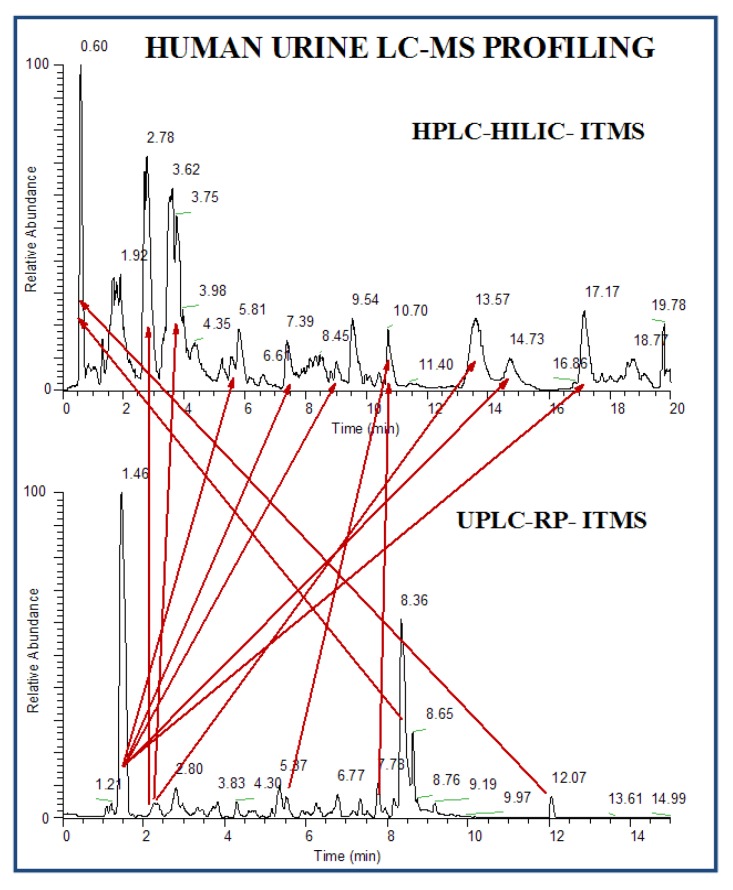
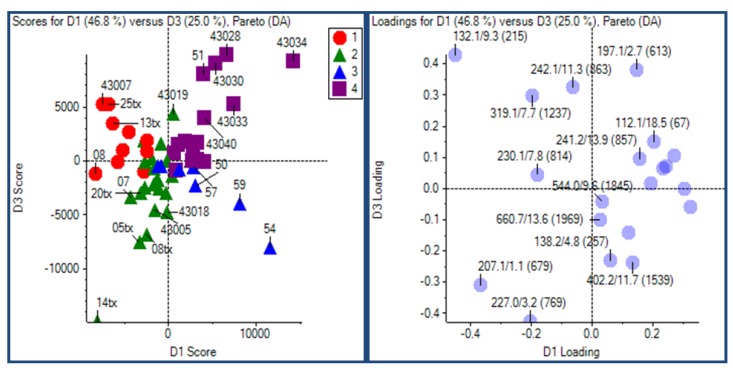
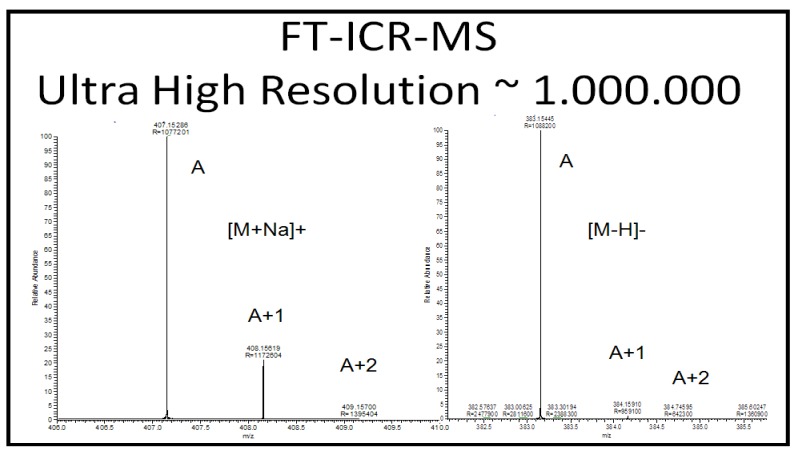
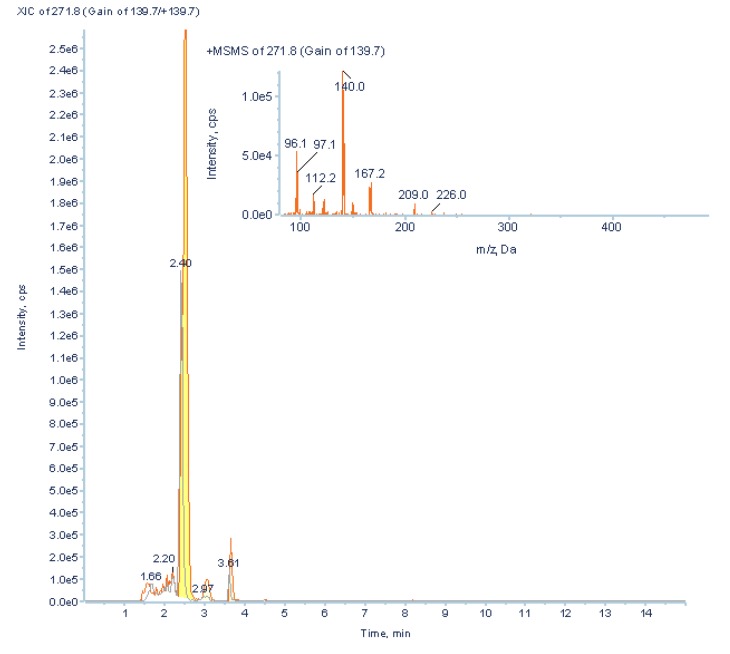
Current available biomarkers lack sensitivity and/or specificity for early detection of cancer. To address this challenge, a robust and complete workflow for metabolic profiling and data mining is described in details. Three independent and complementary analytical techniques for metabolic profiling are applied: hydrophilic interaction liquid chromatography (HILIC-LC), reversed-phase liquid chromatography (RP-LC), and gas chromatography (GC). All three techniques are coupled to a mass spectrometer (MS) in the full scan acquisition mode, and both unsupervised and supervised methods are used for data mining. The univariate and multivariate feature selection are used to determine subsets of potentially discriminative predictors. These predictors are further identified by obtaining accurate masses and isotopic ratios using selected ion monitoring (SIM) and data-dependent MS/MS and/or accurate mass MSn ion tree scans utilizing high resolution MS. A list combining all of the identified potential biomarkers generated from different platforms and algorithms is used for pathway analysis. Such a workflow combining comprehensive metabolic profiling and advanced data mining techniques may provide a powerful approach for metabolic pathway analysis and biomarker discovery in cancer research. Two case studies with previous published data are adapted and included in the context to elucidate the application of the workflow.
目前可用的生物标志物在癌症早期检测方面缺乏敏感性和/或特异性。为应对这一挑战,详细描述了一种用于代谢谱分析和数据挖掘的强大且完整的工作流程。应用了三种独立且互补的代谢谱分析技术:亲水相互作用液相色谱(HILIC-LC)、反相液相色谱(RP-LC)和气相色谱(GC)。这三种技术均在全扫描采集模式下与质谱仪(MS)联用,并且使用无监督和有监督方法进行数据挖掘。单变量和多变量特征选择用于确定潜在判别性预测指标的子集。通过使用选择离子监测(SIM)和数据依赖型MS/MS获取精确质量和同位素比,以及利用高分辨率MS进行精确质量MSn离子树扫描,进一步识别这些预测指标。将来自不同平台和算法生成的所有已识别潜在生物标志物组合而成的列表用于通路分析。这种结合全面代谢谱分析和先进数据挖掘技术的工作流程可能为癌症研究中的代谢通路分析和生物标志物发现提供一种强大的方法。文中改编并纳入了两个具有先前已发表数据的案例研究,以阐明该工作流程的应用。