Chen Xue, Hokka Daisuke, Maniwa Yoshimasa, Ohbayashi Chiho, Itoh Tomoo, Hayashi Yoshitake
Division of Molecular Medicine and Medical Genetics, Department of Pathology, Kobe University Graduate School of Medicine, Kobe, Hyogo 650-0017, Japan.
Division of Thoracic Surgery, Department of Surgery, Kobe University Graduate School of Medicine, Kobe, Hyogo 650-0017, Japan.
Oncol Lett. 2014 Jul;8(1):387-393. doi: 10.3892/ol.2014.2057. Epub 2014 Apr 10.
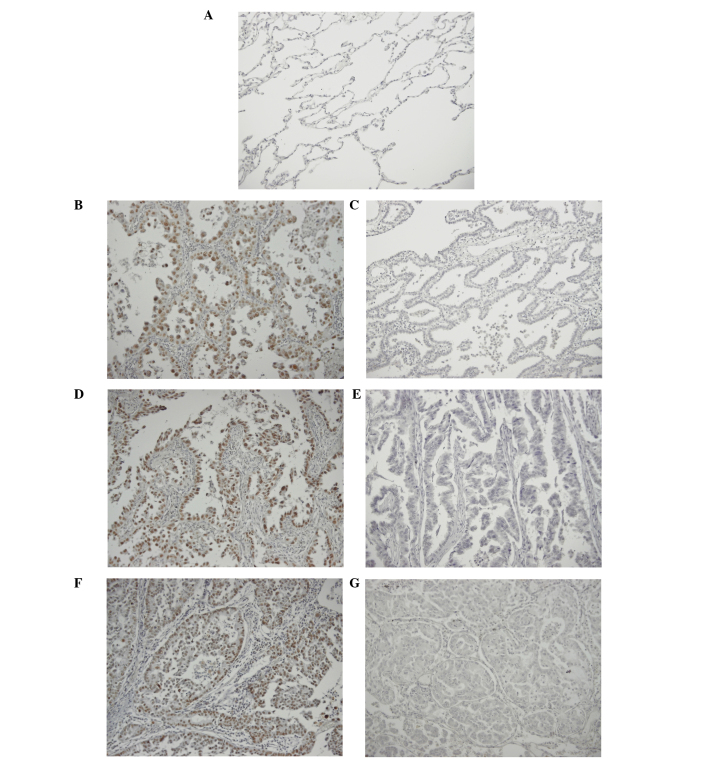
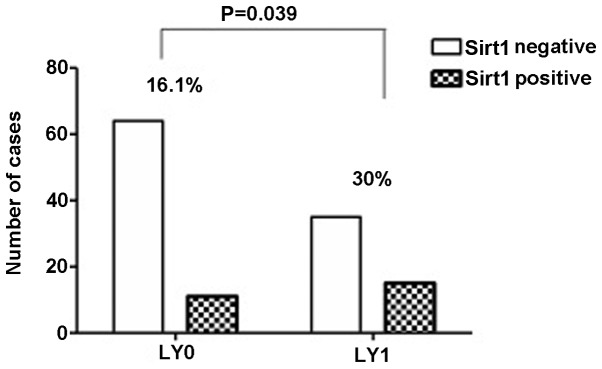
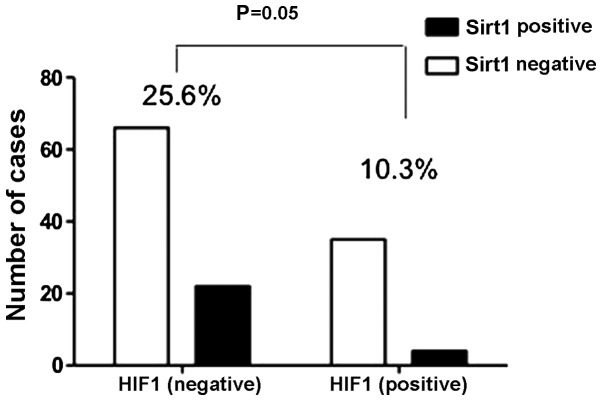
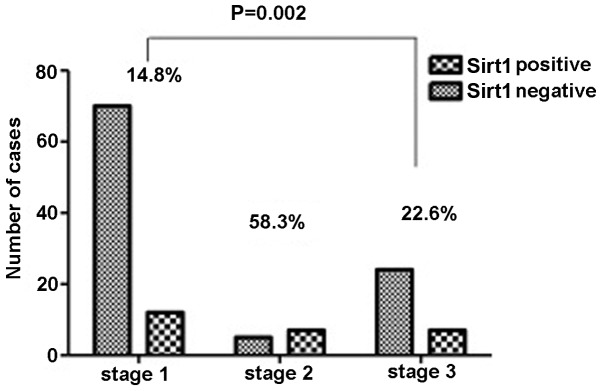
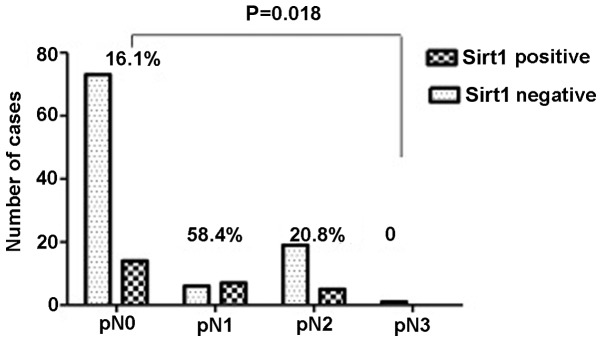
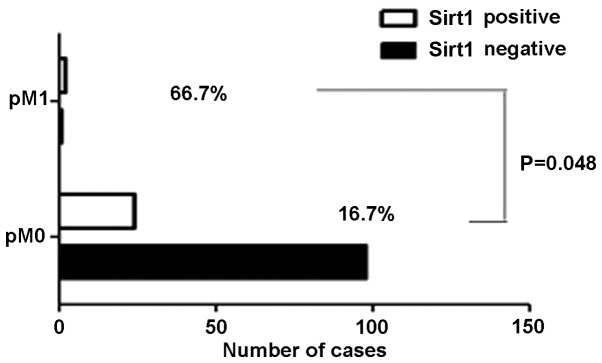
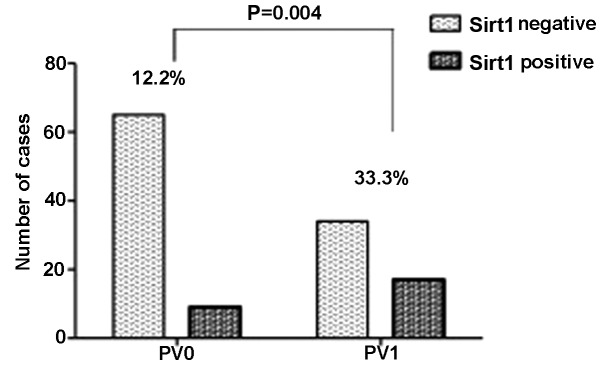
Sirtuin 1 (Sirt1) is a nicotinamide adenine dinucleotide-dependent class III histone deacetylase. It reportedly can repress cellular apoptosis and senescence to affect DNA repair, stress response and aging. Notably, previous data have indicated that Sirt1 is both a tumor promoter and a tumor suppressor in tumorigenesis. However, Sirt1 expression in primary lung adenocarcinoma remains unknown. Immunohistochemical staining was performed to investigate Sirt1 expression in cancer cells in 125 consecutive resected cases of primary lung adenocarcinoma. Sirt1 expression was found to be increased in 26 (20.8%) of the 125 cases, which correlated significantly with five clinicopathological factors: Ki67 index, hypoxia-inducible factor 1 (HIF1) molecule expression, tumor-node-metastasis (TNM) classification, pulmonary vein invasion and lymphatic duct invasion. In the Sirt1-positive expression group, Sirt1 expression correlated with a higher Ki67 index and higher TNM classification, particularly for lymph node invasion and metastasis, and with a higher number of pulmonary vein invasion and lymphatic duct invasion. Additionally, a negative correlation was identified between HIF1-positive expression and Sirt1-negative expression. These results indicate that Sirt1 overexpression plays a promotional role in tumorigenesis and is closely associated with invasion and metastasis and, thus, it may be associated with prognosis.
沉默调节蛋白1(Sirt1)是一种烟酰胺腺嘌呤二核苷酸依赖性III类组蛋白去乙酰化酶。据报道,它可以抑制细胞凋亡和衰老,从而影响DNA修复、应激反应和衰老过程。值得注意的是,先前的数据表明,Sirt1在肿瘤发生过程中既是肿瘤促进因子,也是肿瘤抑制因子。然而,Sirt1在原发性肺腺癌中的表达情况仍不清楚。我们对125例连续切除的原发性肺腺癌病例的癌细胞进行了免疫组织化学染色,以研究Sirt1的表达情况。结果发现,在125例病例中,有26例(20.8%)的Sirt1表达增加,这与五个临床病理因素显著相关:Ki67指数、缺氧诱导因子1(HIF1)分子表达、肿瘤-淋巴结-转移(TNM)分类、肺静脉侵犯和淋巴管侵犯。在Sirt1阳性表达组中,Sirt1表达与较高的Ki67指数和较高的TNM分类相关,特别是与淋巴结侵犯和转移相关,并且与肺静脉侵犯和淋巴管侵犯的数量较多相关。此外,还发现HIF1阳性表达与Sirt1阴性表达之间存在负相关。这些结果表明,Sirt1的过表达在肿瘤发生中起促进作用,并且与侵袭和转移密切相关,因此可能与预后有关。