Wasson A P, Rebetzke G J, Kirkegaard J A, Christopher J, Richards R A, Watt M
CSIRO Plant Industry, GPO Box 1600, Canberra, ACT 2601, Australia
CSIRO Plant Industry, GPO Box 1600, Canberra, ACT 2601, Australia.
J Exp Bot. 2014 Nov;65(21):6231-49. doi: 10.1093/jxb/eru250. Epub 2014 Jun 24.
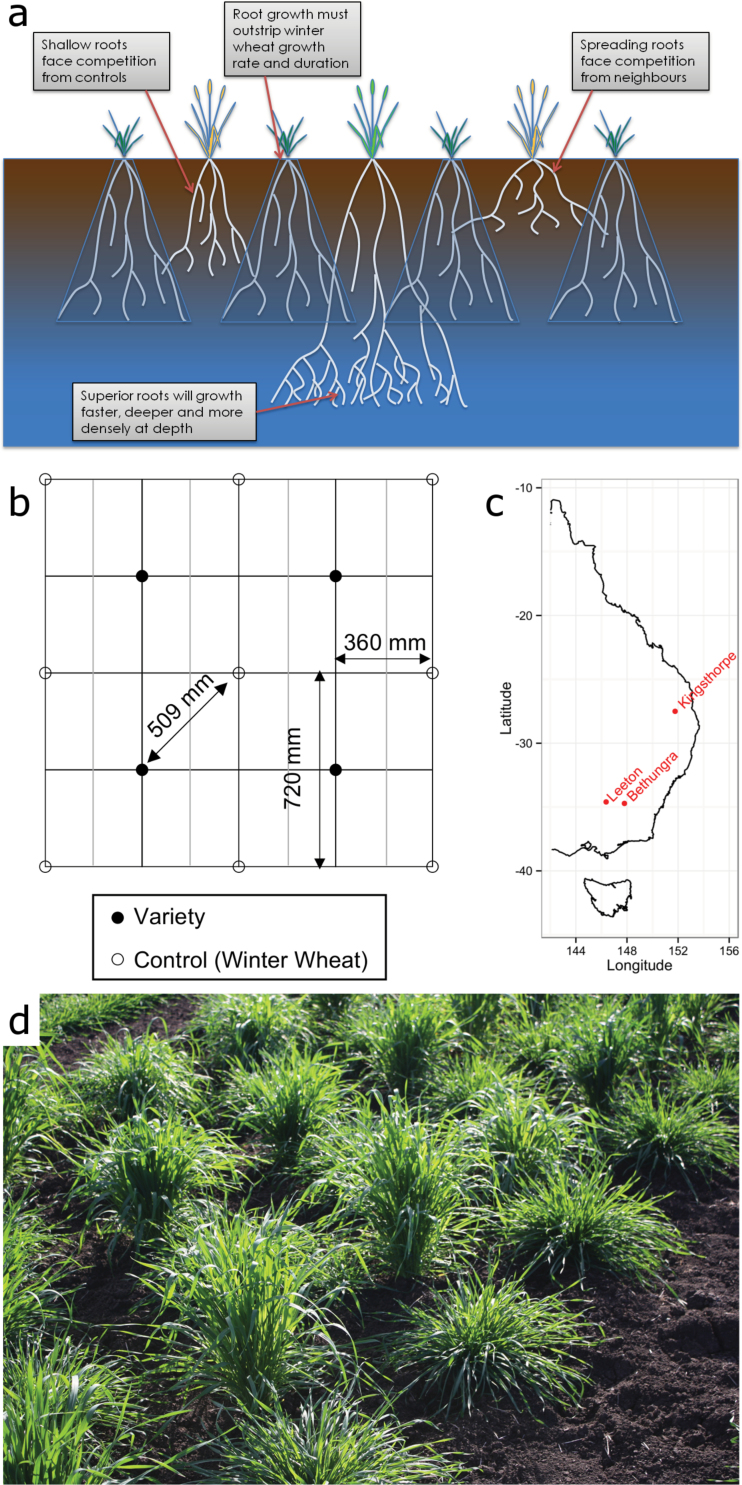
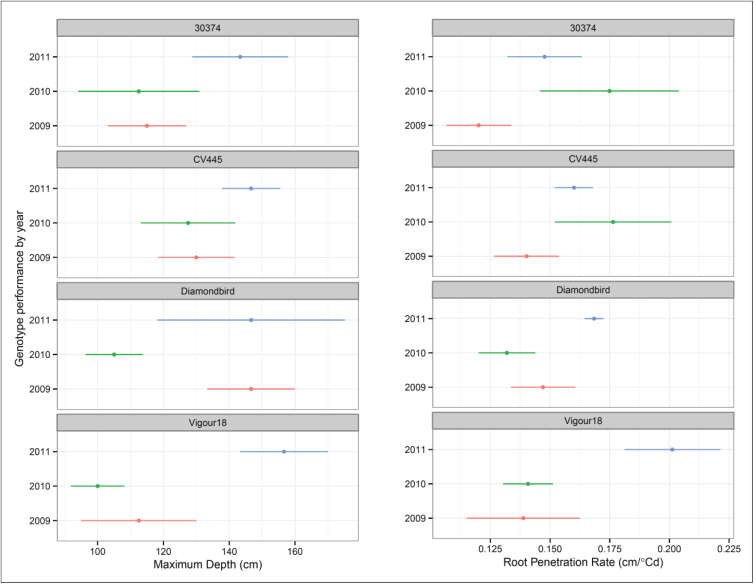
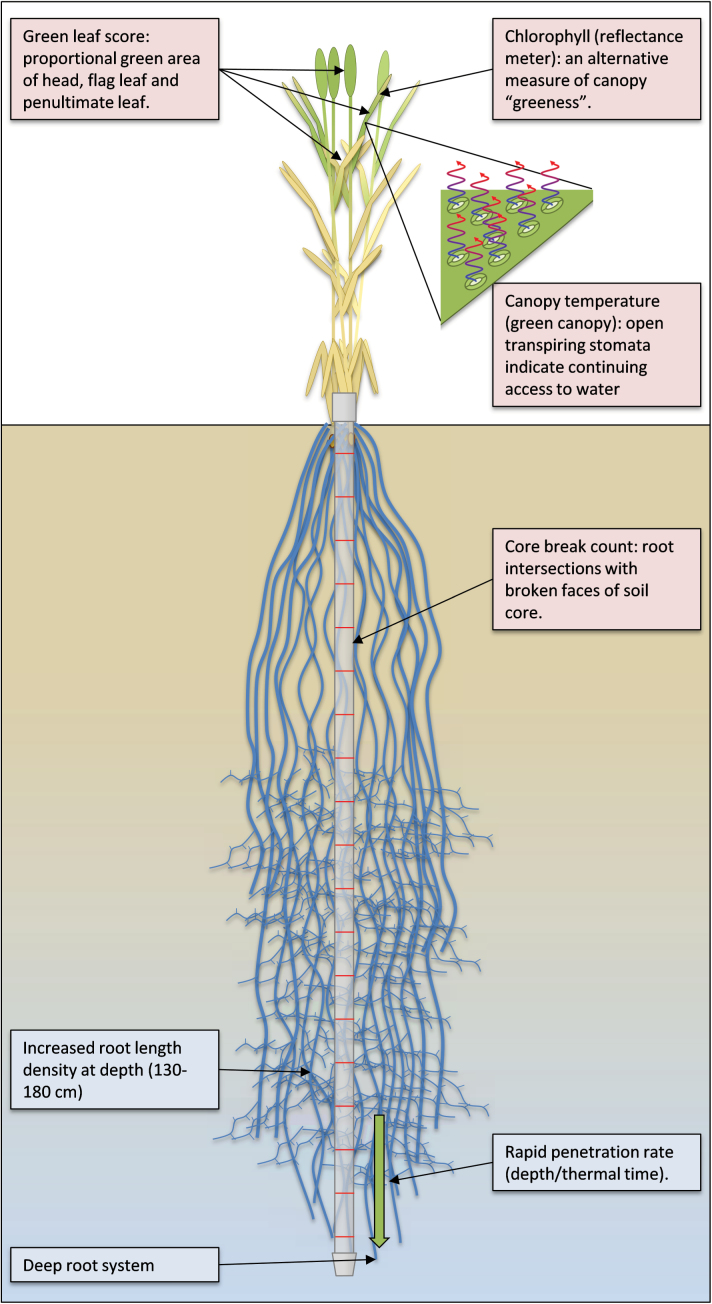
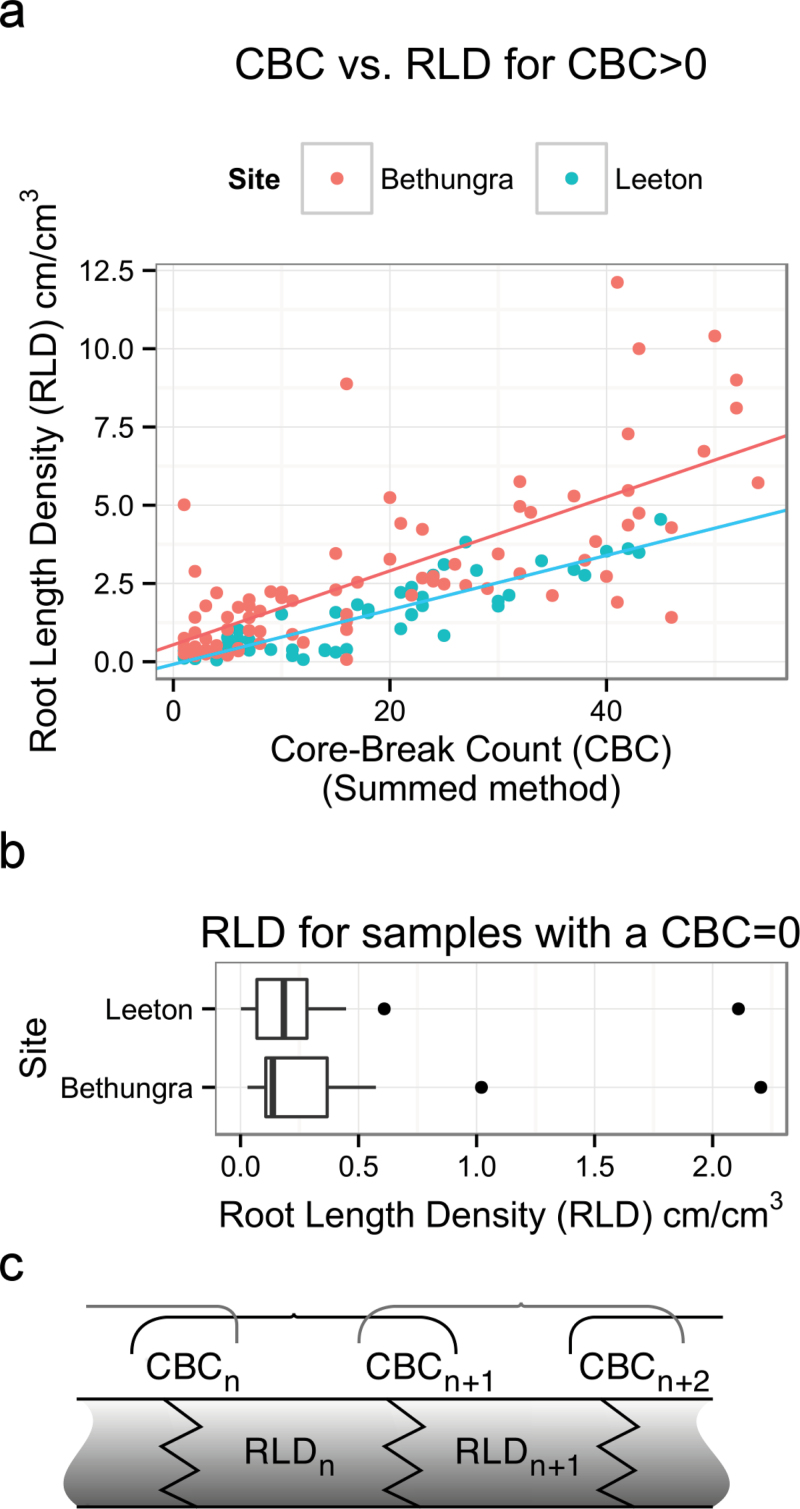
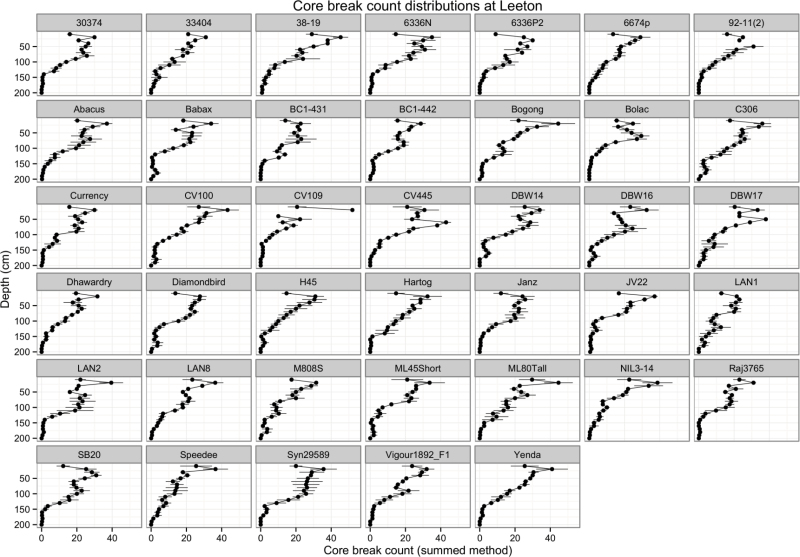
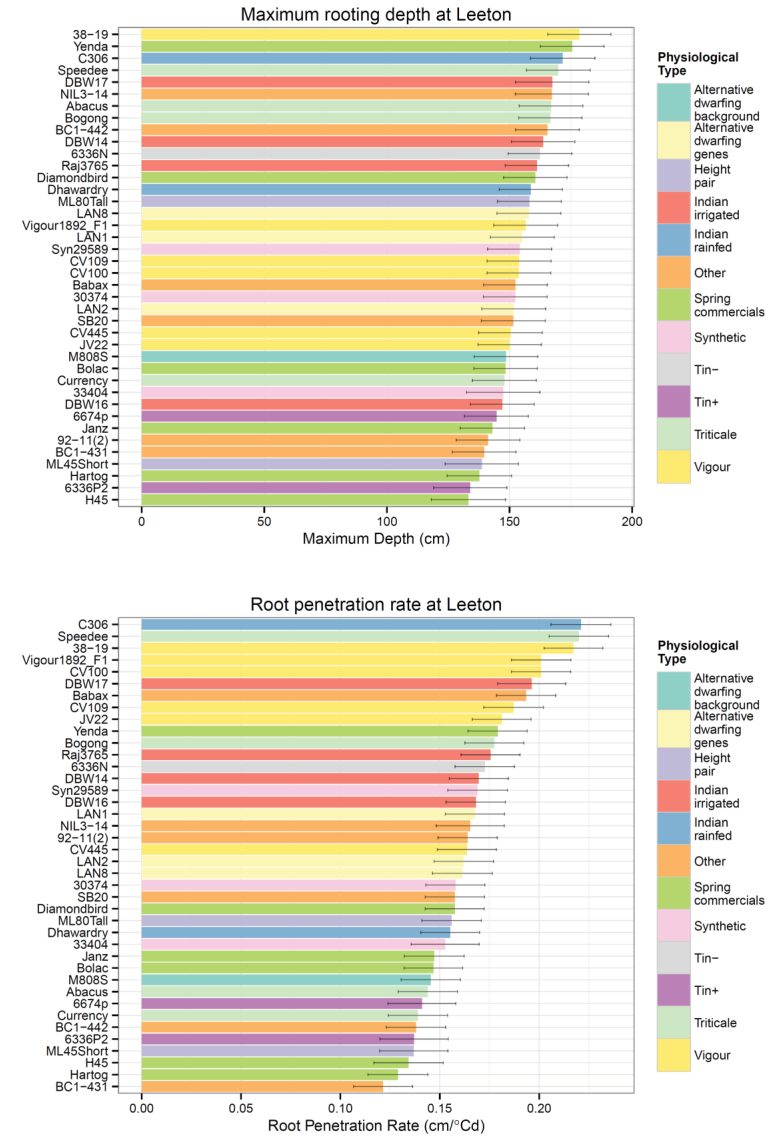
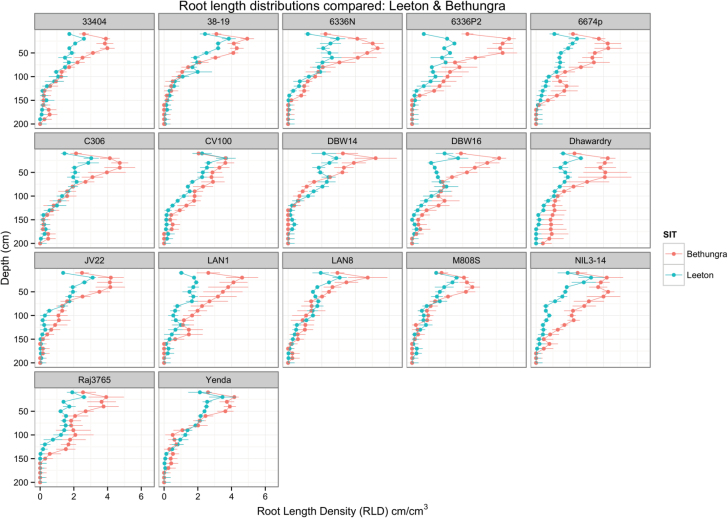
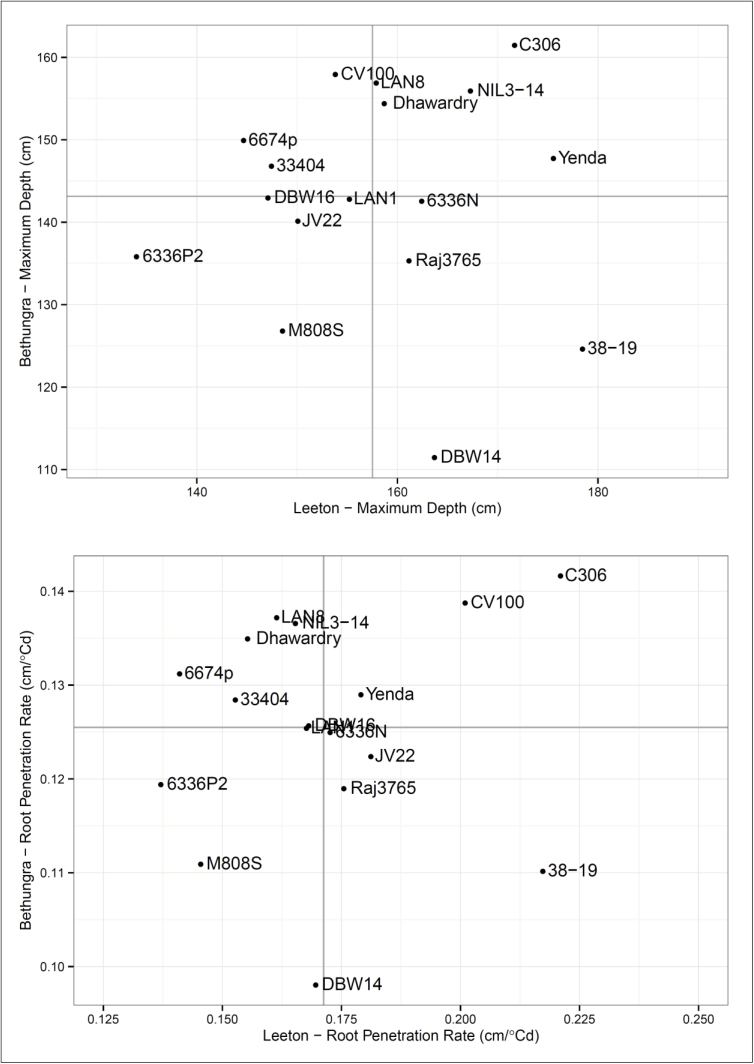
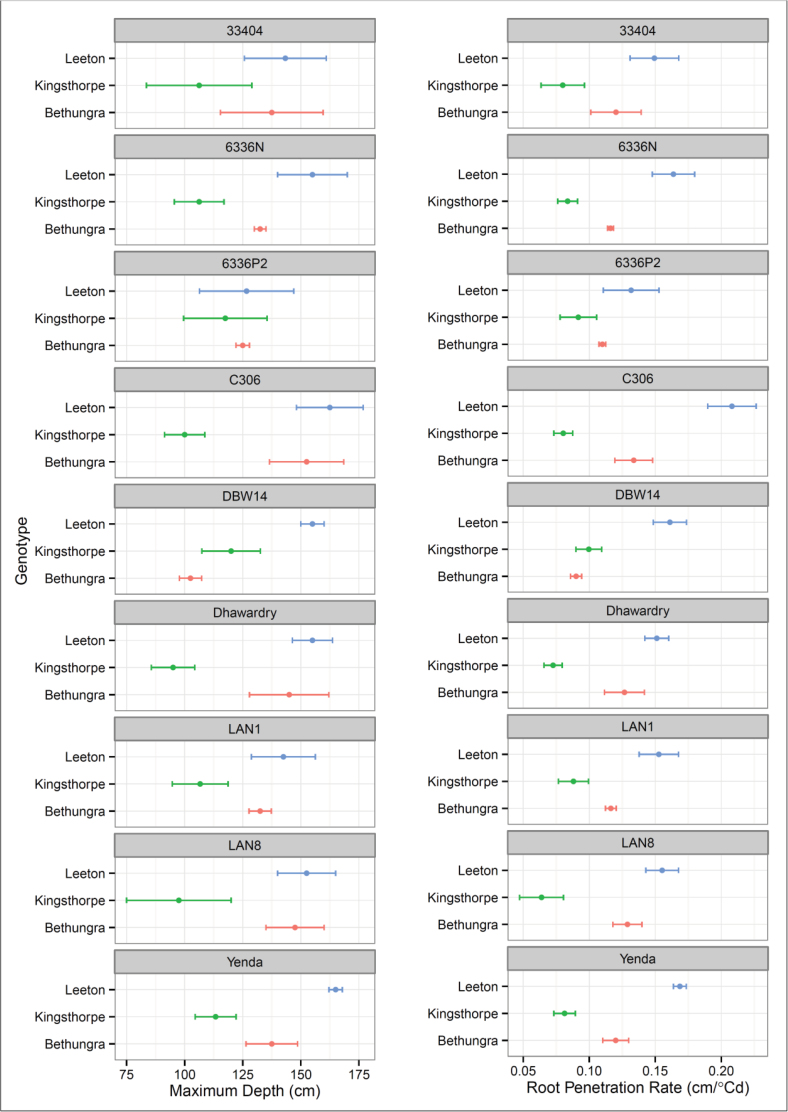
We aim to incorporate deep root traits into future wheat varieties to increase access to stored soil water during grain development, which is twice as valuable for yield as water captured at younger stages. Most root phenotyping efforts have been indirect studies in the laboratory, at young plant stages, or using indirect shoot measures. Here, soil coring to 2 m depth was used across three field environments to directly phenotype deep root traits on grain development (depth, descent rate, density, length, and distribution). Shoot phenotypes at coring included canopy temperature depression, chlorophyll reflectance, and green leaf scoring, with developmental stage, biomass, and yield. Current varieties, and genotypes with breeding histories and plant architectures expected to promote deep roots, were used to maximize identification of variation due to genetics. Variation was observed for deep root traits (e.g. 111.4-178.5cm (60%) for depth; 0.09-0.22cm/°C day (144%) for descent rate) using soil coring in the field environments. There was significant variation for root traits between sites, and variation in the relative performance of genotypes between sites. However, genotypes were identified that performed consistently well or poorly at both sites. Furthermore, high-performing genotypes were statistically superior in root traits than low-performing genotypes or commercial varieties. There was a weak but significant negative correlation between green leaf score (-0.5), CTD (0.45), and rooting depth and a positive correlation for chlorophyll reflectance (0.32). Shoot phenotypes did not predict other root traits. This study suggests that field coring can directly identify variation in deep root traits to speed up selection of genotypes for breeding programmes.
我们旨在将深根性状融入未来的小麦品种中,以便在籽粒发育期间增加对土壤中储存水分的获取,这对产量的价值是小麦幼苗期所获取水分的两倍。大多数根系表型分析工作都是在实验室、幼苗期进行的间接研究,或者采用间接的地上部分测量方法。在此,我们在三种田间环境下采用钻取深度达2米的土壤芯样,直接对籽粒发育阶段的深根性状(深度、下扎速率、密度、长度和分布)进行表型分析。取芯时的地上部分表型包括冠层温度降低、叶绿素反射率和绿叶评分,并记录发育阶段、生物量和产量。使用当前品种以及具有预期能促进深根生长的育种历史和株型的基因型,以最大限度地识别由遗传因素导致的变异。通过在田间环境中钻取土壤芯样,观察到深根性状存在变异(例如,深度为111.4 - 178.5厘米(60%);下扎速率为0.09 - 0.22厘米/℃·天(144%))。不同地点之间根系性状存在显著变异,且不同地点间基因型的相对表现也存在差异,但也鉴定出了在两个地点表现始终良好或较差的基因型。此外,高性能基因型在根系性状上在统计学上优于低性能基因型或商业品种。绿叶评分(-0.5)、冠层温度降低(0.45)与生根深度之间存在微弱但显著的负相关,叶绿素反射率存在正相关(0.32)。地上部分表型无法预测其他根系性状。这项研究表明,田间取芯能够直接识别深根性状的变异,从而加快育种计划中基因型的选择。