Bone Biology Laboratory, School of Medicine, Rosario National University, Rosario, Santa Fe, Argentina.
Institute of Experimental Physiology, Consejo Nacional de Investigaciones Científicas y Técnicas (CONICET), Rosario, Santa Fe, Argentina.
PLoS One. 2014 Jun 25;9(6):e100768. doi: 10.1371/journal.pone.0100768. eCollection 2014.
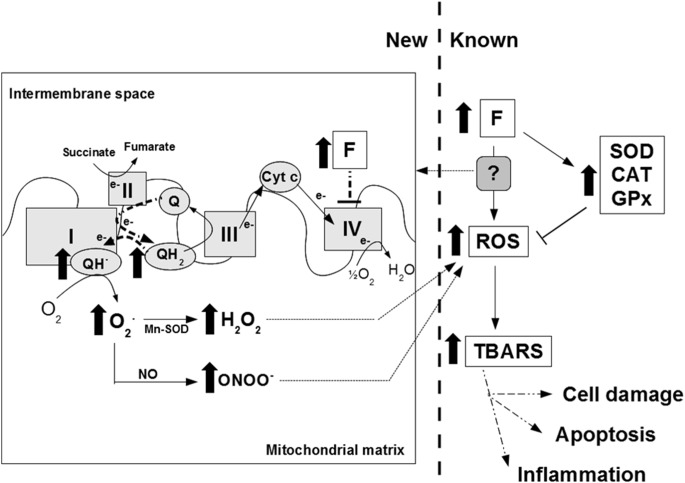
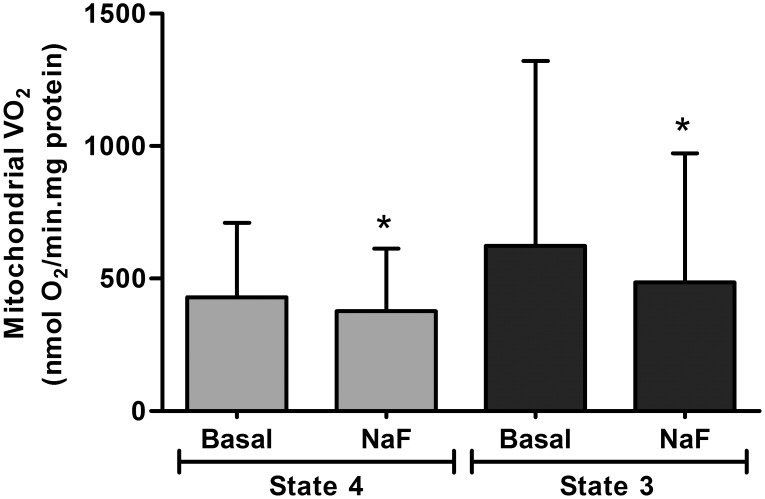
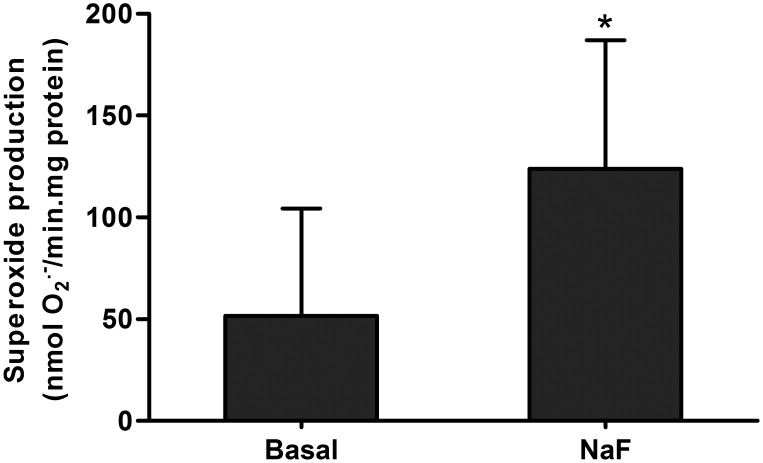
It is known that fluoride produces oxidative stress. Inflammation in bone tissue and an impairment of the respiratory chain of liver have been described in treatments with fluoride. Whether the impairment of the respiratory chain and oxidative stress are related is not known. The aim of this work was to study the effects of fluoride on the production of superoxide radical, the function of the respiratory chain and the increase in oxidative stress in ROS 17/2.8 osteoblastic cells. We measured the effect of fluoride (100 µM) on superoxide production, oxygen consumption, lipid peroxidation and antioxidant enzymes activities of cultured cells following the treatment with fluoride. Fluoride decreased oxygen consumption and increased superoxide production immediately after its addition. Furthermore, chronic treatment with fluoride increased oxidative stress status in osteoblastic cells. These results indicate that fluoride could damage bone tissue by inhibiting the respiratory chain, increasing the production of superoxide radicals and thus of the others reactive oxygen species.
已知氟化物会产生氧化应激。在氟化物治疗中,已经描述了骨组织中的炎症和肝呼吸链的损伤。呼吸链的损伤和氧化应激是否相关尚不清楚。本工作的目的是研究氟化物对超氧自由基产生、呼吸链功能和 ROS 17/2.8 成骨细胞氧化应激增加的影响。我们测量了氟化物(100µM)对培养细胞中超氧自由基产生、耗氧量、脂质过氧化和抗氧化酶活性的影响。氟化物在加入后立即减少耗氧量并增加超氧自由基的产生。此外,慢性氟化物处理会增加成骨细胞中的氧化应激状态。这些结果表明,氟化物可能通过抑制呼吸链、增加超氧自由基的产生以及其他活性氧物质的产生来损害骨组织。