Zhao Changbo, Li Guo-zheng, Li Fufeng, Wang Zhi, Liu Chang
Department of Control Science and Engineering, Tongji University, Shanghai 201804, China.
Laboratory of Information Access and Synthesis of TCM Four Diagnosis, Shanghai University of Traditional Chinese Medicine, Shanghai 201203, China.
Biomed Res Int. 2014;2014:207589. doi: 10.1155/2014/207589. Epub 2014 May 22.
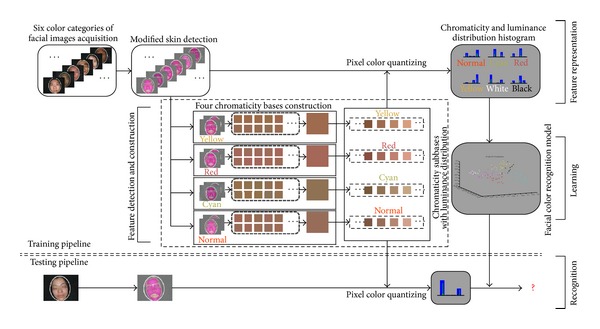
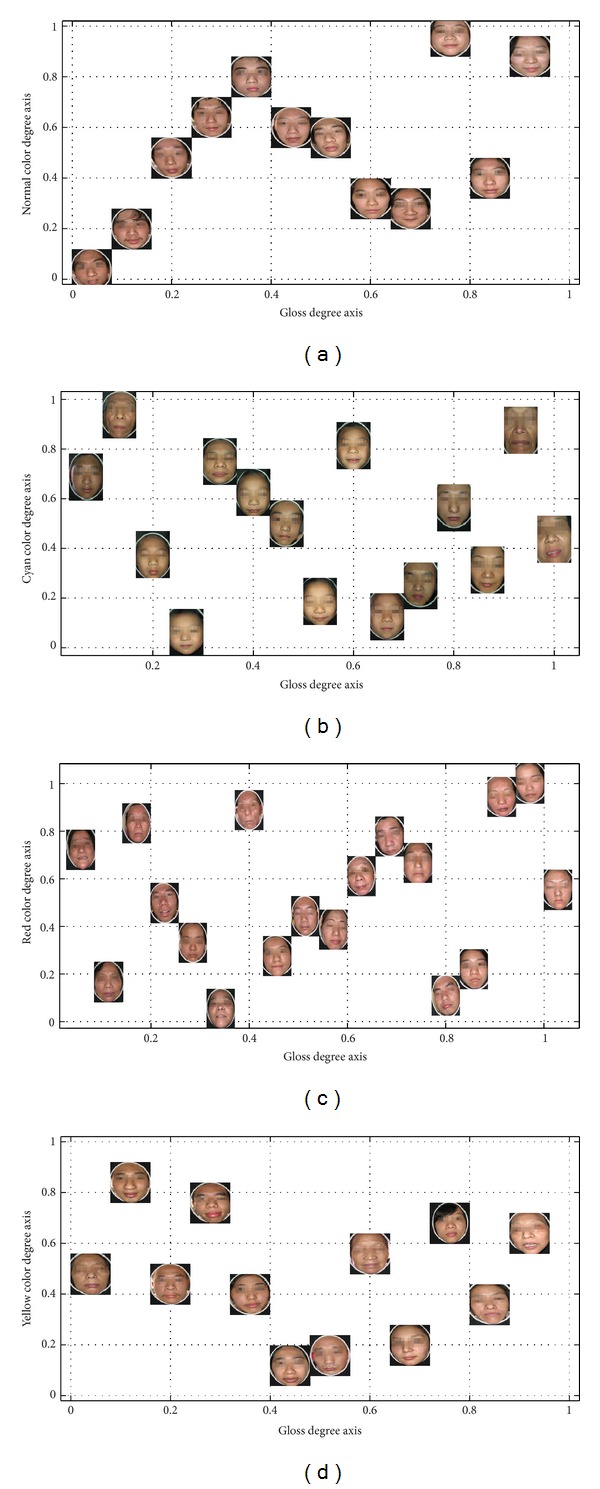
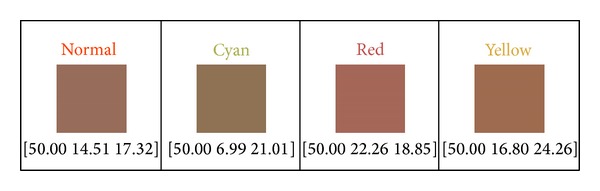
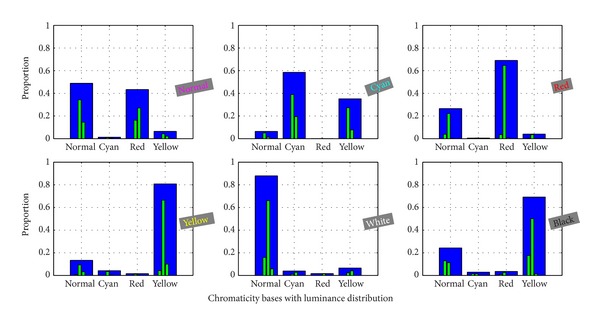
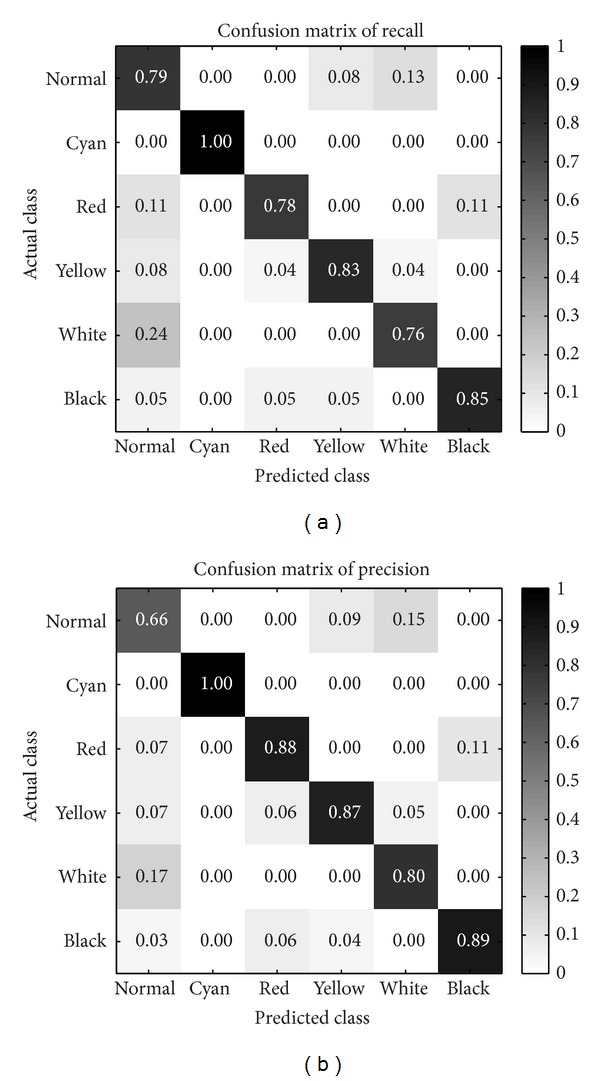
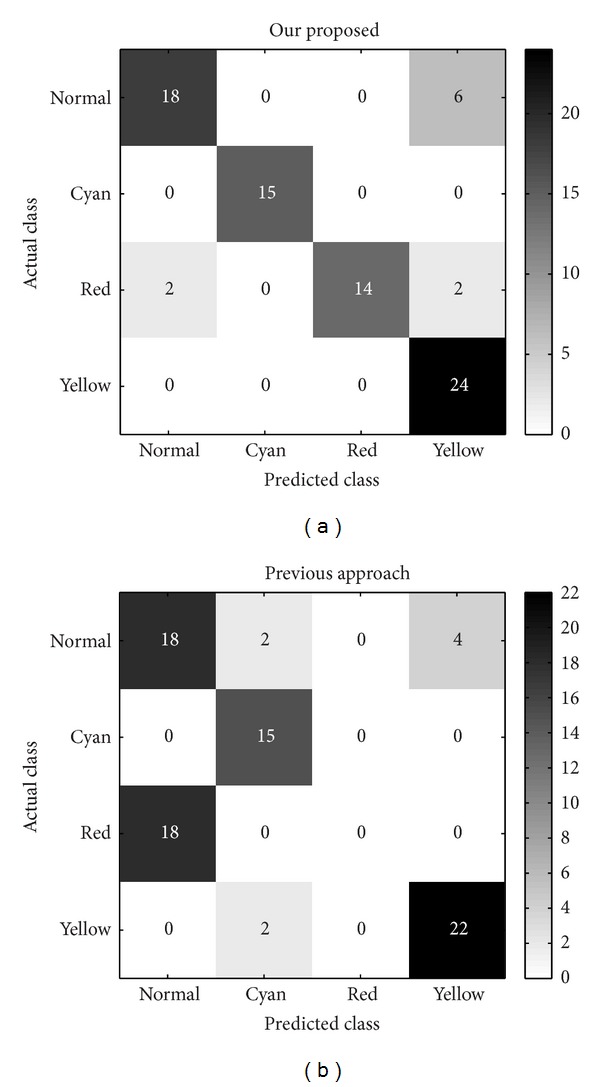
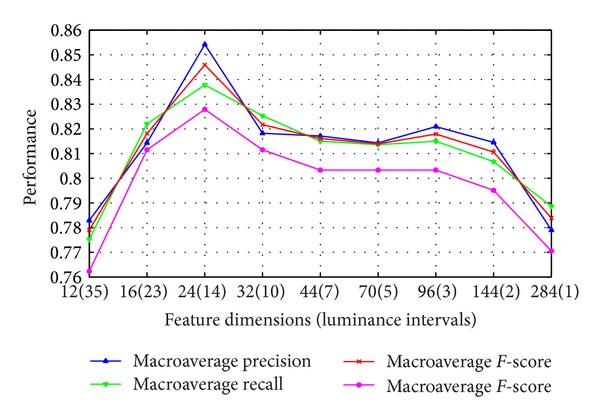
Facial diagnosis is an important and very intuitive diagnostic method in Traditional Chinese Medicine (TCM). However, due to its qualitative and experience-based subjective property, traditional facial diagnosis has a certain limitation in clinical medicine. The computerized inspection method provides classification models to recognize facial complexion (including color and gloss). However, the previous works only study the classification problems of facial complexion, which is considered as qualitative analysis in our perspective. For quantitative analysis expectation, the severity or degree of facial complexion has not been reported yet. This paper aims to make both qualitative and quantitative analysis for facial complexion. We propose a novel feature representation of facial complexion from the whole face of patients. The features are established with four chromaticity bases splitting up by luminance distribution on CIELAB color space. Chromaticity bases are constructed from facial dominant color using two-level clustering; the optimal luminance distribution is simply implemented with experimental comparisons. The features are proved to be more distinctive than the previous facial complexion feature representation. Complexion recognition proceeds by training an SVM classifier with the optimal model parameters. In addition, further improved features are more developed by the weighted fusion of five local regions. Extensive experimental results show that the proposed features achieve highest facial color recognition performance with a total accuracy of 86.89%. And, furthermore, the proposed recognition framework could analyze both color and gloss degrees of facial complexion by learning a ranking function.
面部诊断是中医中一种重要且非常直观的诊断方法。然而,由于其基于定性和经验的主观性,传统面部诊断在临床医学中存在一定局限性。计算机化检查方法提供了用于识别面部肤色(包括颜色和光泽)的分类模型。然而,先前的工作仅研究面部肤色的分类问题,从我们的角度来看,这被视为定性分析。对于定量分析的期望,面部肤色的严重程度或程度尚未见报道。本文旨在对面部肤色进行定性和定量分析。我们提出了一种从患者全脸提取的面部肤色的新颖特征表示。这些特征是通过在CIELAB颜色空间上根据亮度分布将四个色度基分开来建立的。色度基是使用两级聚类从面部主色调构建的;最佳亮度分布通过实验比较简单实现。事实证明,这些特征比以前的面部肤色特征表示更具特色。肤色识别通过使用最佳模型参数训练支持向量机分类器来进行。此外,通过五个局部区域的加权融合进一步开发了更优的特征。大量实验结果表明,所提出的特征实现了最高的面部颜色识别性能,总准确率达到86.89%。而且,所提出的识别框架可以通过学习排序函数来分析面部肤色的颜色和光泽度。