Jin Yucui, Xiong Anwen, Zhang Ziyu, Li Sanen, Huang Huijie, Yu Ting-ting, Cao Xiumei, Cheng Steven Y
Department of Developmental Genetics, School of Basic Medical Sciences, Nanjing Medical University, Nanjing, Jiangsu, China. These authors contributed equally to this work.
Department of Developmental Genetics, School of Basic Medical Sciences, Nanjing Medical University, Nanjing, Jiangsu, China. Department of Oncology, Changhai Hospital, Second Military Medical University, Shanghai, China. These authors contributed equally to this work.
Oncotarget. 2014 Jul 15;5(13):4821-33. doi: 10.18632/oncotarget.2043.
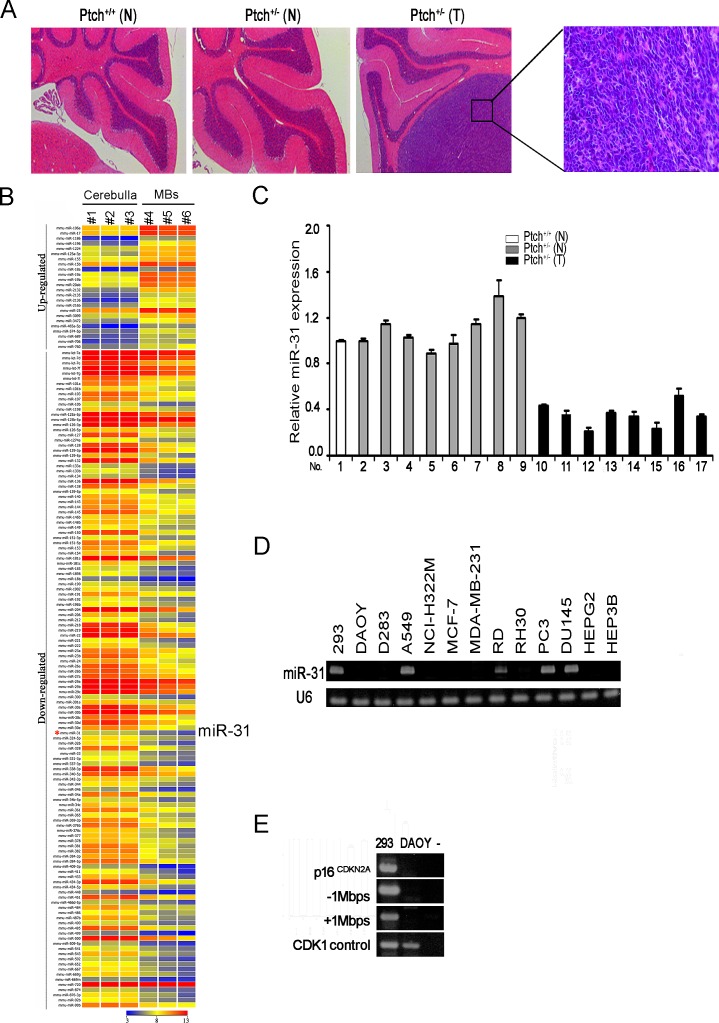
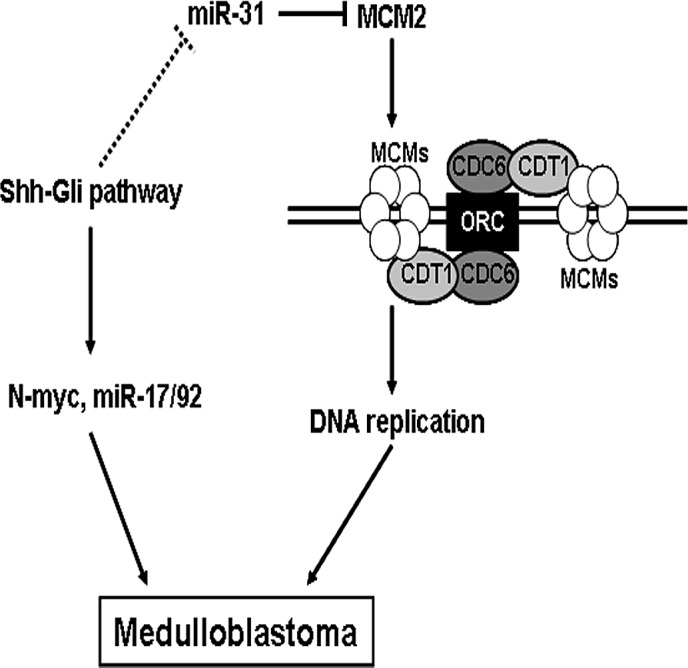
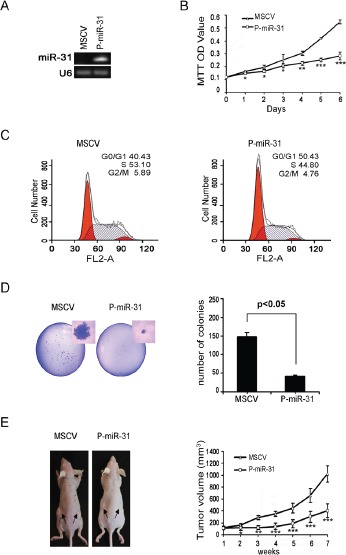
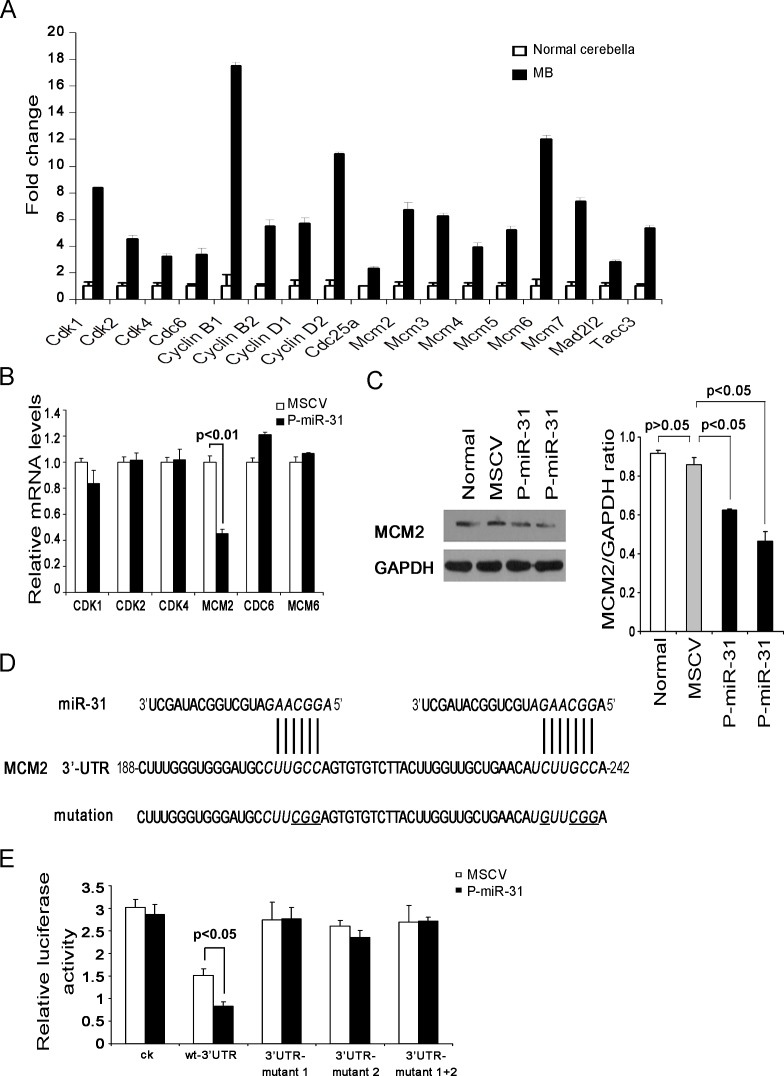
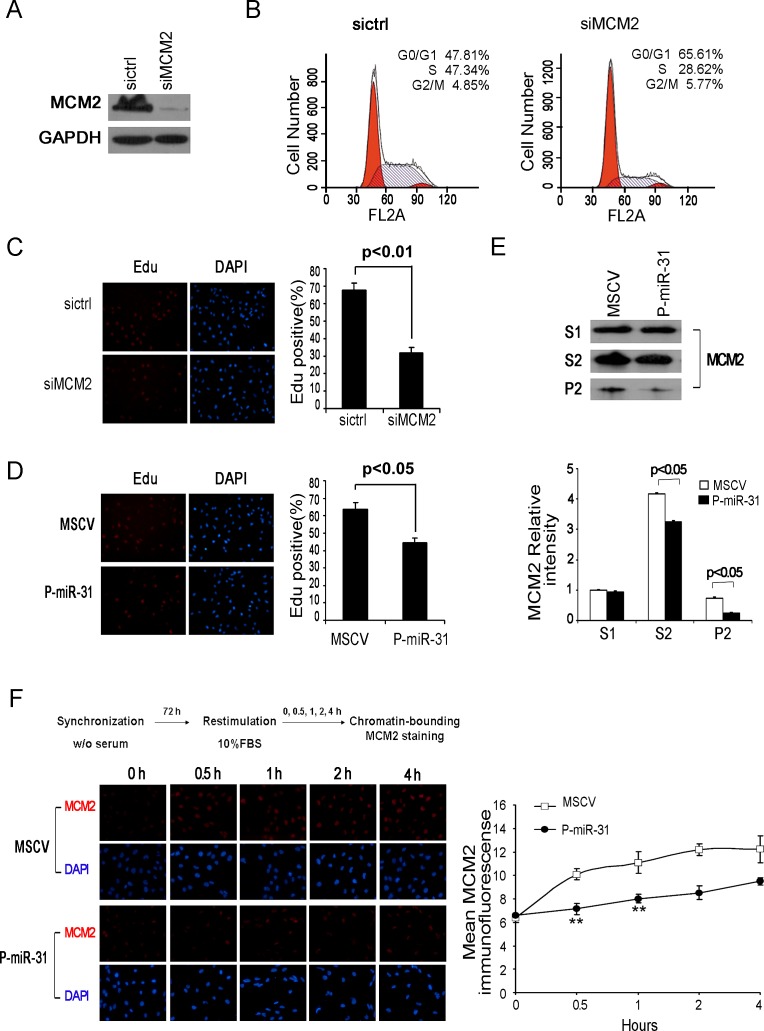
Medulloblastoma is an aggressive childhood brain tumor with poor prognosis. Recent studies indicate that dys-regulation of microRNA expression plays important roles in tumorigenesis. By comparing microRNA levels between mouse medulloblastoma and normal cerebellar tissues, we identified a set of down-regulated microRNAs including miR-31. Here, we show that the genomic region surrounding human miR-31 at 9p21.3 is frequently deleted in many solid tumor cell lines, and reintroducing miR-31 into DAOY cells, a line of human medulloblastoma cells devoid of miR-31, strongly suppresses cell growth, causes cell cycle arrest at the G1/S boundary, and inhibits colony formation in vitro and xenograft tumorigenesis in nude mice. Global gene expression profiling of mouse medulloblastomas and bioinformatics analyses of microRNA targets suggest that minichromosome maintenance complex component 2 (MCM2) is a likely target gene of miR-31 in suppressing cell growth. We demonstrate that miR-31 inhibits MCM2 expression via its 3'-untranslated region, that knockdown of MCM2 in DAOY cells leads to a degree of growth inhibition comparable to that by miR-31 restoration, and that overexpression of miR-31 reduces the chromatin loading of MCM2 at the point of G1/S transition. Taken together, these data indicate that miR-31 suppresses medulloblastoma tumorigenesis by negatively regulating DNA replication via MCM2.
髓母细胞瘤是一种侵袭性儿童脑肿瘤,预后较差。最近的研究表明,微小RNA表达失调在肿瘤发生中起重要作用。通过比较小鼠髓母细胞瘤和正常小脑组织之间的微小RNA水平,我们鉴定出一组下调的微小RNA,包括miR-31。在此,我们表明,在许多实体瘤细胞系中,位于9p21.3的人miR-31周围的基因组区域经常缺失,并且将miR-31重新引入缺乏miR-31的人髓母细胞瘤细胞系DAOY细胞中,可强烈抑制细胞生长,使细胞周期停滞在G1/S边界,并抑制体外集落形成和裸鼠体内异种移植瘤的发生。小鼠髓母细胞瘤的全基因组基因表达谱分析和微小RNA靶标的生物信息学分析表明,微型染色体维持复合体组分2(MCM2)可能是miR-31抑制细胞生长的靶基因。我们证明miR-31通过其3'-非翻译区抑制MCM2表达,在DAOY细胞中敲低MCM2导致的生长抑制程度与miR-31恢复相当,并且miR-31的过表达在G1/S转变点减少MCM2的染色质负载。综上所述,这些数据表明miR-31通过MCM2负调控DNA复制来抑制髓母细胞瘤的肿瘤发生。