Cheng Tao, Adepeju Monsuru
SpaceTimeLab, Department of Civil, Environmental and Geomatic Engineering, University College London, Gower Street, WC1E 6BT London, the United Kingdom.
PLoS One. 2014 Jun 27;9(6):e100465. doi: 10.1371/journal.pone.0100465. eCollection 2014.
When analytical techniques are used to understand and analyse geographical events, adjustments to the datasets (e.g. aggregation, zoning, segmentation etc.) in both the spatial and temporal dimensions are often carried out for various reasons. The 'Modifiable Areal Unit Problem' (MAUP), which is a consequence of adjustments in the spatial dimension, has been widely researched. However, its temporal counterpart is generally ignored, especially in space-time analysis.
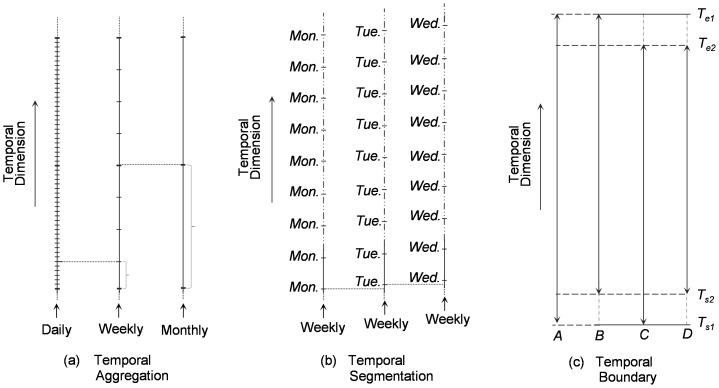
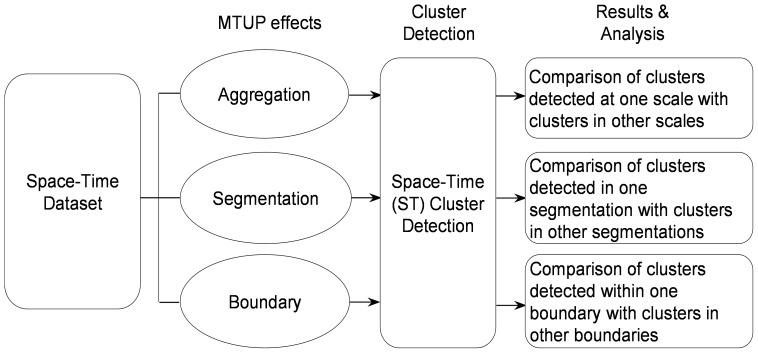
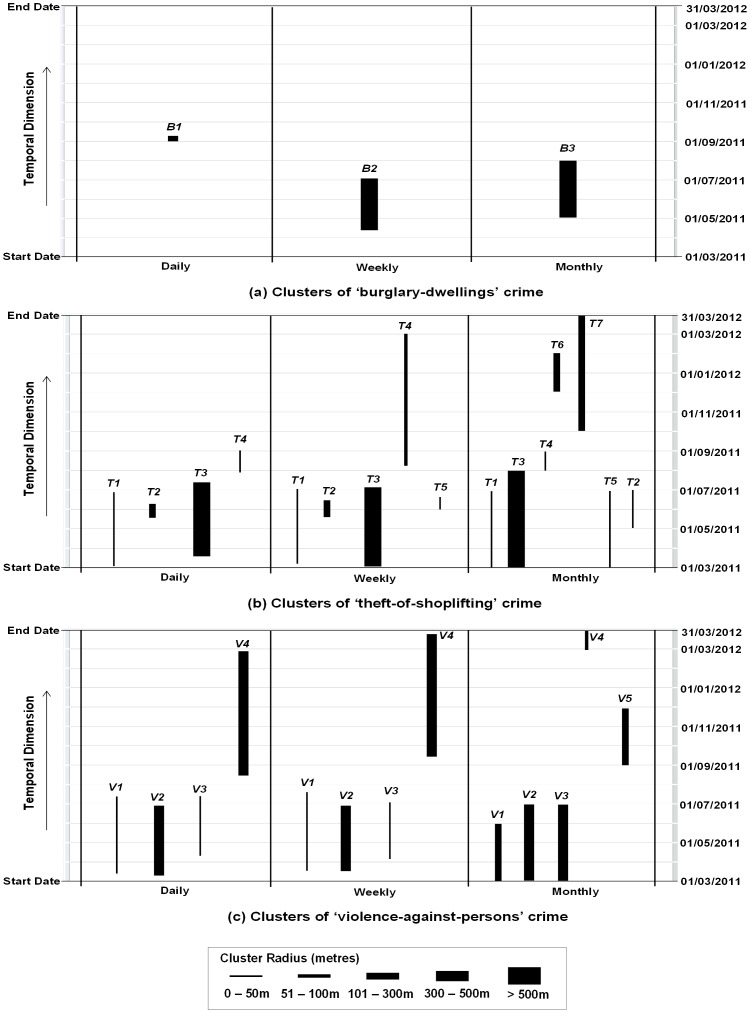
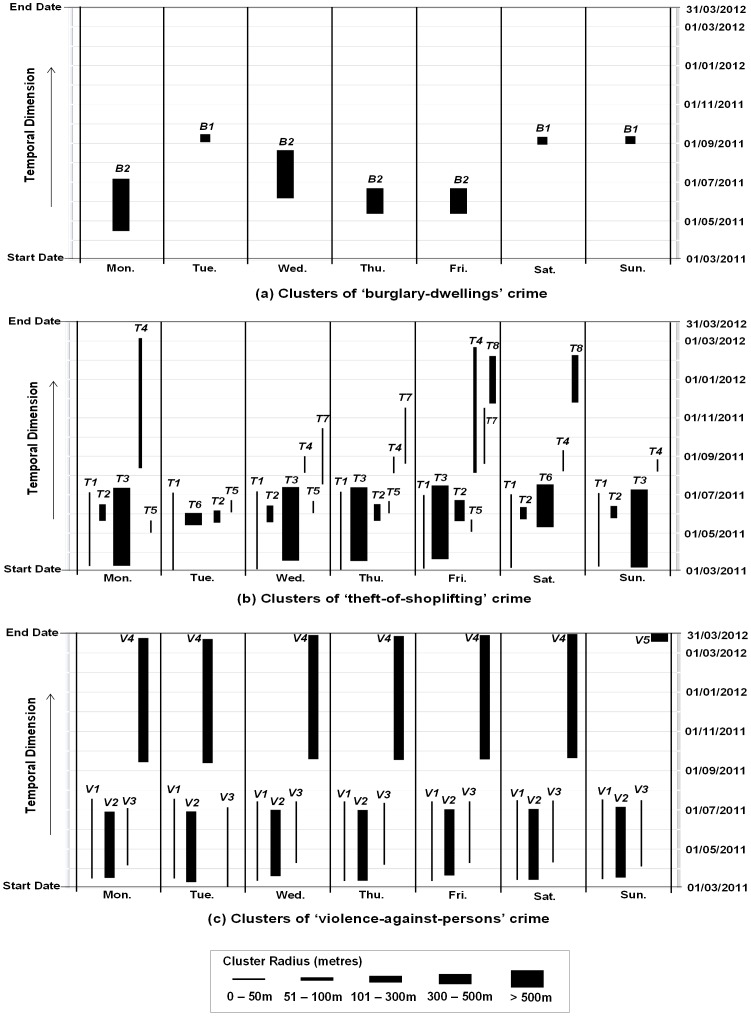
In analogy to MAUP, the Modifiable Temporal Unit Problem (MTUP) is defined as consisting of three temporal effects (aggregation, segmentation and boundary). The effects of MTUP on the detection of space-time clusters of crime datasets of Central London are examined using Space-Time Scan Statistics (STSS).
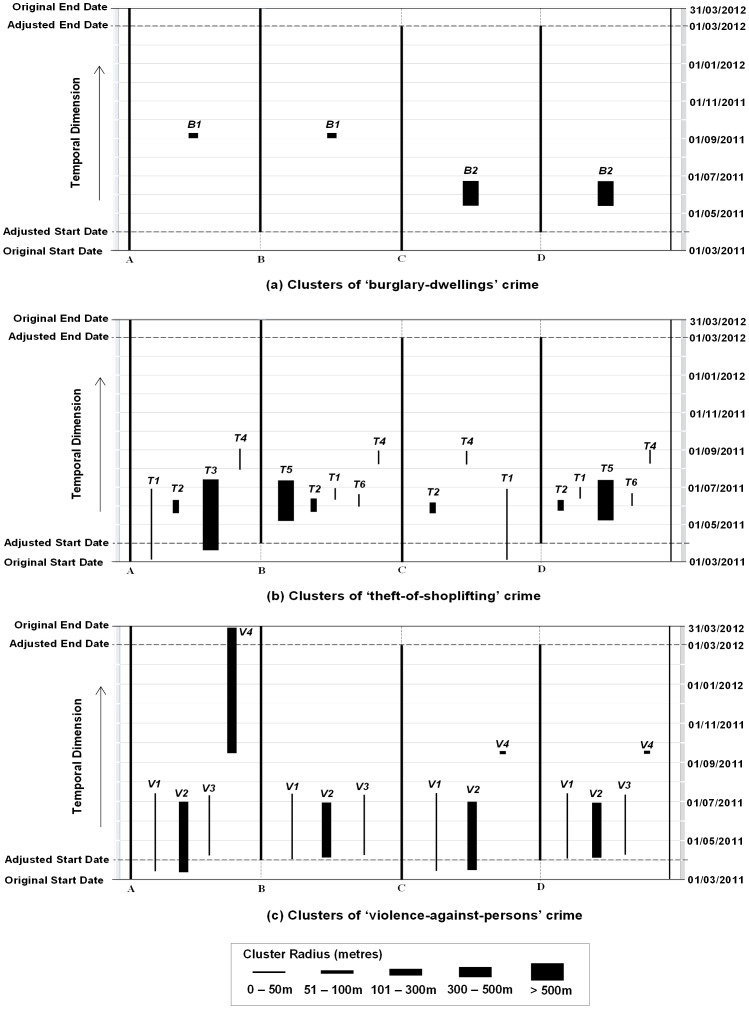
The case study reveals that MTUP has significant effects on the space-time clusters detected. The attributes of the clusters, i.e. temporal duration, spatial extent (size) and significance value (p-value), vary as the aggregation, segmentation and boundaries of the datasets change. Aggregation could be used to find the significant clusters much more quickly than at lower scales; segmentation could be used to understand the cyclic patterns of crime types. The consistencies of the clusters appearing at different temporal scales could help in identifying strong or 'true' clusters.
当使用分析技术来理解和分析地理事件时,出于各种原因,通常会在空间和时间维度上对数据集进行调整(例如聚合、分区、分割等)。“可变面积单元问题”(MAUP)是空间维度调整的结果,已得到广泛研究。然而,其时间对应物通常被忽视,尤其是在时空分析中。
类似于MAUP,可变时间单元问题(MTUP)被定义为由三种时间效应(聚合、分割和边界)组成。使用时空扫描统计(STSS)研究MTUP对伦敦市中心犯罪数据集时空聚类检测的影响。
案例研究表明,MTUP对检测到的时空聚类有显著影响。聚类的属性,即时间持续时间、空间范围(大小)和显著性值(p值),会随着数据集的聚合、分割和边界的变化而变化。聚合可以比在较低尺度上更快地找到显著聚类;分割可以用来理解犯罪类型的循环模式。在不同时间尺度上出现的聚类的一致性有助于识别强聚类或“真正”聚类。