Burri Andrea, Maercker Andreas
Department of Psychology, University of Zurich, Zurich, Switzerland.
BMC Res Notes. 2014 Jun 28;7:407. doi: 10.1186/1756-0500-7-407.
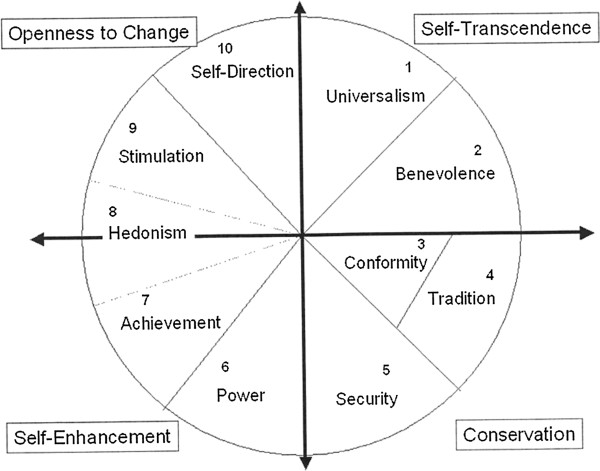
Guided by previous explorations of historical and cultural influences on the occurrence of PTSD, the aim of the present study was to investigate the contributions of war victimisation (in particular, World War II) and other civil trauma on the prevalence of PTSD, as mediated by cultural value orientation. Secondary data analysis was performed for 12 European countries using data, including PTSD prevalence and number of war victims, crime victims, and natural disaster victims, from different sources. Ten single value orientations, as well as value aggregates for traditional and modern factors, were investigated.
Whilst differences in PTSD prevalence were strongly associated with war victim rates, associations, albeit weaker, were also found between crime victims and PTSD. When cultural value orientations, such as stimulation and conformity as representatives of modern and traditional values, were included in the multivariate predictions of PTSD prevalence, an average of approximately 80% of PTSD variance could be explained by the model, independent of the type of trauma exposure.
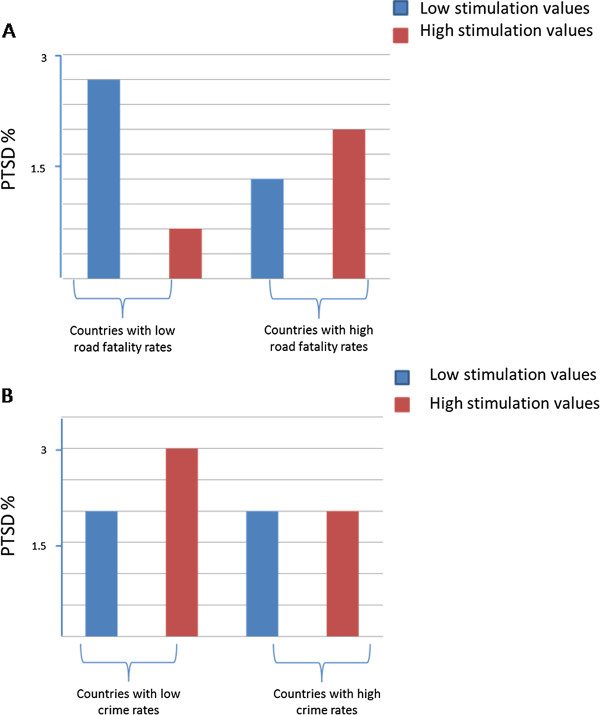
The results suggest that the aftermath of war contributes to current PTSD prevalence, which may be explained by the high proportion of the older population who directly or indirectly experienced traumatic war experiences. Additional findings for other types of civil trauma point towards an interaction between value orientation and country-specific trauma rates. Particularly, being personally oriented towards stimulation appears to interact with differences in trauma prevalence. Thus, cultural value orientation might be viewed not only as an individual intrinsic process but also as a compensatory strategy after trauma exposure.
在前人对历史文化影响创伤后应激障碍(PTSD)发生情况的探索指导下,本研究旨在调查战争受害经历(特别是第二次世界大战)及其他民间创伤事件,通过文化价值取向的介导作用,对PTSD患病率的影响。利用来自不同渠道的数据,对12个欧洲国家进行了二次数据分析,这些数据包括PTSD患病率以及战争受害者、犯罪受害者和自然灾害受害者的数量。研究了十种单一价值取向以及传统和现代因素的价值总和。
虽然PTSD患病率的差异与战争受害率密切相关,但在犯罪受害者与PTSD之间也发现了关联,尽管这种关联较弱。当将诸如刺激和从众等代表现代和传统价值观的文化价值取向纳入PTSD患病率的多变量预测模型时,无论创伤暴露类型如何,该模型平均可解释约80%的PTSD方差。
研究结果表明,战争后果导致了当前PTSD的患病率,这可能是由于直接或间接经历过战争创伤的老年人口比例较高所致。关于其他类型民间创伤的额外研究结果表明,价值取向与特定国家的创伤发生率之间存在相互作用。特别是,个人对刺激的取向似乎与创伤患病率的差异相互作用。因此,文化价值取向不仅可以被视为一种个体内在过程,也可以被视为创伤暴露后的一种补偿策略。