Ravikumar Madhumitha, Sunil Smrithi, Black James, Barkauskas Deborah S, Haung Alex Y, Miller Robert H, Selkirk Stephen M, Capadona Jeffrey R
Department of Biomedical Engineering, Case Western Reserve University, School of Engineering, 2071 Martin Luther King Jr. Drive, Wickenden Bldg, Cleveland OH 44106, USA; Louis Stokes Cleveland Veterans Affairs Medical Center, Rehabilitation Research and Development, Spinal Cord Injury Division, 10701 East Blvd. Mail Stop 151 AW/APT, Cleveland OH 44106, USA.
Department of Biomedical Engineering, Case Western Reserve University, School of Engineering, 2071 Martin Luther King Jr. Drive, Wickenden Bldg, Cleveland OH 44106, USA.
Biomaterials. 2014 Sep;35(28):8049-64. doi: 10.1016/j.biomaterials.2014.05.084. Epub 2014 Jun 24.
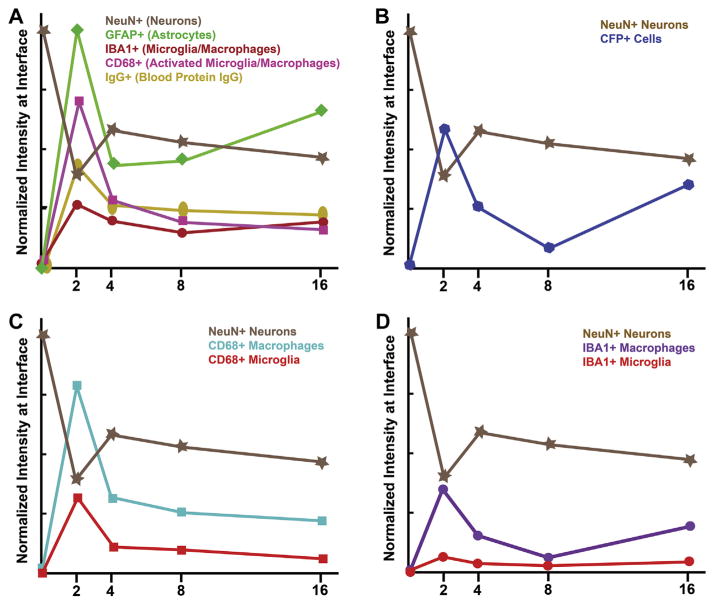
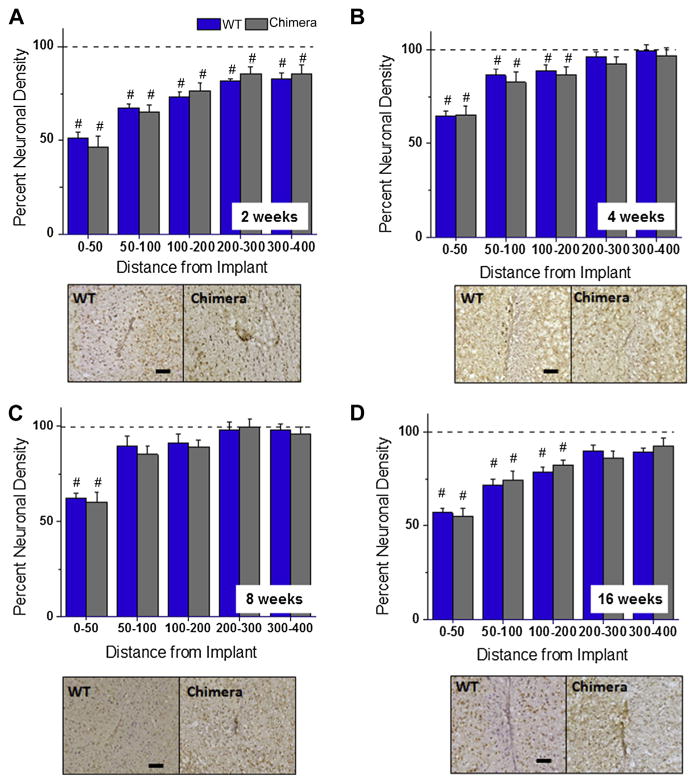
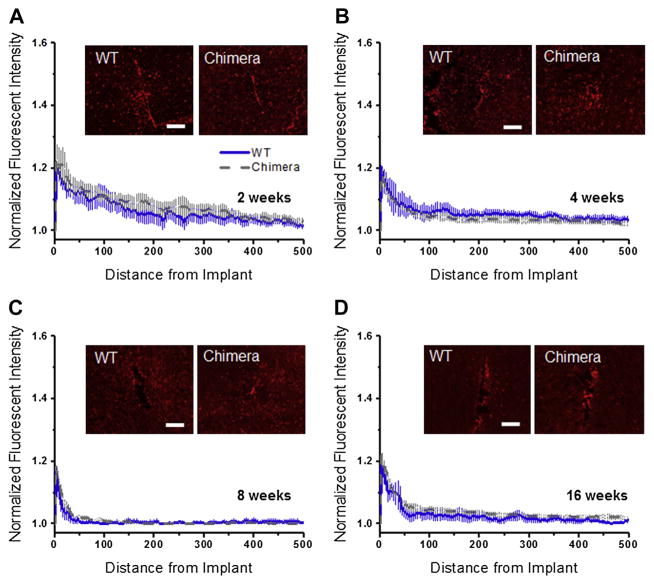
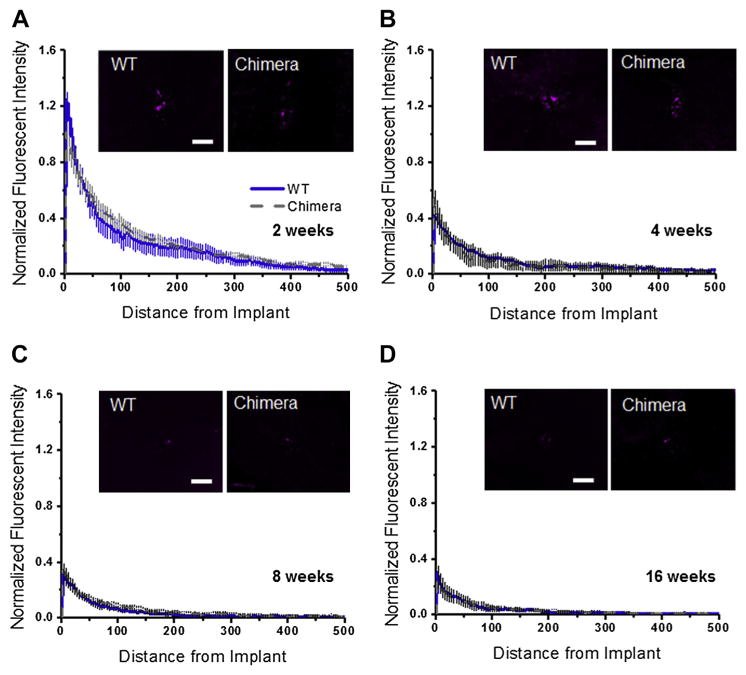
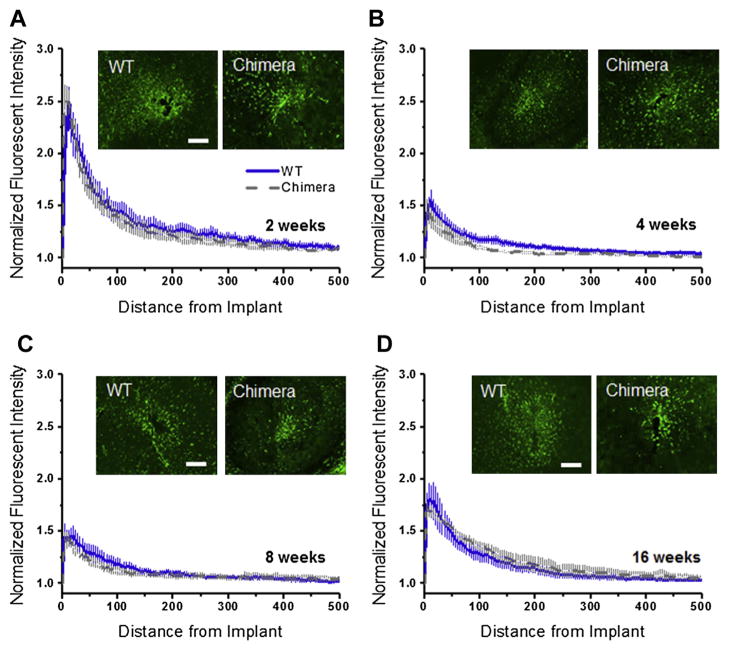
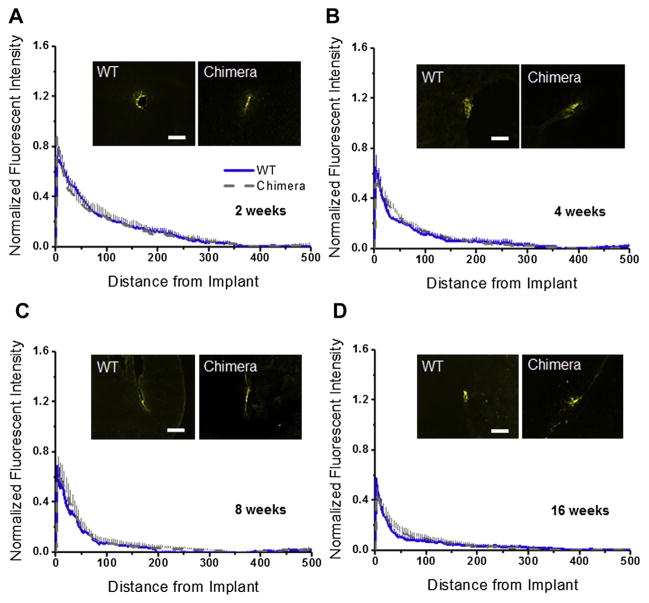
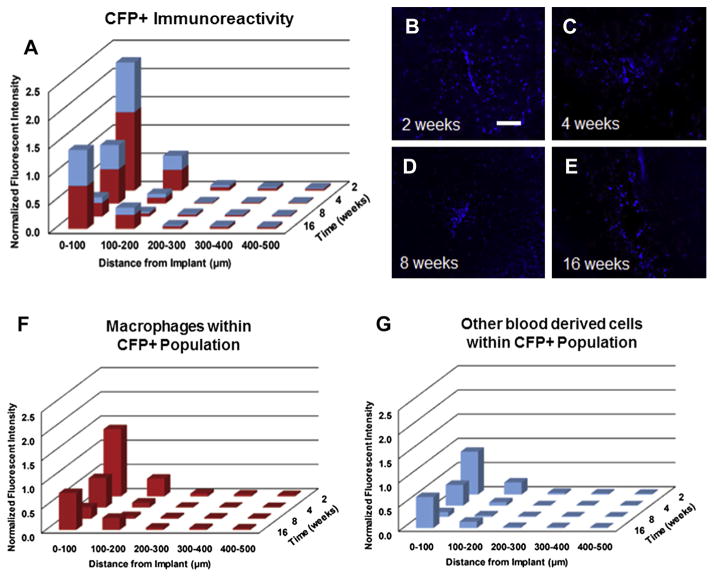
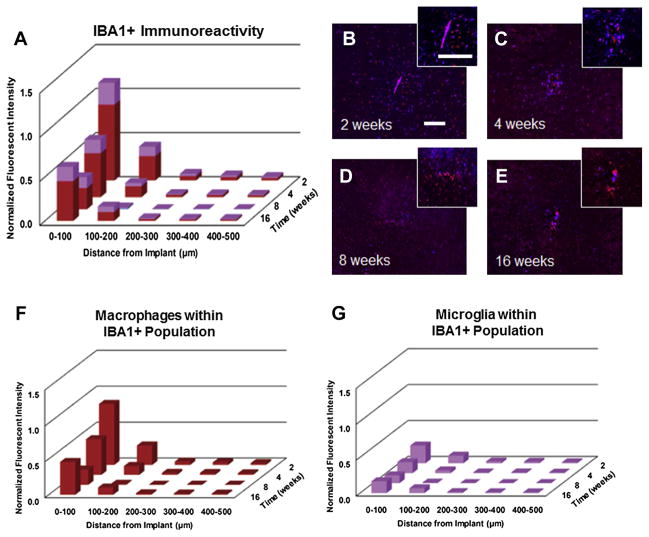
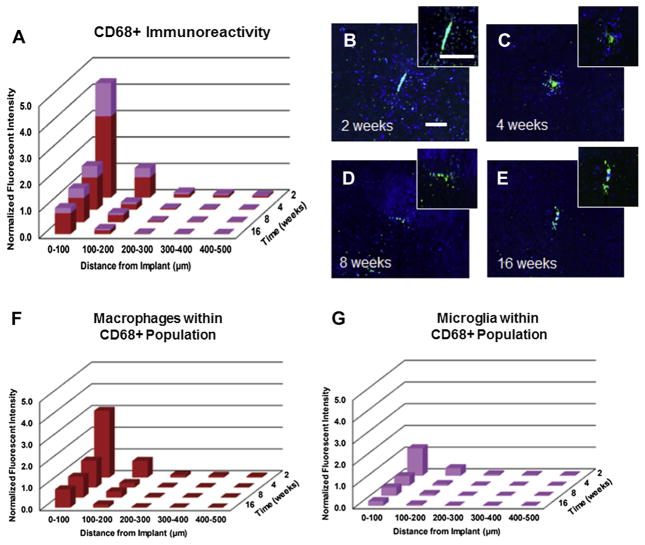
Resident microglia and blood-borne macrophages have both been implicated to play a dominant role in mediating the neuroinflammatory response affecting implanted intracortical microelectrodes. However, the distinction between each cell type has not been demonstrated due to a lack of discriminating cellular markers. Understanding the subtle differences of each cell population in mediating neuroinflammation can aid in determining the appropriate therapeutic approaches to improve microelectrode performance. Therefore, the goal of this study is to characterize the role of infiltrating blood-derived cells, specifically macrophages, in mediating neuroinflammation following intracortical microelectrode implantation. Interestingly, we found no correlation between microglia and neuron populations at the microelectrode-tissue interface. On the other hand, blood-borne macrophages consistently dominated the infiltrating cell population following microelectrode implantation. Most importantly, we found a correlation between increased populations of blood-derived cells (including the total macrophage population) and neuron loss at the microelectrode-tissue interface. Specifically, the total macrophage population was greatest at two and sixteen weeks post implantation, at the same time points when we observed the lowest densities of neuronal survival in closest proximity to the implant. Together, our results suggest a dominant role of infiltrating macrophages, and not resident microglia, in mediating neurodegeneration following microelectrode implantation.
驻留小胶质细胞和血源性巨噬细胞均被认为在介导影响植入皮层内微电极的神经炎症反应中起主导作用。然而,由于缺乏区分性的细胞标志物,尚未证实每种细胞类型之间的区别。了解每个细胞群体在介导神经炎症中的细微差异有助于确定改善微电极性能的适当治疗方法。因此,本研究的目的是表征浸润的血源性细胞,特别是巨噬细胞,在皮层内微电极植入后介导神经炎症中的作用。有趣的是,我们发现在微电极-组织界面处小胶质细胞和神经元群体之间没有相关性。另一方面,血源性巨噬细胞在微电极植入后始终在浸润细胞群体中占主导地位。最重要的是,我们发现在微电极-组织界面处血源性细胞(包括巨噬细胞总数)的增加与神经元损失之间存在相关性。具体而言,巨噬细胞总数在植入后两周和十六周时最大,而在同一时间点,我们观察到最接近植入物的神经元存活率最低。总之,我们的结果表明,浸润的巨噬细胞而非驻留小胶质细胞在微电极植入后介导神经退行性变中起主导作用。