Kishi C, Amano H, Suzue K, Ishikawa O
Department of Dermatology, Gunma University Graduate School of Medicine, Maebashi, Gunma, Japan.
Allergy. 2014 Oct;69(10):1412-9. doi: 10.1111/all.12472. Epub 2014 Aug 18.
Atopic diseases are more prevalent in industrialized countries than in developing countries. In addition, significant differences in the prevalence of allergic diseases are observed between rural and urban areas within the same country. This difference in prevalence has been attributed to what is called the 'hygiene hypothesis'. Although parasitic infections are known to protect against allergic reactions, the mechanism is still unknown. The aim of this study was to investigate whether or not malarial infections can inhibit atopic dermatitis (AD)-like skin lesions in a mouse model of AD.
We used NC/Nga mice which are a model for AD. The NC/Nga mice were intraperitoneally infected with 1 × 10(5) Plasmoduim berghei (Pb) XAT-infected erythrocytes.
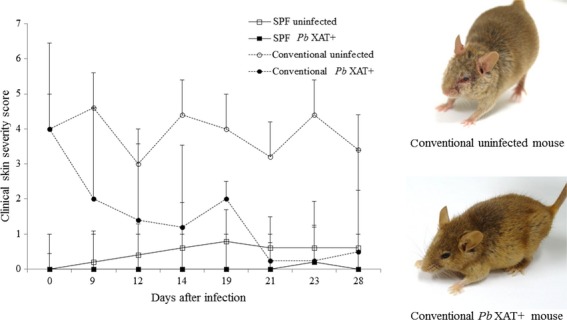
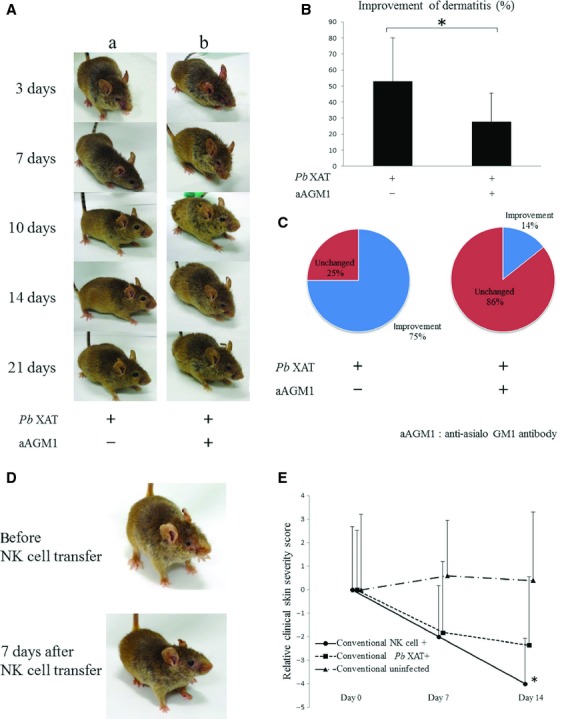
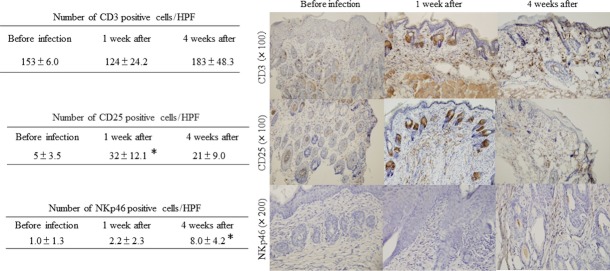
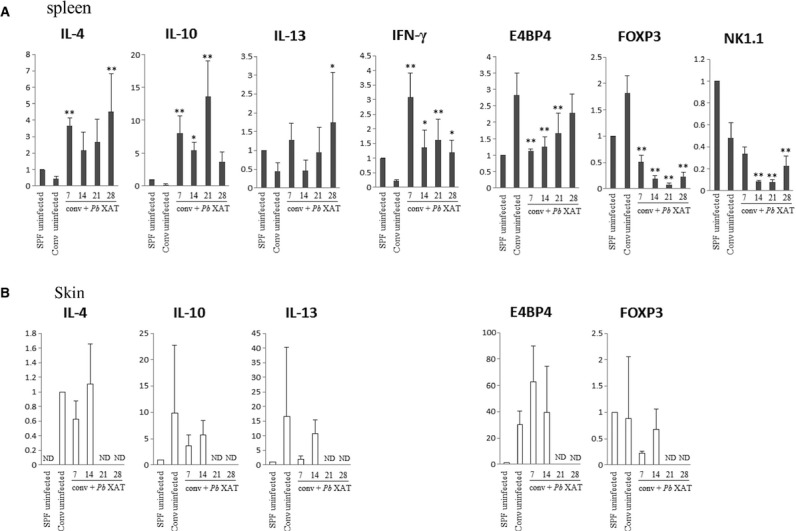
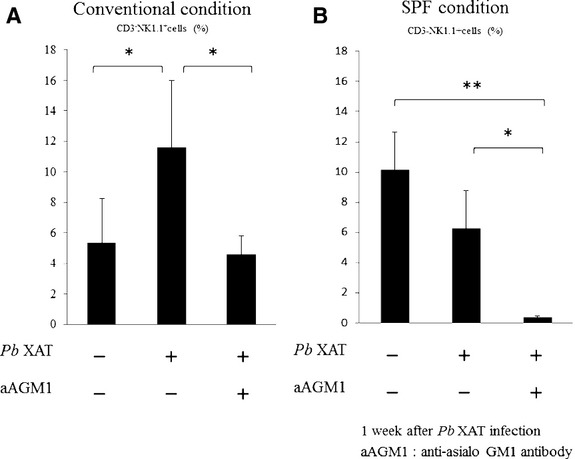
Malarial infections ameliorated AD-like skin lesions in the NC/Nga mice. This improvement was blocked by the administration of anti-asialo GM1 antibodies, which are anti-natural killer (NK) cells. Additionally, adoptive transfer of NK cells markedly improved AD-like skin lesions in conventional NC/Nga mice; these suggest that the novel protective mechanism associated with malaria parasitic infections is at least, in part, dependent on NK cells.
We have experimentally demonstrated for the first time that malarial infections ameliorated AD-like skin lesions in a mouse model of AD. Our study could explain in part the mechanism of the 'hygiene hypothesis', which states that parasitic infections can inhibit the development of allergic diseases.
过敏性疾病在工业化国家比在发展中国家更为普遍。此外,在同一个国家内,农村和城市地区的过敏性疾病患病率也存在显著差异。这种患病率的差异被归因于所谓的“卫生假说”。虽然已知寄生虫感染可预防过敏反应,但其机制仍不清楚。本研究的目的是调查疟原虫感染是否能在特应性皮炎(AD)小鼠模型中抑制类AD皮肤损伤。
我们使用NC/Nga小鼠作为AD模型。将1×10⁵ 感染伯氏疟原虫(Pb)XAT的红细胞腹腔注射到NC/Nga小鼠体内。
疟原虫感染改善了NC/Nga小鼠的类AD皮肤损伤。这种改善被抗去唾液酸GM1抗体(抗自然杀伤(NK)细胞抗体)的给药所阻断。此外,NK细胞的过继转移显著改善了常规NC/Nga小鼠的类AD皮肤损伤;这些结果表明,与疟原虫感染相关的新的保护机制至少部分依赖于NK细胞。
我们首次通过实验证明,疟原虫感染可改善AD小鼠模型中的类AD皮肤损伤。我们的研究可以部分解释“卫生假说”的机制,该假说认为寄生虫感染可抑制过敏性疾病的发展。