Badding Melissa A, Fix Natalie R, Antonini James M, Leonard Stephen S
Health Effects Laboratory Division, National Institute for Occupational Safety and Health, Morgantown, West Virginia, United States of America.
PLoS One. 2014 Jun 30;9(6):e101310. doi: 10.1371/journal.pone.0101310. eCollection 2014.
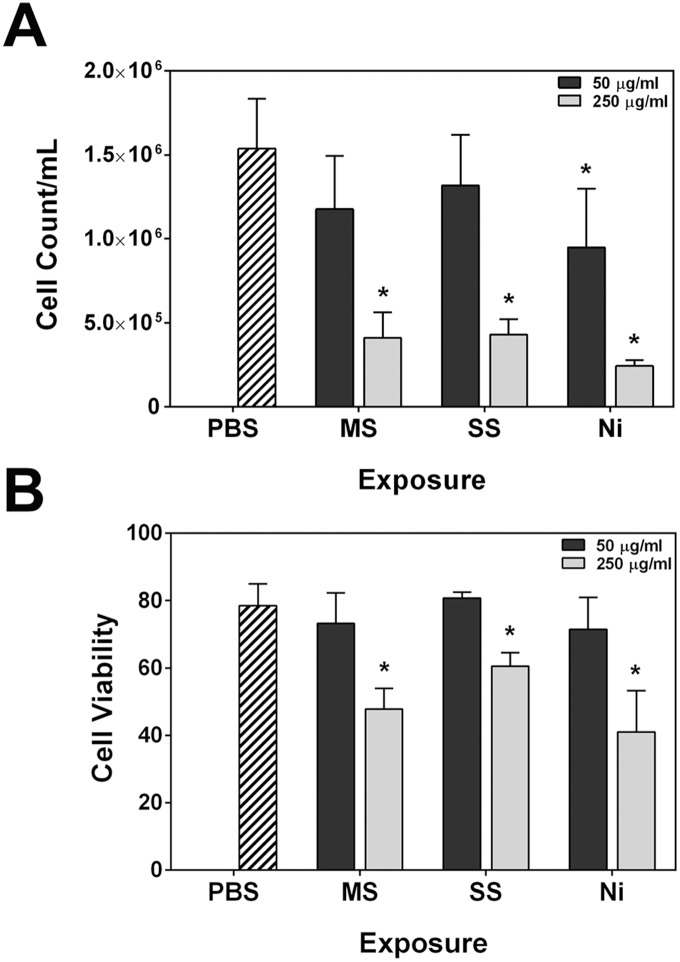
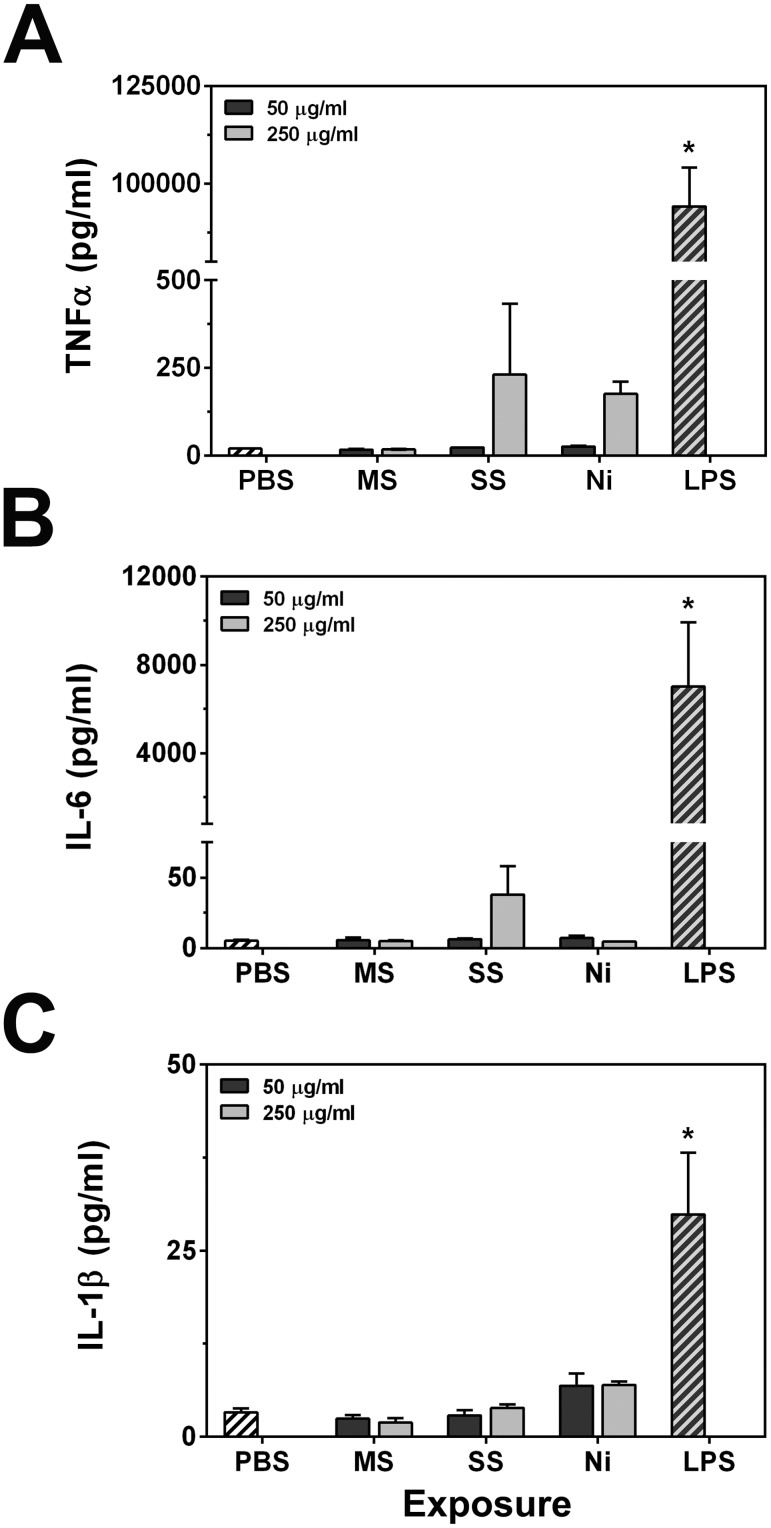
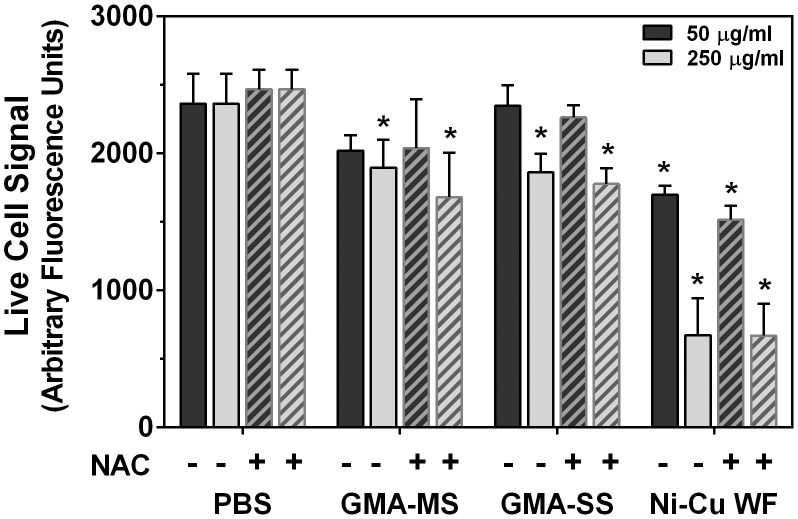
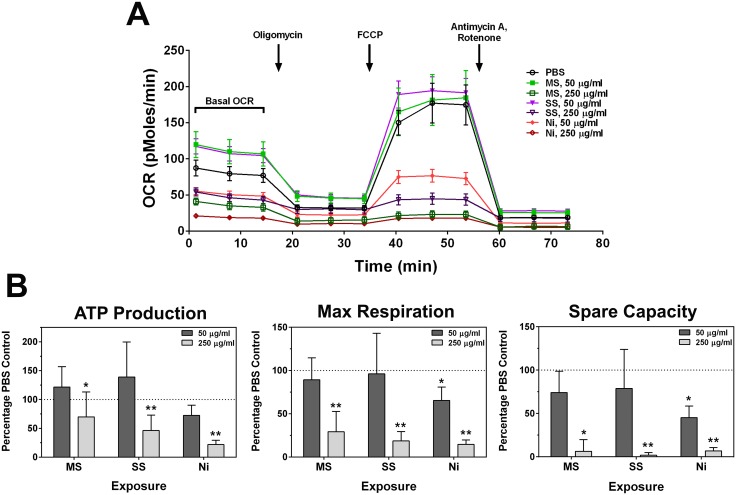
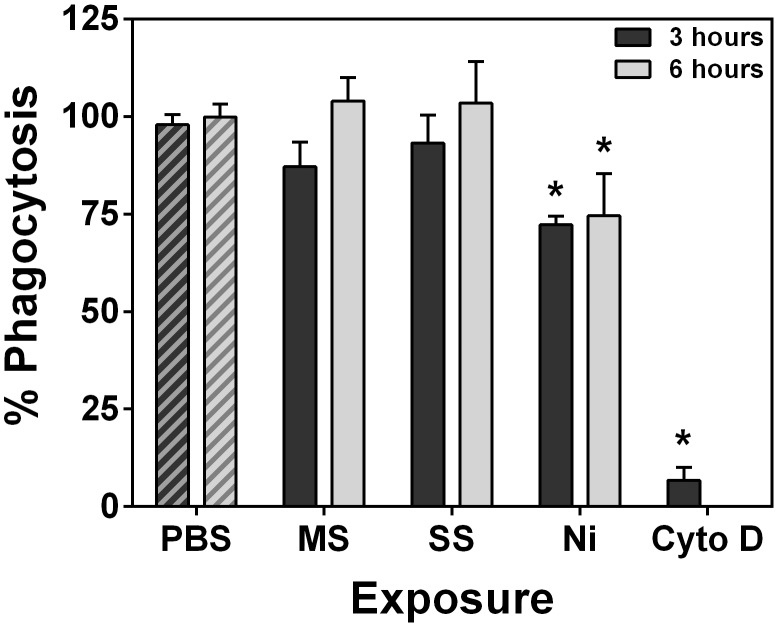
Welding processes that generate fumes containing toxic metals, such as hexavalent chromium (Cr(VI)), manganese (Mn), and nickel (Ni), have been implicated in lung injury, inflammation, and lung tumor promotion in animal models. While federal regulations have reduced permissible worker exposure limits to Cr(VI), this is not always practical considering that welders may work in confined spaces and exhaust ventilation may be ineffective. Thus, there has been a recent initiative to minimize the potentially hazardous components in welding materials by developing new consumables containing much less Cr(VI) and Mn. A new nickel (Ni) and copper (Cu)-based material (Ni-Cu WF) is being suggested as a safer alternative to stainless steel consumables; however, its adverse cellular effects have not been studied. This study compared the cytotoxic effects of the newly developed Ni-Cu WF with two well-characterized welding fumes, collected from gas metal arc welding using mild steel (GMA-MS) or stainless steel (GMA-SS) electrodes. RAW 264.7 mouse macrophages were exposed to the three welding fumes at two doses (50 µg/ml and 250 µg/ml) for up to 24 hours. Cell viability, reactive oxygen species (ROS) production, phagocytic function, and cytokine production were examined. The GMA-MS and GMA-SS samples were found to be more reactive in terms of ROS production compared to the Ni-Cu WF. However, the fumes from this new material were more cytotoxic, inducing cell death and mitochondrial dysfunction at a lower dose. Additionally, pre-treatment with Ni-Cu WF particles impaired the ability of cells to phagocytize E. coli, suggesting macrophage dysfunction. Thus, the toxic cellular responses to welding fumes are largely due to the metal composition. The results also suggest that reducing Cr(VI) and Mn in the generated fume by increasing the concentration of other metals (e.g., Ni, Cu) may not necessarily improve welder safety.
产生含有有毒金属烟雾的焊接工艺,如六价铬(Cr(VI))、锰(Mn)和镍(Ni),在动物模型中与肺损伤、炎症及肺肿瘤的促进有关。虽然联邦法规已经降低了工人对Cr(VI)的允许接触限值,但考虑到焊工可能在密闭空间工作且排气通风可能无效,这并不总是可行的。因此,最近有一项倡议,即通过开发含Cr(VI)和Mn少得多的新型焊接材料,将焊接材料中潜在的有害成分降至最低。一种新的镍(Ni)和铜(Cu)基材料(Ni-Cu WF)被提议作为不锈钢焊接材料的更安全替代品;然而,其对细胞的不良影响尚未得到研究。本研究将新开发的Ni-Cu WF与两种特性明确的焊接烟雾的细胞毒性作用进行了比较,这两种焊接烟雾分别来自使用低碳钢(GMA-MS)或不锈钢(GMA-SS)电极的气体保护金属电弧焊。将RAW 264.7小鼠巨噬细胞以两种剂量(50 µg/ml和250 µg/ml)暴露于这三种焊接烟雾中长达24小时。检测细胞活力、活性氧(ROS)生成、吞噬功能和细胞因子生成。与Ni-Cu WF相比,发现GMA-MS和GMA-SS样品在ROS生成方面更具反应性。然而,这种新材料产生的烟雾细胞毒性更强,在较低剂量下即可诱导细胞死亡和线粒体功能障碍。此外,用Ni-Cu WF颗粒预处理会损害细胞吞噬大肠杆菌的能力,提示巨噬细胞功能障碍。因此,对焊接烟雾的毒性细胞反应很大程度上归因于金属成分。结果还表明,通过增加其他金属(如Ni、Cu)的浓度来降低生成烟雾中的Cr(VI)和Mn,不一定能提高焊工的安全性。