Li Changsheng, Liu Sufang, Xing Ying, Tao Feng
From the College of Basic Medicine, Zhengzhou University, Zhengzhou, Henan, China; Department of Anesthesiology and Critical Care Medicine, Johns Hopkins University School of Medicine, Baltimore, Maryland; College of Basic Medicine, Xinxiang Medical University, Xinxiang, Henan, China; Department of Biomedical Sciences, Texas A&M University Baylor College of Dentistry, Dallas, Texas.
Anesth Analg. 2014 Aug;119(2):413-419. doi: 10.1213/ANE.0000000000000315.
Previous studies have shown that exposure to inhaled anesthetics can cause cognitive dysfunction, suggesting that general anesthesia might be a risk factor for the development of Alzheimer disease. However, the underlying mechanisms remain to be elucidated. In the present study, we tested our hypothesis that enhanced tau protein phosphorylation in hippocampus contributes to isoflurane-induced cognitive dysfunction in a mouse model of Alzheimer disease.
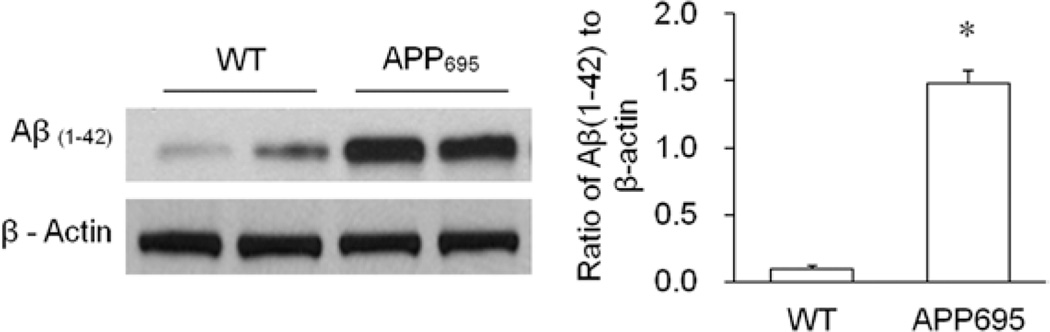
Fifty-four male wild-type (WT) mice (12 months old) and 54 male amyloid precursor protein 695 (APP695) mice (12 months old) were either anesthetized for 4 hours with 1.0 minimum alveolar concentration isoflurane or sham-anesthetized (control). Learning and memory behaviors were measured using the Morris Water Maze test for mice. Phosphorylation of hippocampal tau protein at Ser262 site was analyzed with quantitative Western blotting.
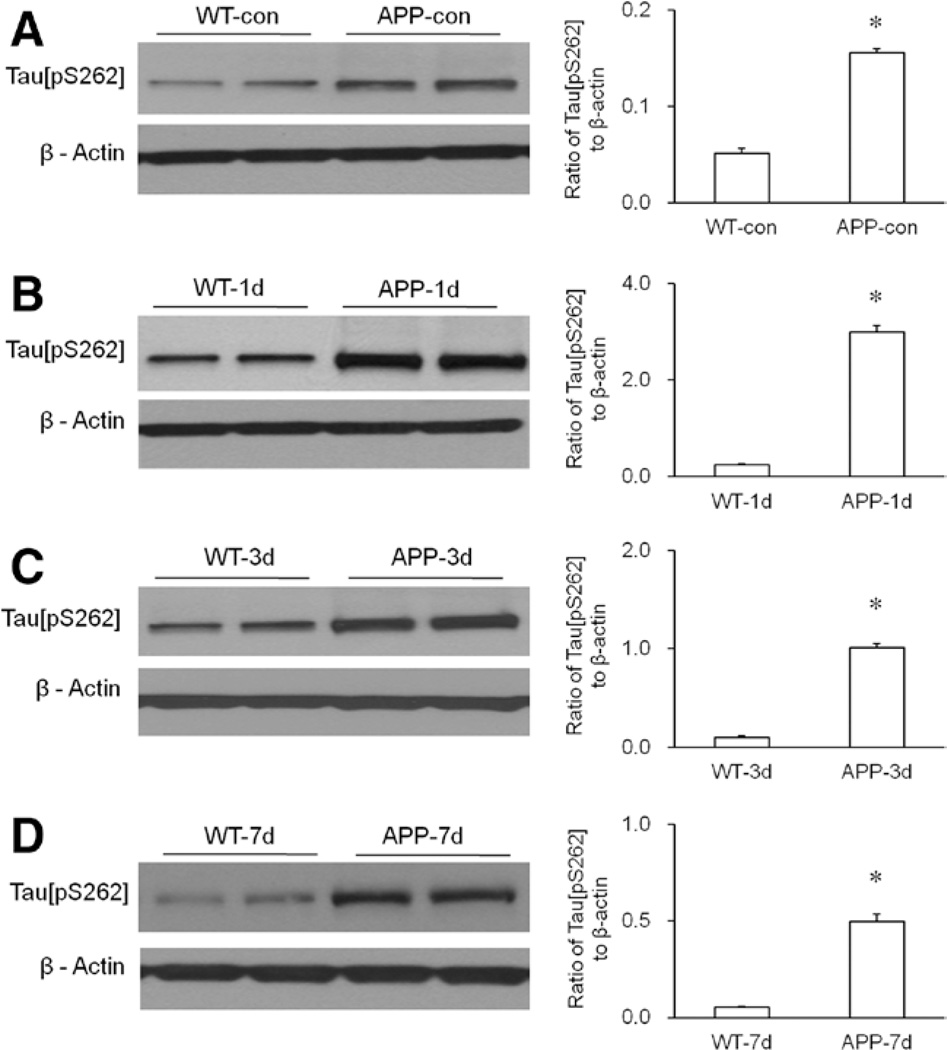
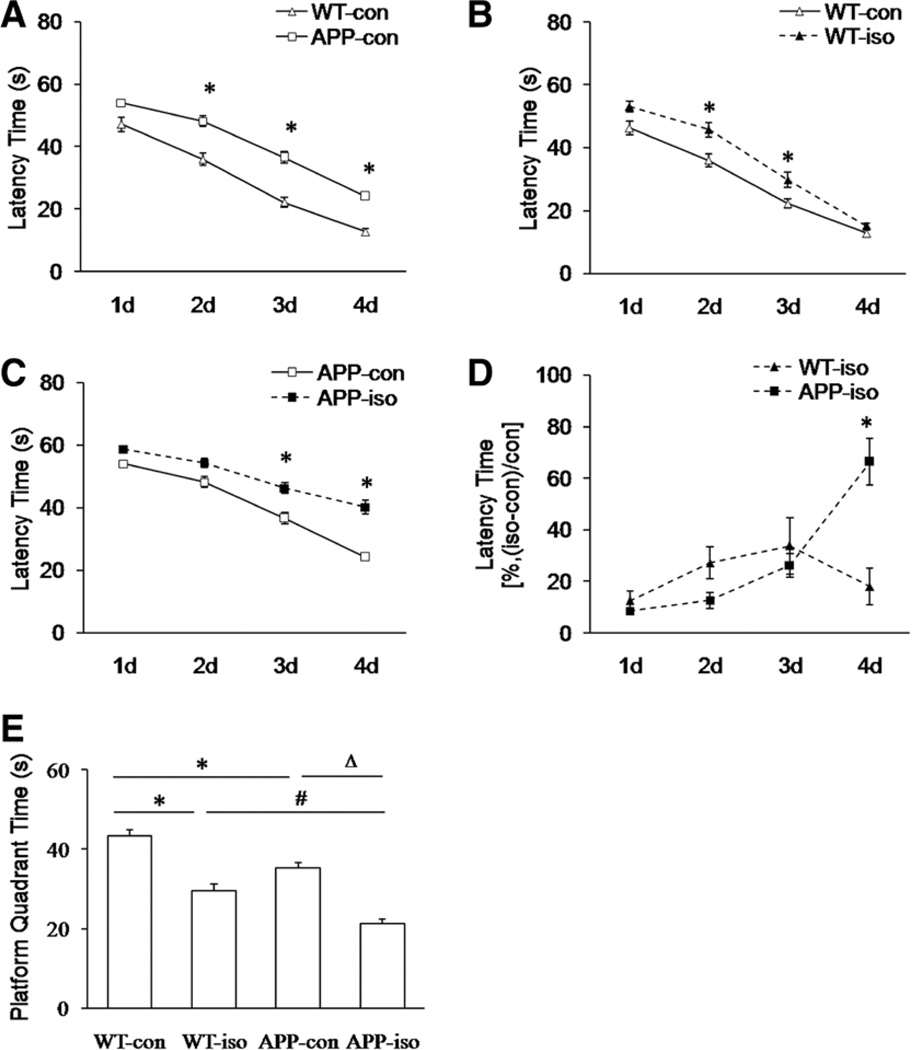
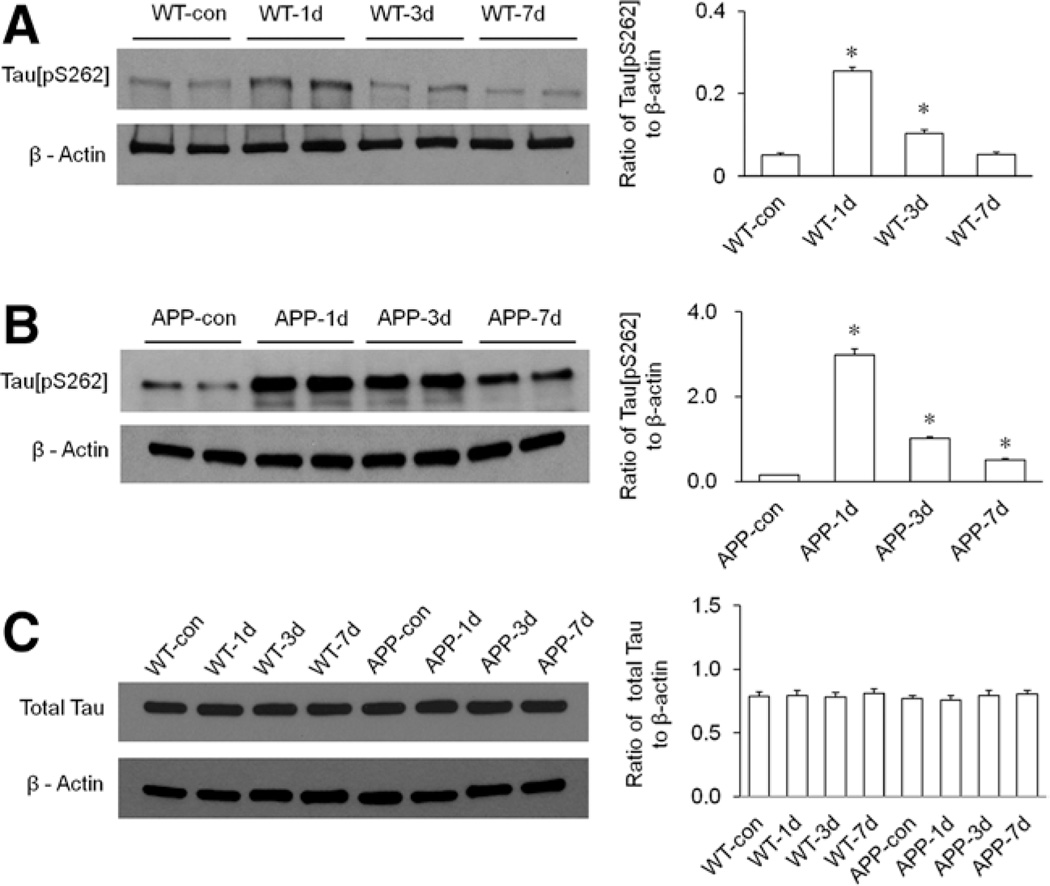
In the Morris Water Maze test, both WT and transgenic APP695 mice showed decreased latency times during a 4-day training period. Isoflurane exposure significantly increased the latency times on days 2 and 3 in WT mice as well as on days 3 and 4 in APP695 mice (WT: P = 0.005 for day 2 and P = 0.002 for day 3; APP695: P = 0.001 for day 3 and P < 0.0001 for day 4) and reduced platform quadrant times (WT: P < 0.0001; APP695: P < 0.0001) in both types of mice. Compared with WT mice, transgenic APP695 mice displayed worse learning and memory behaviors after isoflurane exposure (P = 0.0005 for escape latency testing on day 4 training; P = 0.009 for platform probe testing). Western blot analysis showed that the levels of phosphorylation of hippocampal tau protein at Ser262 site (tau[pS262]) in the transgenic APP695 mice were higher than those in WT mice (P < 0.0001) and that isoflurane exposure time dependently enhanced the hippocampal tau[pS262] levels in both types of mice, but this effect was much more significant in the transgenic APP695 mice (P < 0.0001). Our data also showed that isoflurane exposure had no effect on the expression of total tau protein in the hippocampi of all mice (P ≥ 0.54).
Isoflurane may induce cognitive dysfunction by enhancing phosphorylation of hippocampal tau protein at Ser262 site, and this effect is more significant in transgenic APP695 mice.
先前的研究表明,吸入麻醉剂可导致认知功能障碍,这表明全身麻醉可能是阿尔茨海默病发生发展的一个危险因素。然而,其潜在机制仍有待阐明。在本研究中,我们验证了我们的假设,即在阿尔茨海默病小鼠模型中,海马体中tau蛋白磷酸化增强导致异氟烷诱导的认知功能障碍。
54只雄性野生型(WT)小鼠(12月龄)和54只雄性淀粉样前体蛋白695(APP695)小鼠(12月龄),分别用1.0最低肺泡浓度的异氟烷麻醉4小时或假麻醉(对照)。使用小鼠的莫里斯水迷宫试验测量学习和记忆行为。用定量蛋白质免疫印迹法分析海马tau蛋白在Ser262位点的磷酸化情况。
在莫里斯水迷宫试验中,WT和转基因APP695小鼠在4天的训练期内潜伏期均缩短。异氟烷暴露显著增加了WT小鼠第2天和第3天以及APP695小鼠第3天和第4天的潜伏期(WT:第2天P = 0.005,第3天P = 0.002;APP695:第3天P = 0.001,第4天P < 0.0001),并减少了两种小鼠在平台象限的停留时间(WT:P < 0.0001;APP695:P < 0.0001)。与WT小鼠相比,转基因APP695小鼠在异氟烷暴露后学习和记忆行为更差(第4天训练时逃避潜伏期测试P = 0.0005;平台探测测试P = 0.009)。蛋白质免疫印迹分析显示,转基因APP695小鼠海马tau蛋白在Ser262位点(tau[pS262])的磷酸化水平高于WT小鼠(P < 0.0001),异氟烷暴露时间依赖性地增强了两种小鼠海马tau[pS262]水平,但这种效应在转基因APP695小鼠中更显著(P < 0.0001)。我们的数据还表明,异氟烷暴露对所有小鼠海马中总tau蛋白的表达没有影响(P≥0.54)。
异氟烷可能通过增强海马tau蛋白在Ser262位点的磷酸化诱导认知功能障碍,且这种效应在转基因APP695小鼠中更显著。