Ye Shu-Biao, Li Ze-Lei, Luo Dong-Hua, Huang Bi-Jun, Chen Yu-Suan, Zhang Xiao-Shi, Cui Jun, Zeng Yi-Xin, Li Jiang
State Key Laboratory of Oncology in South China, Sun Yat-Sen University Cancer Center, Guangzhou, China. Collaborative Innovation Center of Cancer Medicine, Sun Yat-Sen University Cancer Center, Guangzhou, China. Department of Biotherapy, Sun Yat-Sen University Cancer Center, Guangzhou, China.
State Key Laboratory of Oncology in South China, Sun Yat-Sen University Cancer Center, Guangzhou, China. Collaborative Innovation Center of Cancer Medicine, Sun Yat-Sen University Cancer Center, Guangzhou, China. Department of Nasopharyngeal Carcinoma, Sun Yat-Sen University Cancer Center, Guangzhou, China.
Oncotarget. 2014 Jul 30;5(14):5439-52. doi: 10.18632/oncotarget.2118.
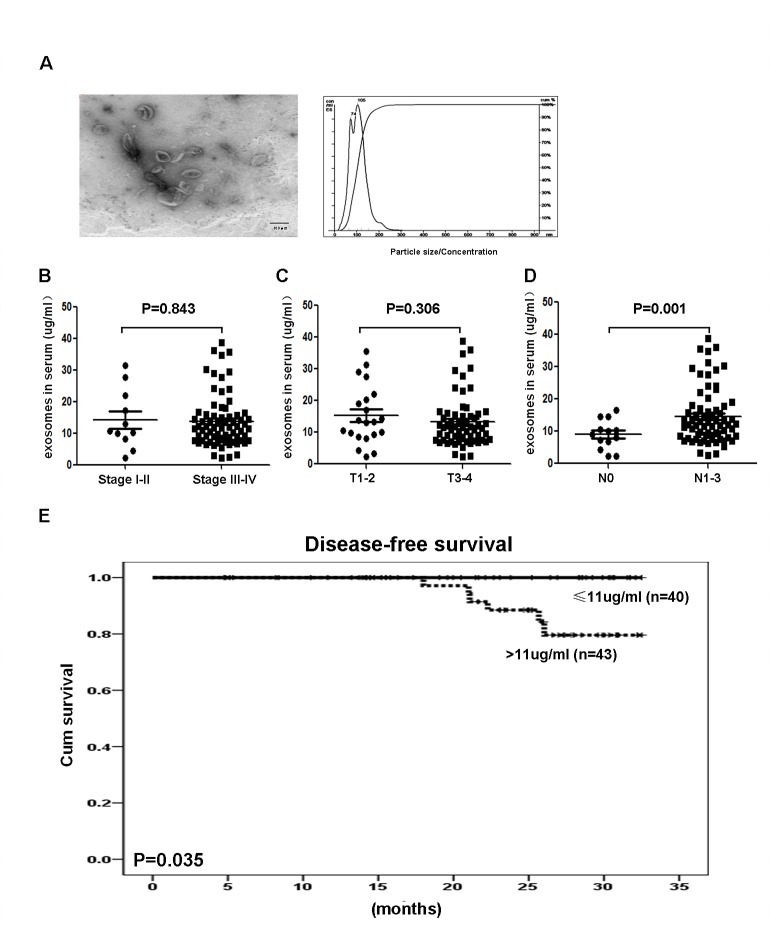
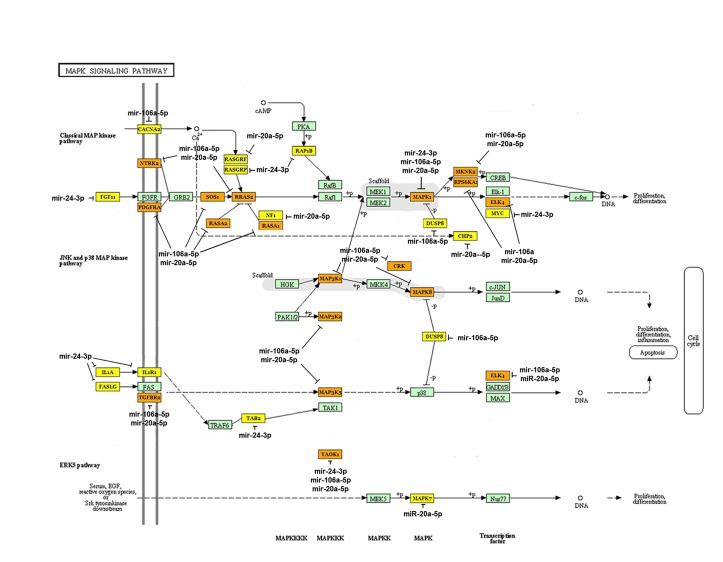
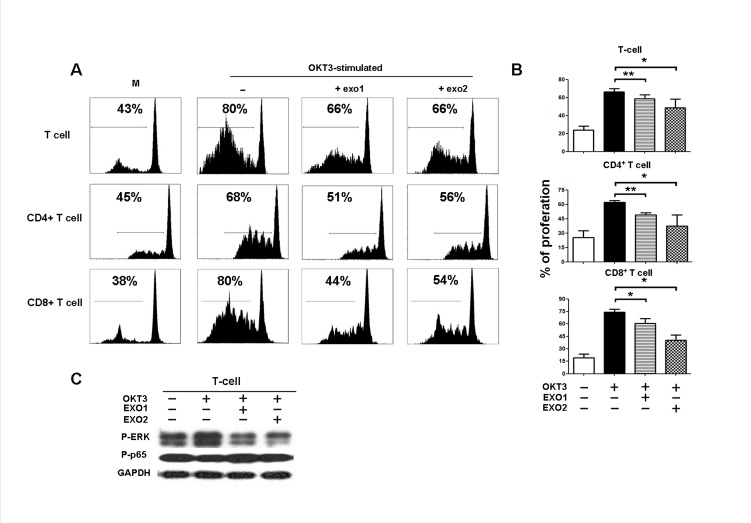
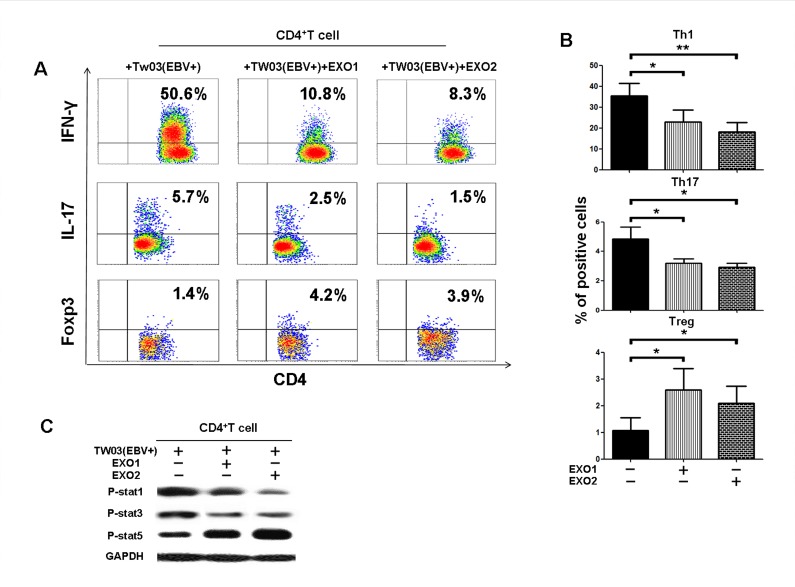
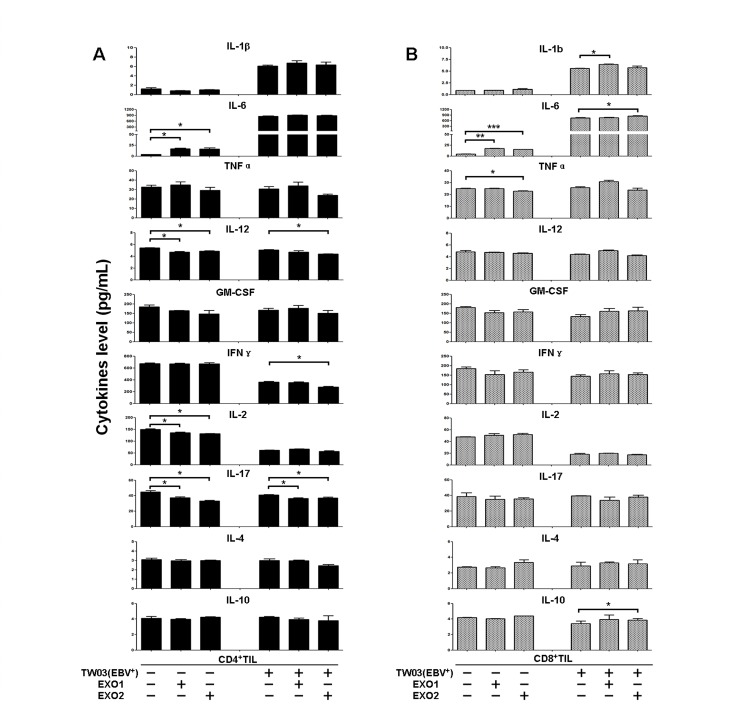
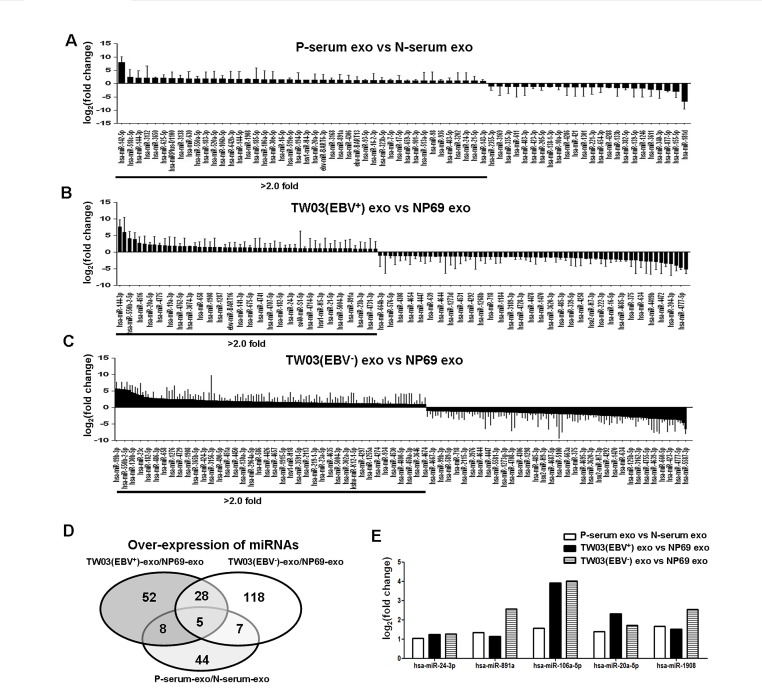
Tumor-derived exosomes contain biologically active proteins and messenger and microRNAs (miRNAs). These particles serve as vehicles of intercellular communication and are emerging mediators of tumorigenesis and immune escape. Here, we isolated 30-100 nm exosomes from the serum of patients with nasopharyngeal carcinoma (NPC) or the supernatant of TW03 cells. Increased circulating exosome concentrations were correlated with advanced lymphoid node stage and poor prognosis in NPC patients (P< 0.05). TW03-derived exosomes impaired T-cell function by inhibiting T-cell proliferation and Th1 and Th17 differentiation and promoting Treg induction by NPC cells in vitro. These results are associated with decreases in ERK, STAT1, and STAT3 phosphorylation and increases in STAT5 phosphorylation in exosome-stimulated T-cells. TW03-derived exosomes increased the proinflammatory cytokines IL-1β, IL-6, and IL-10 but decreased IFNγ, IL-2, and IL-17 release from CD4+ or CD8+ T-cells. Furthermore, five commonly over-expressed miRNAs were identified in the exosomes from patient sera or NPC cells: hsa-miR-24-3p, hsa-miR-891a, hsa-miR-106a-5p, hsa-miR-20a-5p, and hsa-miR-1908. These over-expressed miRNA clusters down-regulated the MARK1 signaling pathway to alter cell proliferation and differentiation. Overall, these observations reveal the clinical relevance and prognostic value of tumor-derived exosomes and identify a unique intercellular mechanism mediated by tumor-derived exosomes to modulate T-cell function in NPC.
肿瘤来源的外泌体含有生物活性蛋白、信使核糖核酸和微小核糖核酸(miRNA)。这些颗粒作为细胞间通讯的载体,正成为肿瘤发生和免疫逃逸的介质。在此,我们从鼻咽癌(NPC)患者血清或TW03细胞的上清液中分离出30 - 100纳米的外泌体。NPC患者循环外泌体浓度升高与晚期淋巴结分期及预后不良相关(P<0.05)。TW03来源的外泌体在体外通过抑制T细胞增殖、Th1和Th17分化以及促进NPC细胞诱导Treg,损害T细胞功能。这些结果与外泌体刺激的T细胞中ERK、STAT1和STAT3磷酸化水平降低以及STAT5磷酸化水平升高有关。TW03来源的外泌体增加了促炎细胞因子IL-1β、IL-6和IL-10的释放,但减少了CD4+或CD8+ T细胞中IFNγ、IL-2和IL-17的释放。此外,在患者血清或NPC细胞来源的外泌体中鉴定出五种常见的过表达miRNA:hsa-miR-24-3p、hsa-miR-891a、hsa-miR-106a-5p、hsa-miR-20a-5p和hsa-miR-1908。这些过表达的miRNA簇下调MARK1信号通路以改变细胞增殖和分化。总体而言,这些观察结果揭示了肿瘤来源外泌体的临床相关性和预后价值,并确定了一种由肿瘤来源外泌体介导的独特细胞间机制来调节NPC中的T细胞功能。