Kwatra Gaurav, Adrian Peter V, Shiri Tinevimbo, Buchmann Eckhart J, Cutland Clare L, Madhi Shabir A
Department of Science and Technology/National Research Foundation: Vaccine Preventable Diseases, University of the Witwatersrand, Johannesburg, South Africa; MRC, Respiratory and Meningeal Pathogens Research Unit, University of the Witwatersrand, Johannesburg, South Africa.
Department of Obstetrics and Gynaecology, University of the Witwatersrand, Johannesburg, South Africa.
PLoS One. 2014 Jun 30;9(6):e98778. doi: 10.1371/journal.pone.0098778. eCollection 2014.
Maternal recto-vaginal colonization with Group B Streptococcus (GBS) and consequent vertical transmission to the newborn predisposes neonates to early-onset invasive GBS disease. This study aimed to determine the acquisition and loss of serotype-specific recto-vaginal GBS colonization from 20-37+ weeks of gestational age.
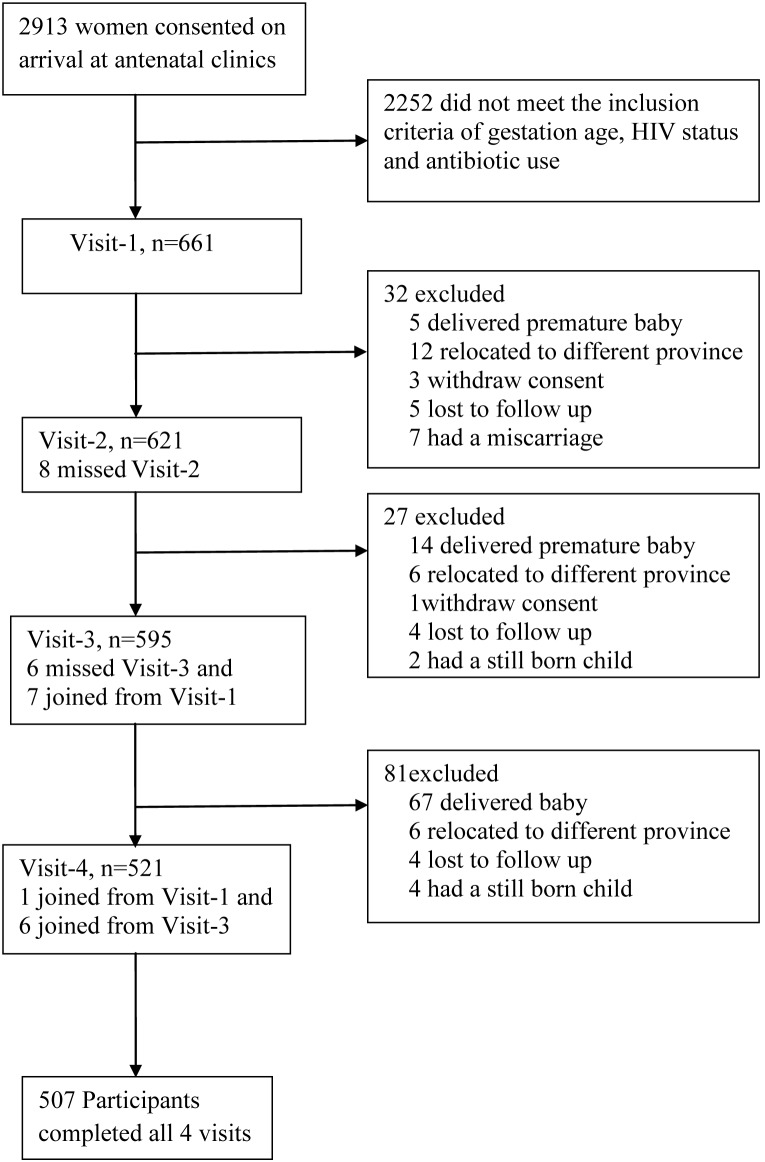
Vaginal and rectal swabs were collected from HIV-uninfected women at 20-25 weeks of gestation age and at 5-6 weekly intervals thereafter. Swabs were cultured for GBS and isolates were serotyped by latex agglutination. Serologically non-typable isolates and pilus islands were characterized by PCR.
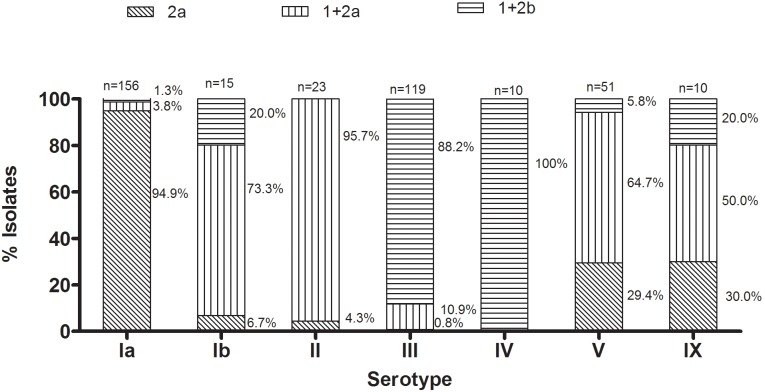
The prevalence of recto-vaginal GBS colonization was 33.0%, 32.7%, 28.7% and 28.4% at 20-25 weeks, 26-30 weeks, 31-35 weeks and 37+ weeks of gestational age, respectively. The most common identified serotypes were Ia (39.2%), III (32.8%) and V (12.4%). Of 507 participants who completed all four study visits, the cumulative overall recto-vaginal acquisition rate of new serotypes during the study was 27.9%, including 11.2%, 8.2% and 4.3% for serotypes Ia, III and V, respectively. Comparing the common colonizing serotypes, serotype III was more likely to be associated with persistent colonization throughout the study (29%) than Ia (18%; p = 0.045) or V (6%; p = 0.002). The median duration of recto-vaginal GBS colonization for serotype III was 6.35 weeks, which was longer than other serotypes. Pilus island proteins were detected in all GBS isolates and their subtype distribution was associated with specific serotypes.
South African pregnant women have a high prevalence of GBS recto-vaginal colonization from 20 weeks of gestational age onwards, including high GBS acquisition rates in the last pregnancy-trimesters. There are differences in specific-serotype colonization patterns during pregnancy.
孕妇B族链球菌(GBS)直肠阴道定植及其随后向新生儿的垂直传播使新生儿易患早发型侵袭性GBS疾病。本研究旨在确定孕20至37⁺周期间血清型特异性直肠阴道GBS定植的获得和丧失情况。
在孕20至25周时从未感染HIV的女性中采集阴道和直肠拭子,此后每隔5至6周采集一次。对拭子进行GBS培养,分离株通过乳胶凝集法进行血清分型。通过PCR对血清学不可分型的分离株和菌毛岛进行鉴定。
在孕20至25周、26至30周、31至35周和37⁺周时,直肠阴道GBS定植的患病率分别为33.0%、32.7%、28.7%和28.4%。最常见的血清型为Ia(39.2%)、III(32.8%)和V(12.4%)。在完成全部四次研究访视的507名参与者中,研究期间新血清型的直肠阴道累积总体获得率为27.9%,其中血清型Ia、III和V的获得率分别为11.2%、8.2%和4.3%。比较常见的定植血清型,血清型III在整个研究期间持续定植的可能性(29%)高于Ia(18%;p = 0.045)或V(6%;p = 0.002)。血清型III直肠阴道GBS定植的中位持续时间为6.35周,长于其他血清型。在所有GBS分离株中均检测到菌毛岛蛋白,其亚型分布与特定血清型相关。
南非孕妇从孕20周起GBS直肠阴道定植的患病率较高,包括妊娠晚期较高的GBS获得率。孕期特定血清型的定植模式存在差异。