Department of Sports Training-Academy of Physical Education im. J. Kukuczki in Katowice, Mikolowska 72a, 40-065 Katowice, Poland.
Department of Biochemistry-Academy of Physical Education im. J. Kukuczki in Katowice, Mikolowska 72a, 40-065 Katowice, Poland.
Nutrients. 2014 Jun 27;6(7):2493-508. doi: 10.3390/nu6072493.
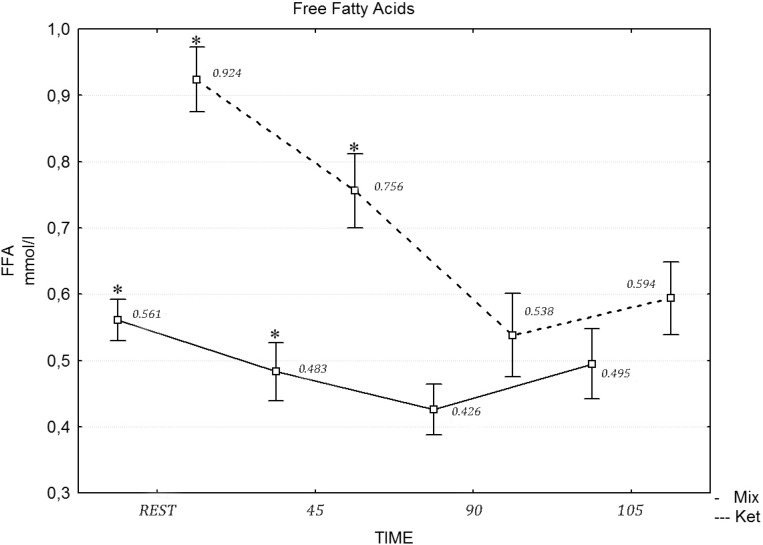
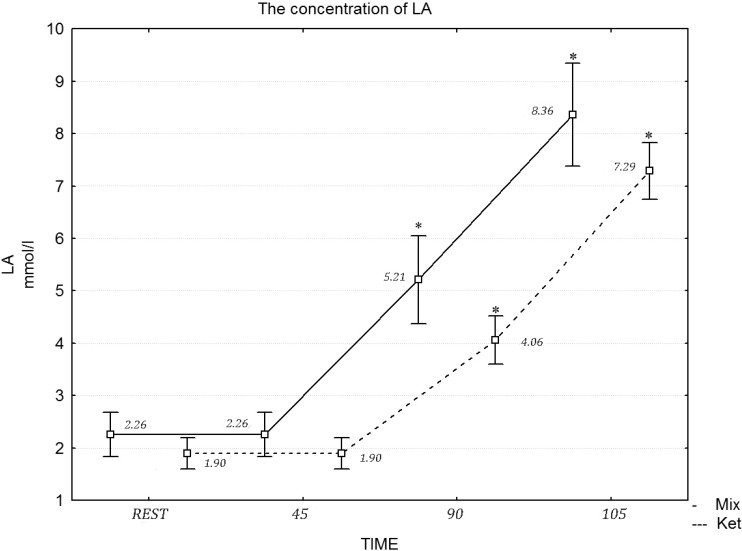
The main objective of this research was to determine the effects of a long-term ketogenic diet, rich in polyunsaturated fatty acids, on aerobic performance and exercise metabolism in off-road cyclists. Additionally, the effects of this diet on body mass and body composition were evaluated, as well as those that occurred in the lipid and lipoprotein profiles due to the dietary intervention. The research material included eight male subjects, aged 28.3 ± 3.9 years, with at least five years of training experience that competed in off-road cycling. Each cyclist performed a continuous exercise protocol on a cycloergometer with varied intensity, after a mixed and ketogenic diet in a crossover design. The ketogenic diet stimulated favorable changes in body mass and body composition, as well as in the lipid and lipoprotein profiles. Important findings of the present study include a significant increase in the relative values of maximal oxygen uptake (VO2max) and oxygen uptake at lactate threshold (VO2 LT) after the ketogenic diet, which can be explained by reductions in body mass and fat mass and/or the greater oxygen uptake necessary to obtain the same energy yield as on a mixed diet, due to increased fat oxidation or by enhanced sympathetic activation. The max work load and the work load at lactate threshold were significantly higher after the mixed diet. The values of the respiratory exchange ratio (RER) were significantly lower at rest and during particular stages of the exercise protocol following the ketogenic diet. The heart rate (HR) and oxygen uptake were significantly higher at rest and during the first three stages of exercise after the ketogenic diet, while the reverse was true during the last stage of the exercise protocol conducted with maximal intensity. Creatine kinase (CK) and lactate dehydrogenase (LDH) activity were significantly lower at rest and during particular stages of the 105-min exercise protocol following the low carbohydrate ketogenic diet. The alterations in insulin and cortisol concentrations due to the dietary intervention confirm the concept that the glucostatic mechanism controls the hormonal and metabolic responses to exercise.
本研究的主要目的是确定富含多不饱和脂肪酸的长期生酮饮食对越野自行车运动员的有氧能力和运动代谢的影响。此外,还评估了这种饮食对体重和身体成分的影响,以及由于饮食干预导致的脂质和脂蛋白谱的变化。研究材料包括 8 名年龄为 28.3 ± 3.9 岁的男性受试者,他们至少有 5 年的训练经验,并参加过越野自行车比赛。每个自行车运动员在交叉设计中先进行混合饮食和生酮饮食,然后在功率自行车上进行不同强度的持续运动方案。生酮饮食刺激体重和身体成分以及脂质和脂蛋白谱发生有利变化。本研究的重要发现包括生酮饮食后最大摄氧量(VO2max)和乳酸阈摄氧量(VO2 LT)的相对值显著增加,这可以通过体重和脂肪量减少以及/或由于脂肪氧化增加或交感神经激活增强,获得与混合饮食相同能量产量所需的摄氧量增加来解释。混合饮食后最大工作负荷和乳酸阈工作负荷显著增加。生酮饮食后,休息时和运动方案特定阶段的呼吸交换率(RER)显著降低。休息时和生酮饮食后前三个运动阶段的心率(HR)和摄氧量显著升高,而在最大强度运动方案的最后一个阶段则相反。休息时和 105 分钟运动方案特定阶段的肌酸激酶(CK)和乳酸脱氢酶(LDH)活性显著降低。饮食干预对胰岛素和皮质醇浓度的影响证实了糖稳态机制控制运动的激素和代谢反应的概念。