Santoferrara Luciana F, Guida Stephanie, Zhang Huan, McManus George B
Department of Marine Sciences, University of Connecticut, Groton, Connecticut, United States of America.
The National Center for Genome Resources, Santa Fe, New Mexico, United States of America.
PLoS One. 2014 Jul 1;9(7):e101418. doi: 10.1371/journal.pone.0101418. eCollection 2014.
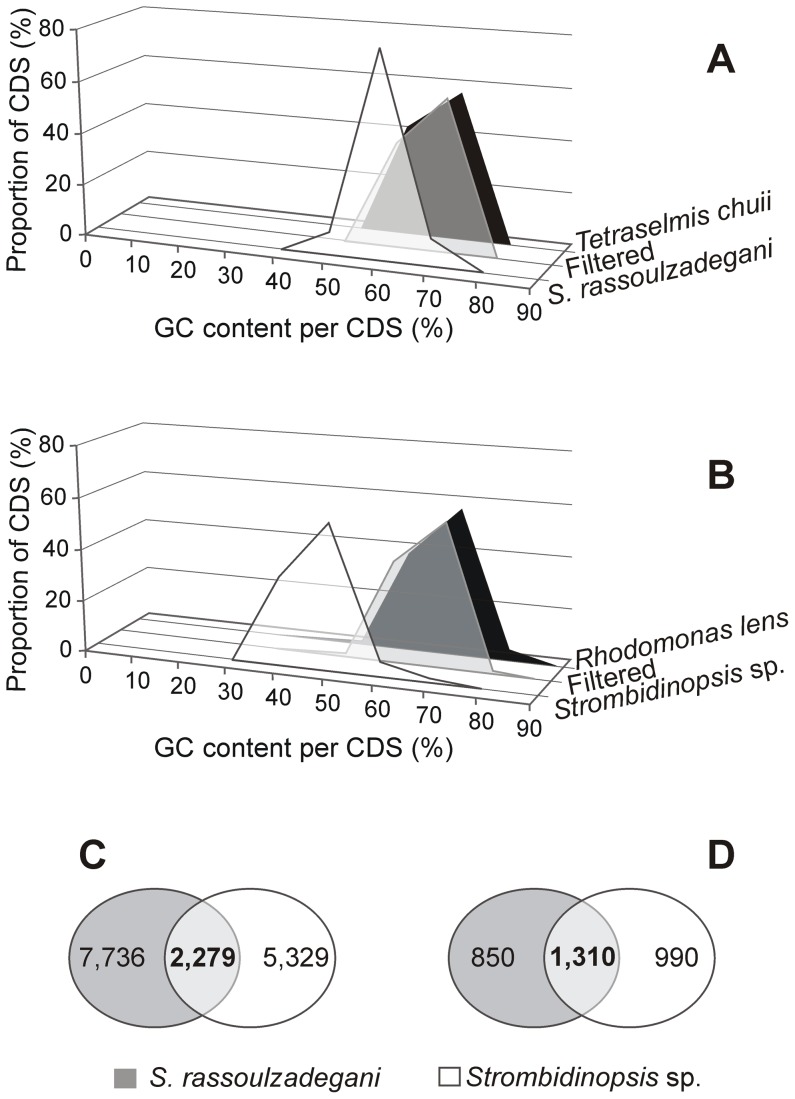
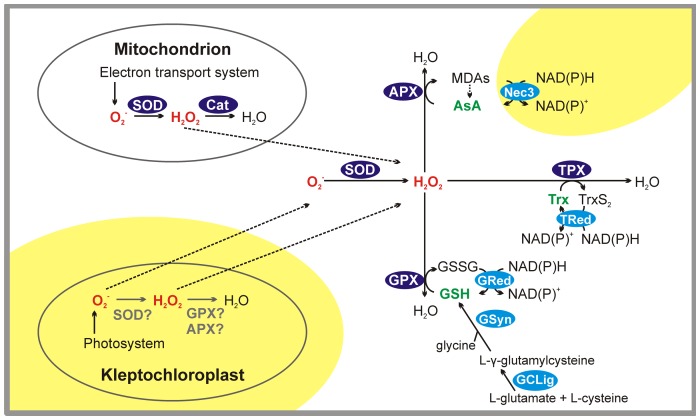
Studying non-model organisms is crucial in the context of the current development of genomics and transcriptomics for both physiological experimentation and environmental characterization. We investigated the transcriptomes of two marine planktonic ciliates, the mixotrophic oligotrich Strombidium rassoulzadegani and the heterotrophic choreotrich Strombidinopsis sp., and their respective algal food using Illumina RNAseq. Our aim was to characterize the transcriptomes of these contrasting ciliates and to identify genes potentially involved in mixotrophy. We detected approximately 10,000 and 7,600 amino acid sequences for S. rassoulzadegani and Strombidinopsis sp., respectively. About half of these transcripts had significant BLASTP hits (E-value <10-6) against previously-characterized sequences, mostly from the model ciliate Oxytricha trifallax. Transcriptomes from both the mixotroph and the heterotroph species provided similar annotations for GO terms and KEGG pathways. Most of the identified genes were related to housekeeping activity and pathways such as the metabolism of carbohydrates, lipids, amino acids, nucleotides, and vitamins. Although S. rassoulzadegani can keep and use chloroplasts from its prey, we did not find genes clearly linked to chloroplast maintenance and functioning in the transcriptome of this ciliate. While chloroplasts are known sources of reactive oxygen species (ROS), we found the same complement of antioxidant pathways in both ciliates, except for one enzyme possibly linked to ascorbic acid recycling found exclusively in the mixotroph. Contrary to our expectations, we did not find qualitative differences in genes potentially related to mixotrophy. However, these transcriptomes will help to establish a basis for the evaluation of differential gene expression in oligotrichs and choreotrichs and experimental investigation of the costs and benefits of mixotrophy.
在当前基因组学和转录组学发展的背景下,研究非模式生物对于生理实验和环境特征描述都至关重要。我们使用Illumina RNA测序技术研究了两种海洋浮游纤毛虫的转录组,即兼养型寡毛类的拉苏尔扎德氏斯特龙比虫和异养型毛口类的斯特龙比诺普西斯属物种,以及它们各自的藻类食物。我们的目的是表征这些形成对比的纤毛虫的转录组,并鉴定可能参与兼养营养的基因。我们分别检测到拉苏尔扎德氏斯特龙比虫和斯特龙比诺普西斯属物种约10,000个和7,600个氨基酸序列。这些转录本中约一半对先前表征的序列有显著的BLASTP比对结果(E值<10-6),这些序列大多来自模式纤毛虫三裂奥克特里虫。兼养型和异养型物种的转录组在基因本体(GO)术语和京都基因与基因组百科全书(KEGG)通路方面提供了相似的注释。大多数鉴定出的基因与看家活动和通路相关,如碳水化合物、脂质、氨基酸、核苷酸和维生素的代谢。尽管拉苏尔扎德氏斯特龙比虫可以保留并利用其猎物的叶绿体,但我们在这种纤毛虫的转录组中未发现与叶绿体维持和功能明确相关的基因。虽然叶绿体是活性氧(ROS)的已知来源,但我们在两种纤毛虫中发现了相同的抗氧化通路补充,只是在兼养型中发现了一种可能与抗坏血酸循环相关的酶,而异养型中没有。与我们的预期相反,我们没有发现可能与兼养营养相关的基因存在质的差异。然而,这些转录组将有助于为评估寡毛类和毛口类的差异基因表达以及兼养营养的成本和效益的实验研究奠定基础。