Department of Community Health Sciences, University of Calgary, Calgary, Alberta, Canada.
BMC Pediatr. 2014 Jul 1;14:166. doi: 10.1186/1471-2431-14-166.
Mental disorders in childhood have a considerable health and societal impact but the associated negative consequences may be ameliorated through early identification of risk and protective factors that can guide health promoting and preventive interventions. The objective of this study was to inform health policy and practice through identification of demographic, familial and environmental factors associated with emotional or behavioural problems in middle childhood, and the predictors of resilience in the presence of identified risk factors.
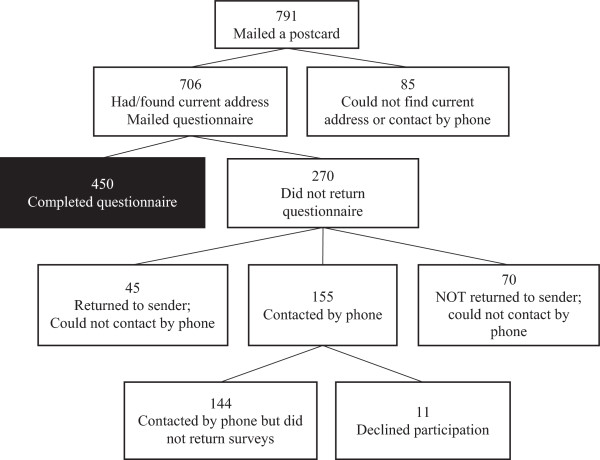
A cohort of 706 mothers followed from early pregnancy was surveyed at six to eight years post-partum by a mail-out questionnaire, which included questions on demographics, children's health, development, activities, media and technology, family, friends, community, school life, and mother's health.
Although most children do well in middle childhood, of 450 respondents (64% response rate), 29.5% and 25.6% of children were found to have internalising and externalising behaviour problem scores in the lowest quintile on the NSCLY Child Behaviour Scales. Independent predictors for problem behaviours identified through multivariable logistic regression modelling included being male, demographic risk, maternal mental health risk, poor parenting interactions, and low parenting morale. Among children at high risk for behaviour problems, protective factors included high maternal and child self-esteem, good maternal emotional health, adequate social support, good academic performance, and adequate quality parenting time.
These findings demonstrate that several individual and social resilience factors can counter the influence of early adversities on the likelihood of developing problem behaviours in middle childhood, thus informing enhanced public health interventions for this understudied life course phase.
儿童期精神障碍对健康和社会有重大影响,但通过早期识别风险和保护因素,可以减轻相关的负面影响,这些因素可以指导促进健康和预防干预。本研究的目的是通过确定与儿童中期情绪或行为问题相关的人口统计学、家庭和环境因素,以及在存在已确定风险因素的情况下预测适应能力,为卫生政策和实践提供信息。
一项从妊娠早期开始的队列研究,在产后 6-8 岁时通过邮寄问卷对 706 名母亲进行了调查,问卷包括人口统计学、儿童健康、发育、活动、媒体和技术、家庭、朋友、社区、学校生活和母亲健康方面的问题。
尽管大多数儿童在儿童中期表现良好,但在 450 名应答者(64%的应答率)中,有 29.5%和 25.6%的儿童在 NSCLY 儿童行为量表上的最低五分位数中表现出内化和外化行为问题得分。通过多变量逻辑回归模型确定的行为问题的独立预测因素包括男性、人口统计学风险、母亲心理健康风险、不良的育儿互动和低育儿士气。在有行为问题高风险的儿童中,保护因素包括高母亲和儿童自尊心、良好的母亲情绪健康、足够的社会支持、良好的学业成绩和充足的优质育儿时间。
这些发现表明,在儿童中期,一些个体和社会适应因素可以抵消早期逆境对发展行为问题的影响,从而为这一研究不足的生命阶段提供强化公共卫生干预措施。