Yoo So Young, Merzlyak Anna, Lee Seung-Wuk
Convergence Stem Cell Research Center, Medical Research Institute, Pusan National University School of Medicine, Yangsan 626-870, Republic of Korea.
Department of Bioengineering, University of California, Berkeley, and Physical Bioscience Division, Lawrence Berkeley National Laboratory, Berkeley, CA 94720, USA.
Mediators Inflamm. 2014;2014:192790. doi: 10.1155/2014/192790. Epub 2014 May 27.
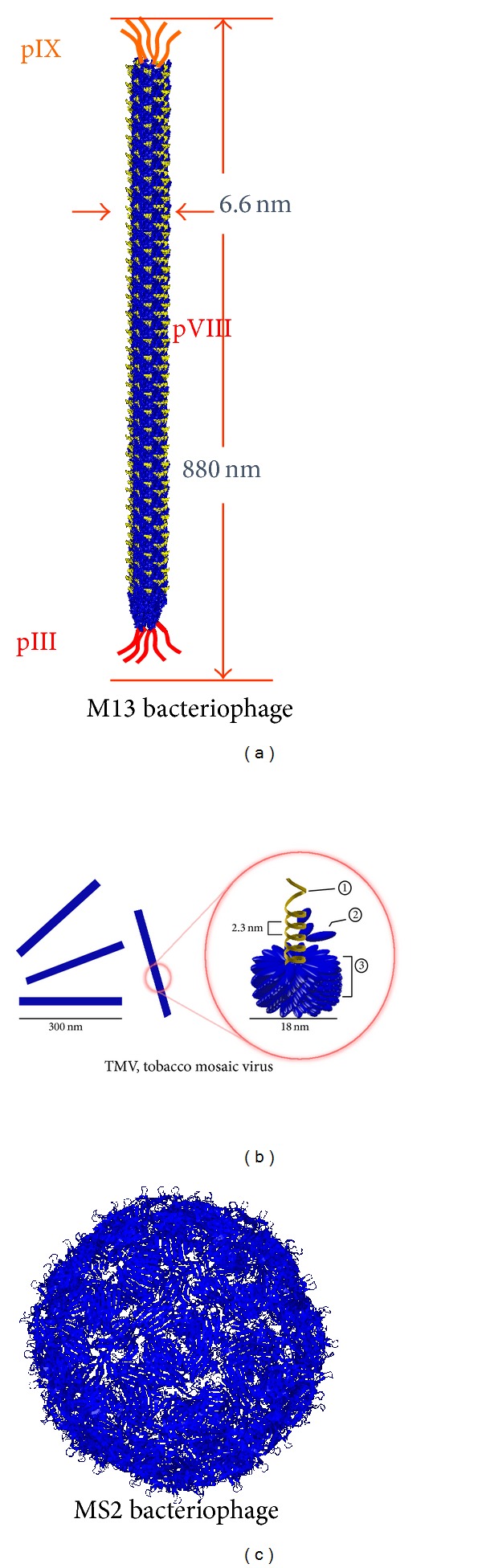
Controlling structural organization and signaling motif display is of great importance to design the functional tissue regenerating materials. Synthetic phage, genetically engineered M13 bacteriophage has been recently introduced as novel tissue regeneration materials to display a high density of cell-signaling peptides on their major coat proteins for tissue regeneration purposes. Structural advantages of their long-rod shape and monodispersity can be taken together to construct nanofibrous scaffolds which support cell proliferation and differentiation as well as direct orientation of their growth in two or three dimensions. This review demonstrated how functional synthetic phage is designed and subsequently utilized for tissue regeneration that offers potential cell therapy.
控制结构组织和信号基序展示对于设计功能性组织再生材料至关重要。合成噬菌体,即基因工程改造的M13噬菌体,最近已作为新型组织再生材料被引入,其主要衣壳蛋白上可展示高密度的细胞信号肽用于组织再生目的。可以利用它们长杆状和单分散性的结构优势来构建纳米纤维支架,该支架可支持细胞增殖和分化,并直接引导细胞在二维或三维空间中生长。这篇综述展示了功能性合成噬菌体是如何被设计并随后用于提供潜在细胞治疗的组织再生的。