Aung Hnin H, Tsoukalas Athanasios, Rutledge John C, Tagkopoulos Ilias
UC Davis Genome Center, University of California, Davis, CA 95616, USA.
BMC Syst Biol. 2014 Jul 4;8:80. doi: 10.1186/1752-0509-8-80.
Neurovascular inflammation is associated with a number of neurological diseases including vascular dementia and Alzheimer's disease, which are increasingly important causes of morbidity and mortality around the world. Lipotoxicity is a metabolic disorder that results from accumulation of lipids, particularly fatty acids, in non-adipose tissue leading to cellular dysfunction, lipid droplet formation, and cell death.
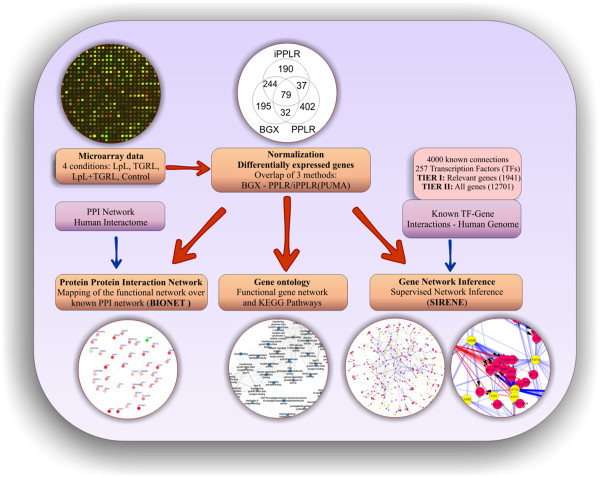
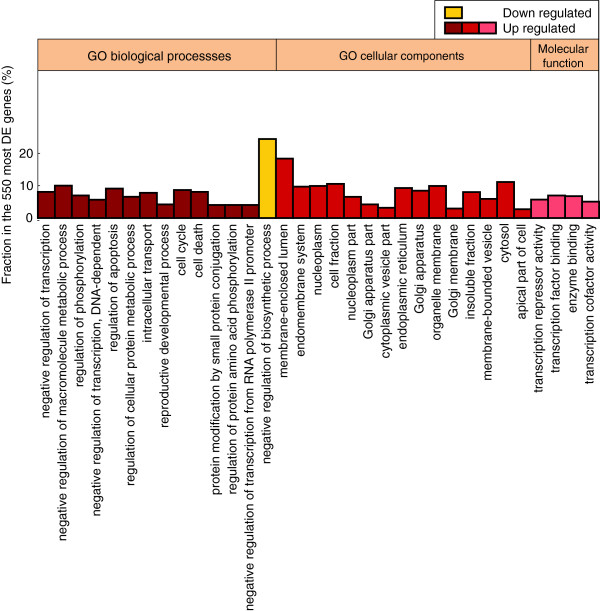
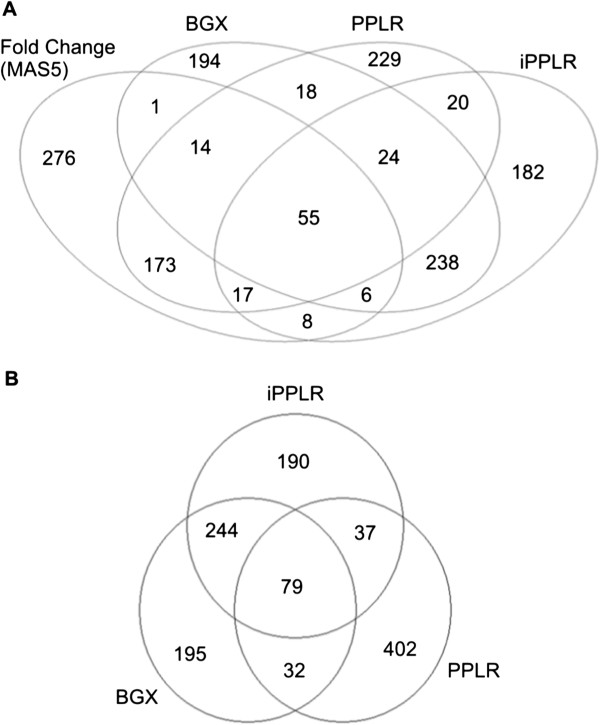
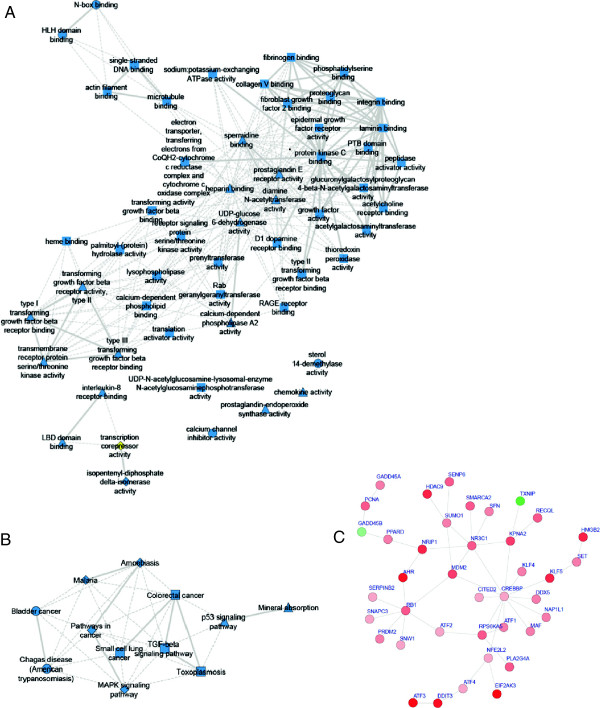
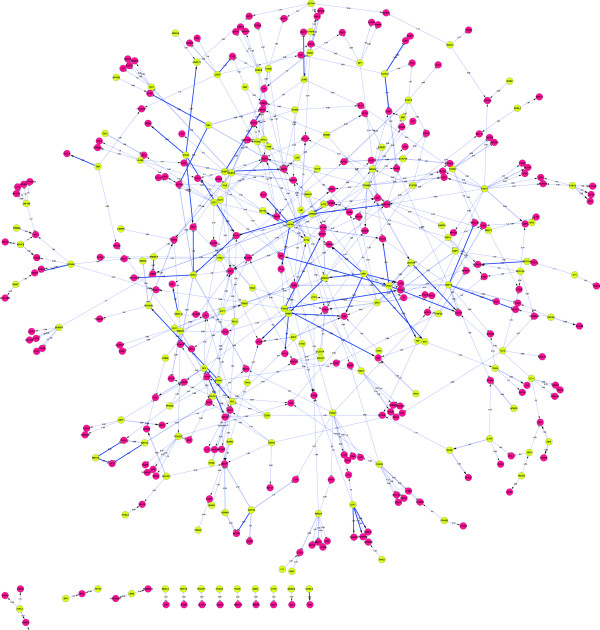
Our studies indicate for the first time that the neurovascular circulation also can manifest lipotoxicity, which could have major effects on cognitive function. The penetration of integrative systems biology approaches is limited in this area of research, which reduces our capacity to gain an objective insight into the signal transduction and regulation dynamics at a systems level. To address this question, we treated human microvascular endothelial cells with triglyceride-rich lipoprotein (TGRL) lipolysis products and then we used genome-wide transcriptional profiling to obtain transcript abundances over four conditions. We then identified regulatory genes and their targets that have been differentially expressed through analysis of the datasets with various statistical methods. We created a functional gene network by exploiting co-expression observations through a guilt-by-association assumption. Concomitantly, we used various network inference algorithms to identify putative regulatory interactions and we integrated all predictions to construct a consensus gene regulatory network that is TGRL lipolysis product specific.
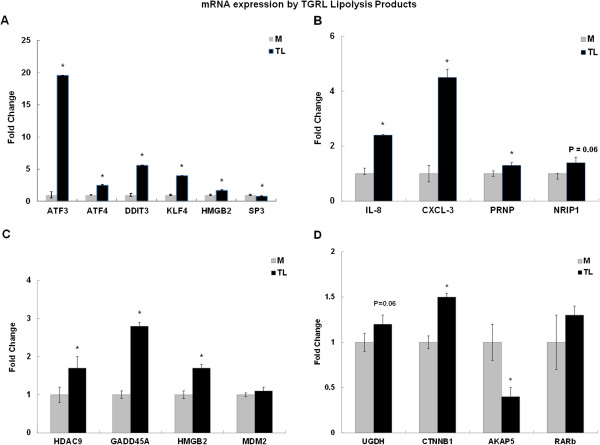
System biology analysis has led to the validation of putative lipid-related targets and the discovery of several genes that may be implicated in lipotoxic-related brain microvascular endothelial cell responses. Here, we report that activating transcription factors 3 (ATF3) is a principal regulator of TGRL lipolysis products-induced gene expression in human brain microvascular endothelial cell.
神经血管炎症与包括血管性痴呆和阿尔茨海默病在内的多种神经系统疾病相关,这些疾病在全球范围内日益成为发病和死亡的重要原因。脂毒性是一种代谢紊乱,由脂质尤其是脂肪酸在非脂肪组织中的积累导致细胞功能障碍、脂滴形成和细胞死亡。
我们的研究首次表明神经血管循环也可表现出脂毒性,这可能对认知功能产生重大影响。在这一研究领域,整合系统生物学方法的应用有限,这降低了我们在系统层面客观洞察信号转导和调控动态的能力。为解决这一问题,我们用富含甘油三酯的脂蛋白(TGRL)脂解产物处理人微血管内皮细胞,然后使用全基因组转录谱分析来获取四种条件下的转录本丰度。接着,我们通过用各种统计方法分析数据集,鉴定出差异表达的调控基因及其靶标。我们通过基于关联有罪假设利用共表达观察结果创建了一个功能基因网络。同时,我们使用各种网络推理算法来识别假定的调控相互作用,并整合所有预测结果构建了一个特定于TGRL脂解产物的共识基因调控网络。
系统生物学分析已验证了假定的脂质相关靶标,并发现了几个可能与脂毒性相关的脑微血管内皮细胞反应有关的基因。在此,我们报告激活转录因子3(ATF3)是人脑微血管内皮细胞中TGRL脂解产物诱导基因表达的主要调节因子。