Grande Laura, Michelacci Valeria, Tozzoli Rosangela, Ranieri Paola, Maugliani Antonella, Caprioli Alfredo, Morabito Stefano
EU Reference Laboratory for E, coli, Veterinary Public Health and Food Safety Department, Istituto Superiore di Sanità, Viale Regina Elena 299, Rome 00161, Italy.
BMC Genomics. 2014 Jul 8;15(1):574. doi: 10.1186/1471-2164-15-574.
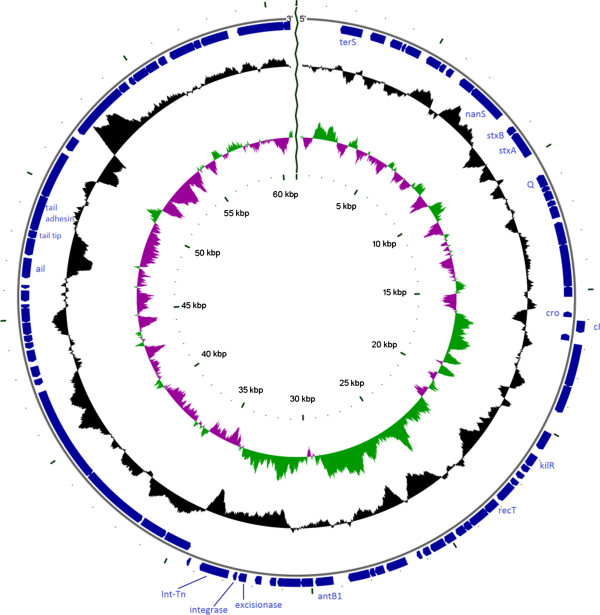
Enteroaggregative Haemorrhagic E. coli (EAHEC) is a new pathogenic group of E. coli characterized by the presence of a vtx2-phage integrated in the genomic backbone of Enteroaggregative E. coli (EAggEC). So far, four distinct EAHEC serotypes have been described that caused, beside the large outbreak of infection occurred in Germany in 2011, a small outbreak and six sporadic cases of HUS in the time span 1992-2012. In the present work we determined the whole genome sequence of the vtx2-phage, termed Phi-191, present in the first described EAHEC O111:H2 isolated in France in 1992 and compared it with those of the vtx-phages whose sequences were available.
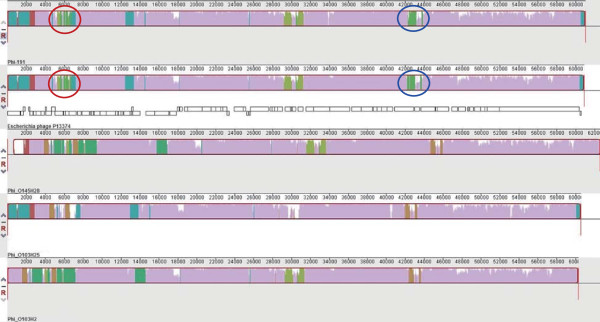
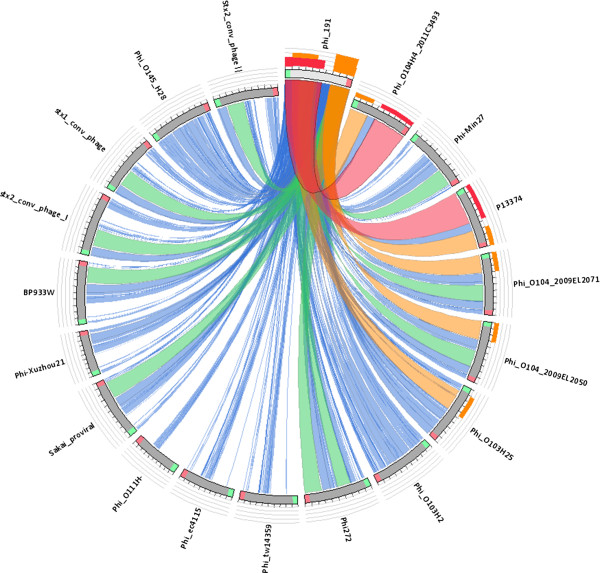
The whole genome sequence of the Phi-191 phage was identical to that of the vtx2-phage P13374 present in the EAHEC O104:H4 strain isolated during the German outbreak 20 years later. Moreover, it was also almost identical to those of the other vtx2-phages of EAHEC O104:H4 strains described so far. Conversely, the Phi-191 phage appeared to be different from the vtx2-phage carried by the EAHEC O111:H21 isolated in the Northern Ireland in 2012.The comparison of the vtx2-phages sequences from EAHEC strains with those from the vtx-phages of typical Verocytotoxin-producing E. coli strains showed the presence of a 900 bp sequence uniquely associated with EAHEC phages and encoding a tail fiber.
At least two different vtx2-phages, both characterized by the presence of a peculiar tail fiber-coding gene, intervened in the emergence of EAHEC. The finding of an identical vtx2-phage in two EAggEC strains isolated after 20 years in spite of the high variability described for vtx-phages is unexpected and suggests that such vtx2-phages are kept under a strong selective pressure.The observation that different EAHEC infections have been traced back to countries where EAggEC infections are endemic and the treatment of human sewage is often ineffective suggests that such countries may represent the cradle for the emergence of the EAHEC pathotype. In these regions, EAggEC of human origin can extensively contaminate the environment where they can meet free vtx-phages likely spread by ruminants excreta.
肠聚集性出血性大肠杆菌(EAHEC)是大肠杆菌的一个新致病群体,其特征是在肠聚集性大肠杆菌(EAggEC)的基因组主干中存在一个整合的vtx2噬菌体。到目前为止,已描述了四种不同的EAHEC血清型,除了2011年在德国发生的大规模感染暴发外,在1992年至2012年期间还引起了一次小规模暴发和6例溶血尿毒综合征散发病例。在本研究中,我们测定了1992年在法国分离出的首例EAHEC O111:H2中存在的名为Phi-191的vtx2噬菌体的全基因组序列,并将其与已获得序列的vtx噬菌体进行了比较。
Phi-191噬菌体的全基因组序列与20年后在德国暴发期间分离出的EAHEC O104:H4菌株中存在的vtx2噬菌体P13374的序列相同。此外,它也与迄今为止描述的EAHEC O104:H4菌株的其他vtx2噬菌体的序列几乎相同。相反,Phi-191噬菌体似乎与2012年在北爱尔兰分离出的EAHEC O111:H21携带的vtx2噬菌体不同。将EAHEC菌株的vtx2噬菌体序列与典型产志贺毒素大肠杆菌菌株的vtx噬菌体序列进行比较,发现存在一个900 bp的序列,该序列仅与EAHEC噬菌体相关,并编码一种尾丝。
至少两种不同的vtx2噬菌体参与了EAHEC的出现,这两种噬菌体都具有一个独特的尾丝编码基因。尽管vtx噬菌体具有高度变异性,但在20年后分离出的两种EAggEC菌株中发现相同的vtx2噬菌体是出乎意料的,这表明此类vtx2噬菌体处于强大的选择压力之下。不同的EAHEC感染可追溯到EAggEC感染流行且人类污水处理往往无效的国家,这一观察结果表明这些国家可能是EAHEC致病型出现的摇篮。在这些地区,人类来源的EAggEC可广泛污染环境,在那里它们可能会遇到可能由反刍动物粪便传播的游离vtx噬菌体。