Matarazzo Valery, Muscatelli Françoise
Aix-Marseille Université; INMED UMR 901; Marseille, France.
Rare Dis. 2013 Dec 12;1:e27228. doi: 10.4161/rdis.27228. eCollection 2013.
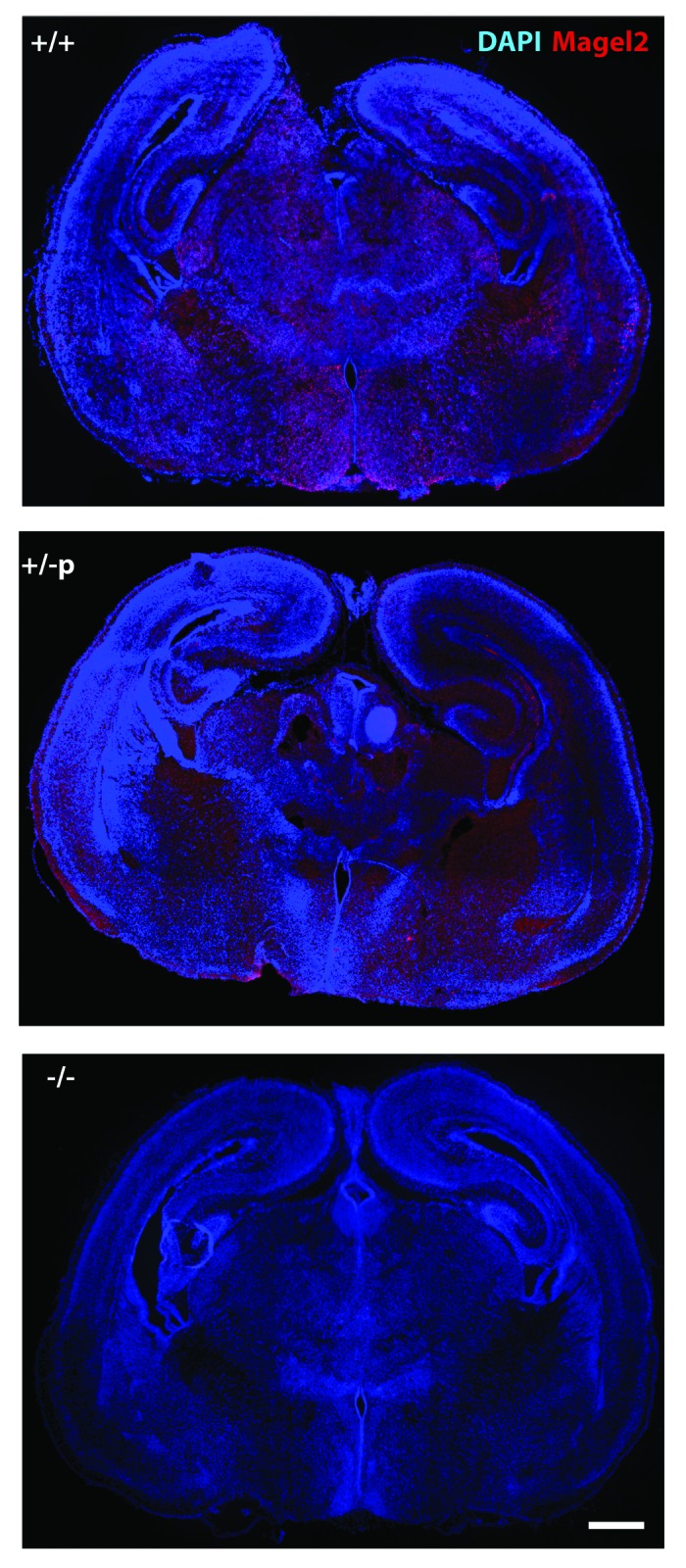
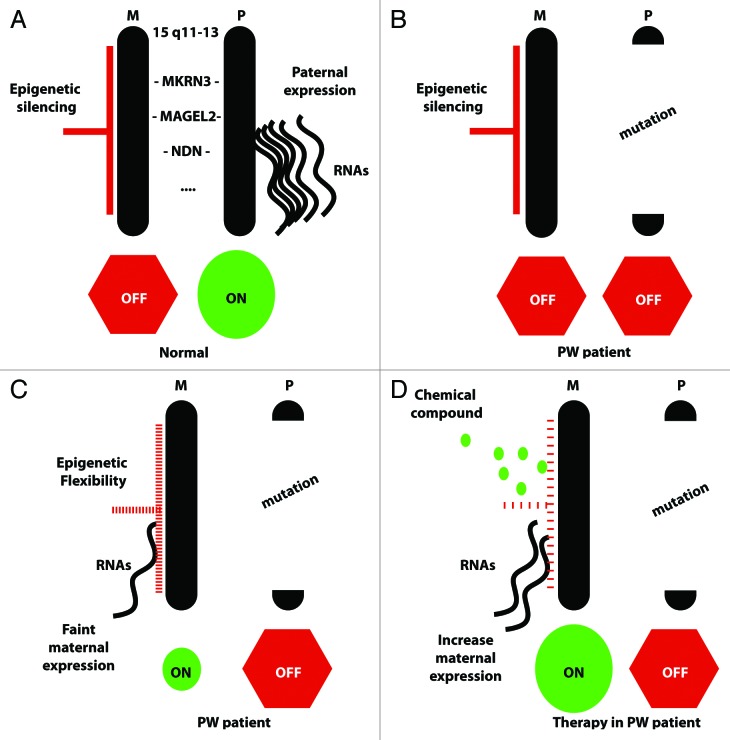
Genomic imprinting is a normal process of epigenetic regulation leading some autosomal genes to be expressed from one parental allele only, the other parental allele being silenced. The reasons why this mechanism has been selected throughout evolution are not clear; however, expression dosage is critical for imprinted genes. There is a paradox between the fact that genomic imprinting is a robust mechanism controlling the expression of specific genes and the fact that this mechanism is based on epigenetic regulation that, per se, should present some flexibility. The robustness has been well studied, revealing the epigenetic modifications at the imprinted locus, but the flexibility has been poorly investigated. Prader-Willi syndrome is the best-studied disease involving imprinted genes caused by the absence of expression of paternally inherited alleles of genes located in the human 15q11-q13 region. Until now, the silencing of the maternally inherited alleles was like a dogma. Rieusset et al. showed that in absence of the paternal Ndn allele, in Ndn +m/-p mice, the maternal Ndn allele is expressed at an extremely low level with a high degree of non-genetic heterogeneity. In about 50% of these mutant mice, this stochastic expression reduces birth lethality and severity of the breathing deficiency, correlated with a reduction in the loss of serotonergic neurons. Furthermore, using several mouse models, they reveal a competition between non-imprinted Ndn promoters, which results in monoallelic (paternal or maternal) Ndn expression, suggesting that Ndn monoallelic expression occurs in the absence of imprinting regulation. Importantly, specific expression of the maternal NDN allele is also detected in post-mortem brain samples of PWS individuals. Here, similar expression of the Magel2 maternal allele is reported in Magel2 +m/-p mice, suggesting that this loss of imprinting can be extended to other PWS genes. These data reveal an unexpected epigenetic flexibility of PWS imprinted genes that could be exploited to reactivate the functional but dormant maternal alleles in PWS.
基因组印记是一种正常的表观遗传调控过程,使得一些常染色体基因仅从一个亲本等位基因表达,另一个亲本等位基因则被沉默。在整个进化过程中选择这种机制的原因尚不清楚;然而,表达剂量对印记基因至关重要。一方面,基因组印记是一种控制特定基因表达的强大机制;另一方面,该机制基于表观遗传调控,而表观遗传调控本身应该具有一定的灵活性,这两者之间存在矛盾。人们对其强大性进行了充分研究,揭示了印记位点的表观遗传修饰,但对其灵活性的研究却很少。
普拉德-威利综合征是研究最深入的涉及印记基因的疾病,由位于人类15q11 - q13区域的父源遗传等位基因不表达引起。到目前为止,母源遗传等位基因的沉默就像一个教条。里厄塞等人表明,在Ndn +m/-p小鼠中,若缺失父源Ndn等位基因,母源Ndn等位基因会以极低水平表达,且具有高度的非遗传异质性。在约50%的这些突变小鼠中,这种随机表达降低了出生致死率和呼吸缺陷的严重程度,这与血清素能神经元损失的减少相关。此外,通过使用多种小鼠模型,他们揭示了非印记Ndn启动子之间的竞争,这导致了单等位基因(父源或母源)Ndn表达,表明Ndn单等位基因表达在没有印记调控的情况下也会发生。重要的是,在普拉德-威利综合征患者的尸检脑样本中也检测到了母源NDN等位基因的特异性表达。在此,在Magel2 +m/-p小鼠中也报道了Magel2母源等位基因的类似表达情况,这表明这种印记缺失可能扩展到其他普拉德-威利综合征相关基因。这些数据揭示了普拉德-威利综合征印记基因出人意料的表观遗传灵活性,这可被用于重新激活普拉德-威利综合征中功能正常但处于休眠状态的母源等位基因。