Wang Min, Shi Hui, Wu Di, Han Haobo, Zhang Jianxu, Xing Zhen, Wang Shuang, Li Quanshun
Department of Colorectal and Anal Surgery, The Second Hospital, Jilin University, Changchun 130041, China.
Key Laboratory for Molecular Enzymology and Engineering of Ministry of Education, School of Life Sciences, Jilin University, Changchun 130012, China.
Molecules. 2014 Jul 8;19(7):9838-49. doi: 10.3390/molecules19079838.
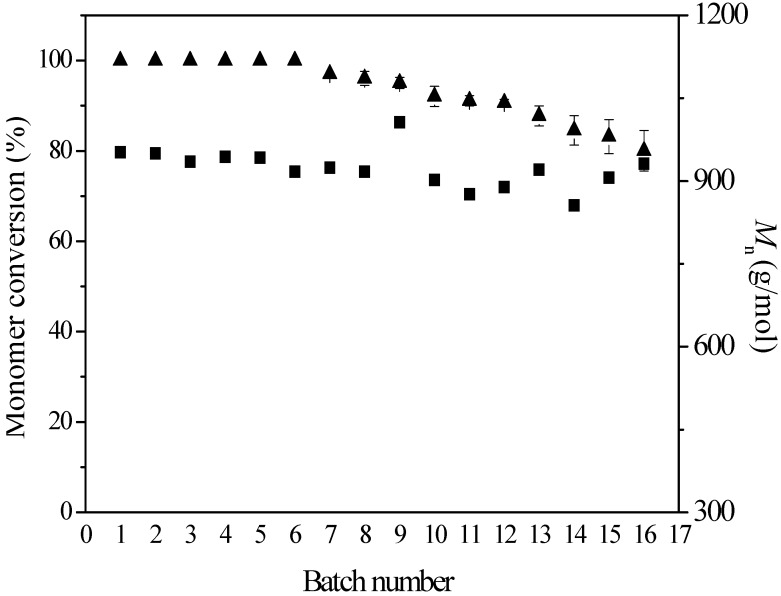
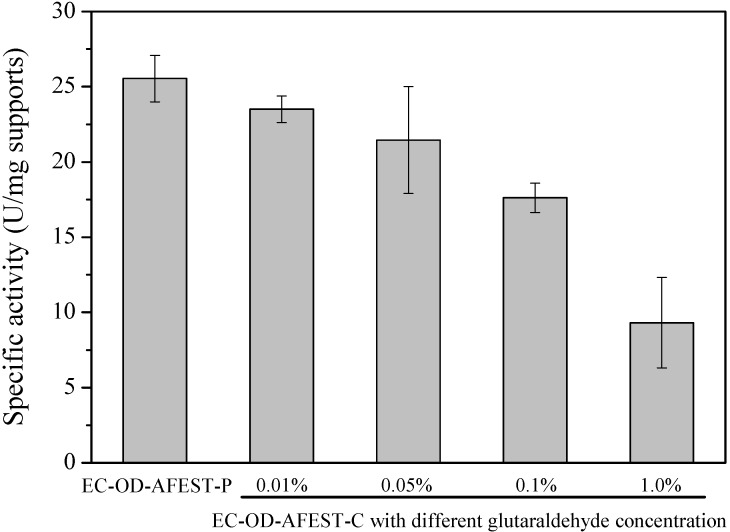
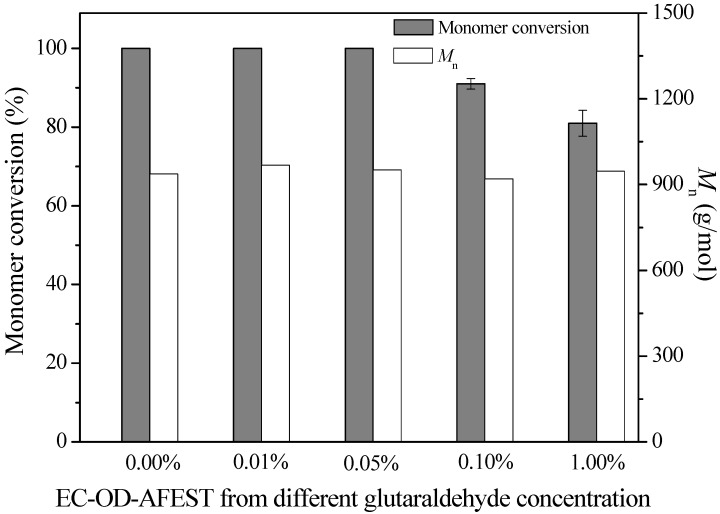
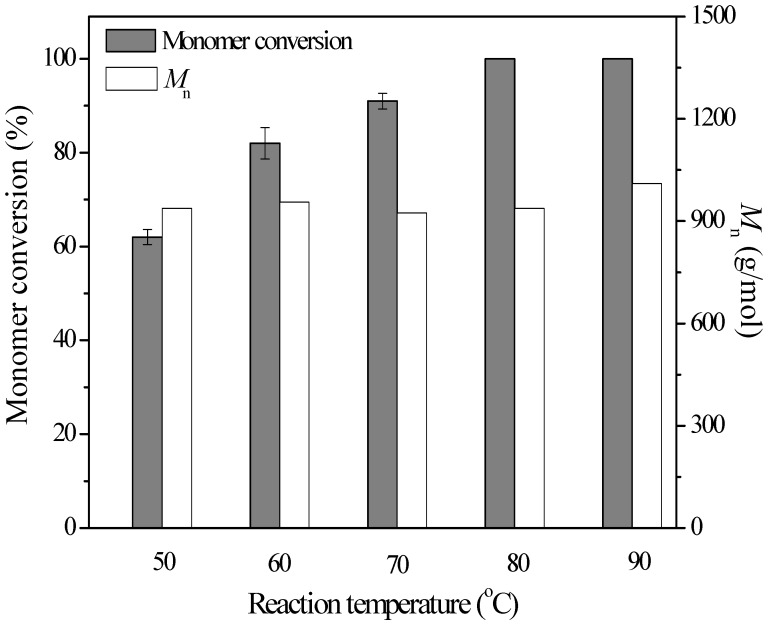
The immobilized thermophilic esterase from Archaeoglobus fulgidus was successfully constructed through the glutaraldehyde-mediated covalent coupling after its physical adsorption on a hydrophobic macroporous resin, Sepabeads EC-OD. Through 0.05% glutaraldehyde treatment, the prevention of enzyme leaching and the maintenance of catalytic activity could be simultaneously realized. Using the enzymatic ring-opening polymerization of ε-caprolactone as a model, effects of organic solvents and reaction temperature on the monomer conversion and product molecular weight were systematically investigated. After the optimization of reaction conditions, products were obtained with 100% monomer conversion and Mn values lower than 1010 g/mol. Furthermore, the cross‑linked immobilized thermophilic esterase exhibited an excellent operational stability, with monomer conversion values exceeding 90% over the course of 12 batch reactions, still more than 80% after 16 batch reactions.
嗜热栖热放线菌的固定化嗜热酯酶在物理吸附于疏水性大孔树脂Sepabeads EC-OD后,通过戊二醛介导的共价偶联成功构建。经0.05%戊二醛处理,可同时实现防止酶渗漏和维持催化活性。以ε-己内酯的酶促开环聚合为模型,系统研究了有机溶剂和反应温度对单体转化率和产物分子量的影响。优化反应条件后,得到了单体转化率为100%且Mn值低于1010 g/mol的产物。此外,交联固定化嗜热酯酶表现出优异的操作稳定性,在12批次反应过程中单体转化率超过90%,16批次反应后仍超过80%。