Shestov Alexander A, Liu Xiaojing, Ser Zheng, Cluntun Ahmad A, Hung Yin P, Huang Lei, Kim Dongsung, Le Anne, Yellen Gary, Albeck John G, Locasale Jason W
Division of Nutritional Sciences, Cornell University, Ithaca, United States.
Field of Biochemistry and Molecular Cell Biology, Department of Molecular Biology and Genetics, Cornell University, Ithaca, United States.
Elife. 2014 Jul 9;3:e03342. doi: 10.7554/eLife.03342.
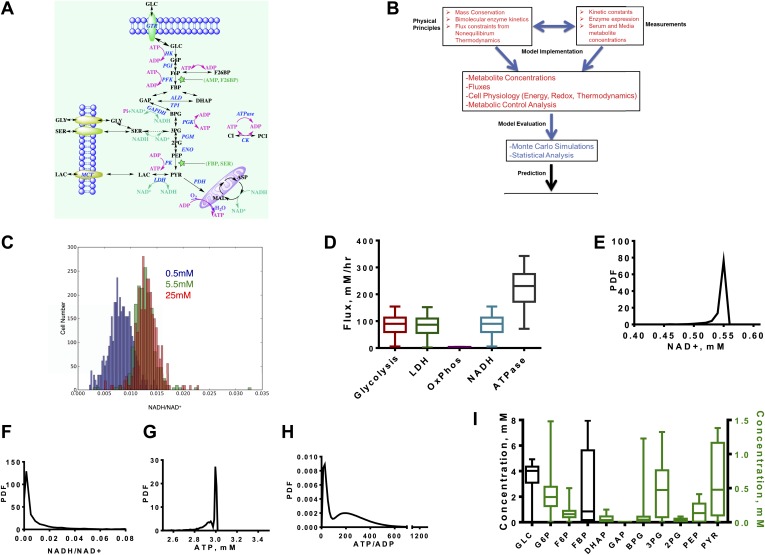
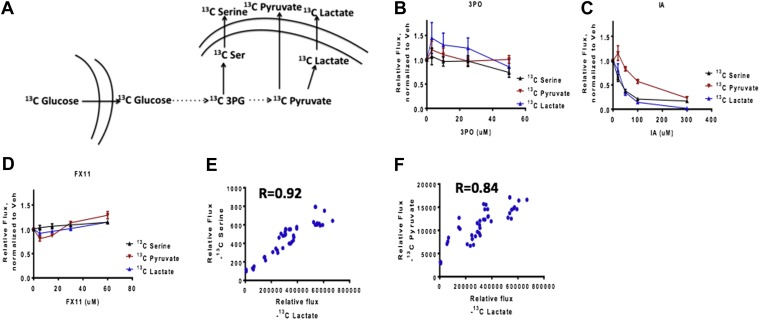
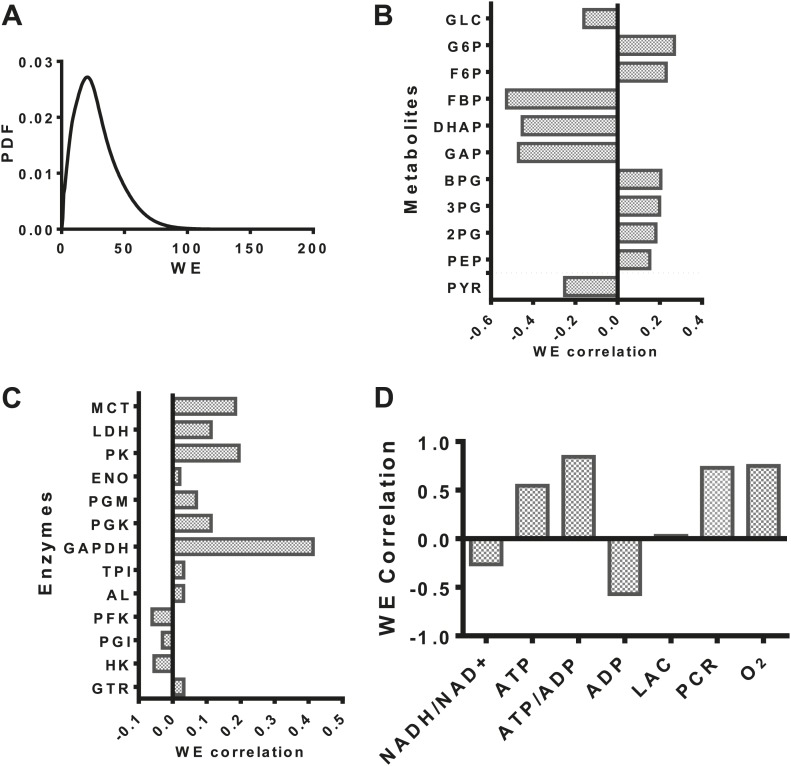
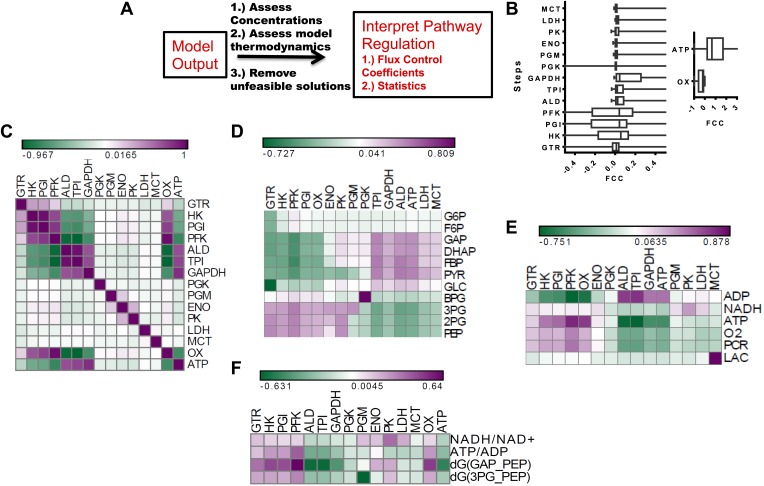
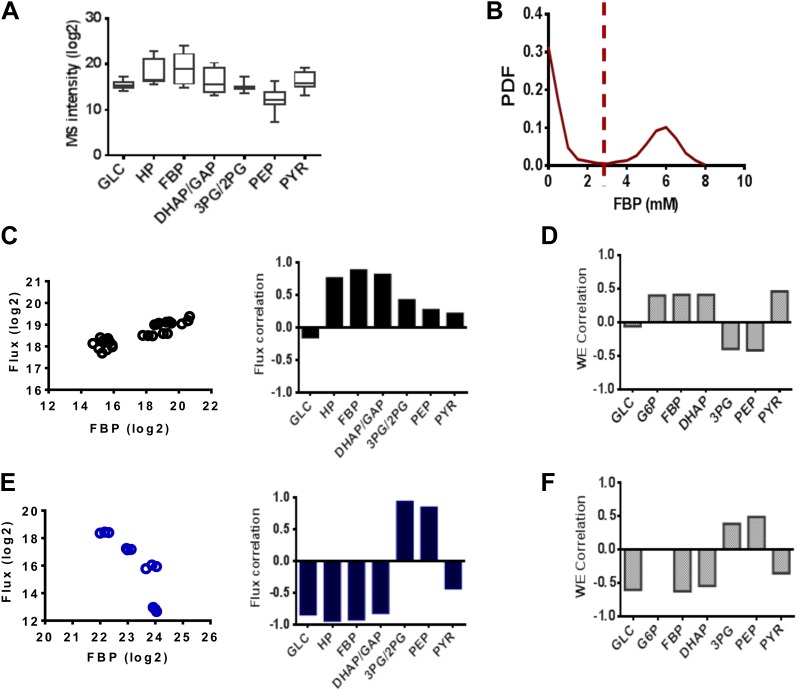
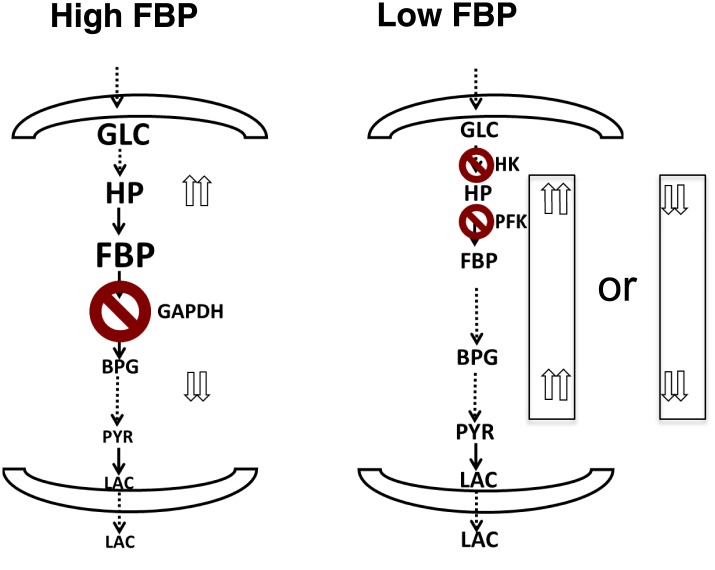
Aerobic glycolysis or the Warburg Effect (WE) is characterized by the increased metabolism of glucose to lactate. It remains unknown what quantitative changes to the activity of metabolism are necessary and sufficient for this phenotype. We developed a computational model of glycolysis and an integrated analysis using metabolic control analysis (MCA), metabolomics data, and statistical simulations. We identified and confirmed a novel mode of regulation specific to aerobic glycolysis where flux through GAPDH, the enzyme separating lower and upper glycolysis, is the rate-limiting step in the pathway and the levels of fructose (1,6) bisphosphate (FBP), are predictive of the rate and control points in glycolysis. Strikingly, negative flux control was found and confirmed for several steps thought to be rate-limiting in glycolysis. Together, these findings enumerate the biochemical determinants of the WE and suggest strategies for identifying the contexts in which agents that target glycolysis might be most effective.
有氧糖酵解或瓦伯格效应(WE)的特征是葡萄糖代谢增加生成乳酸。目前尚不清楚对于这种表型而言,代谢活动发生何种定量变化是必要且充分的。我们开发了一个糖酵解计算模型,并使用代谢控制分析(MCA)、代谢组学数据和统计模拟进行综合分析。我们识别并确认了一种有氧糖酵解特有的新型调控模式,即通过甘油醛-3-磷酸脱氢酶(GAPDH,分隔糖酵解上下游的酶)的通量是该途径中的限速步骤,而果糖-1,6-二磷酸(FBP)的水平可预测糖酵解中的速率和控制点。令人惊讶的是,对于糖酵解中几个被认为是限速步骤的反应,我们发现并证实了负通量控制。这些发现共同列举了瓦伯格效应的生化决定因素,并提出了识别靶向糖酵解的药物可能最有效的背景的策略。