Eltoukhy Ahmed A, Sahay Gaurav, Cunningham James M, Anderson Daniel G
Koch Institute for Integrative Cancer Research, Massachusetts Institute of Technology , Cambridge, Massachusetts 02139, United States.
ACS Nano. 2014 Aug 26;8(8):7905-13. doi: 10.1021/nn501630h. Epub 2014 Jul 16.
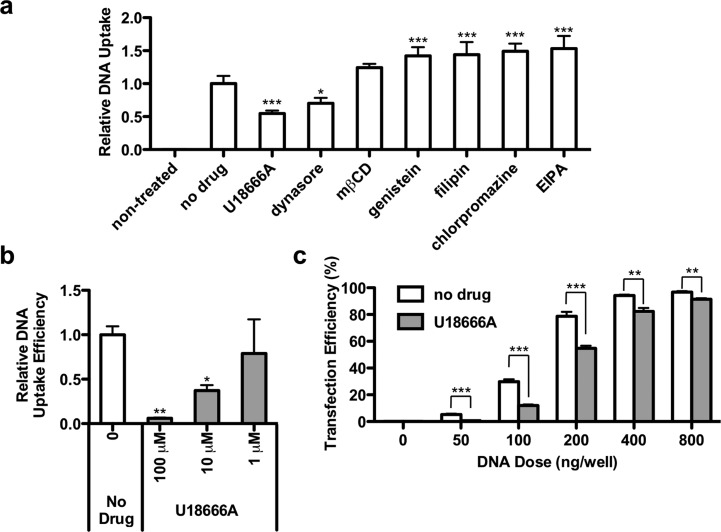
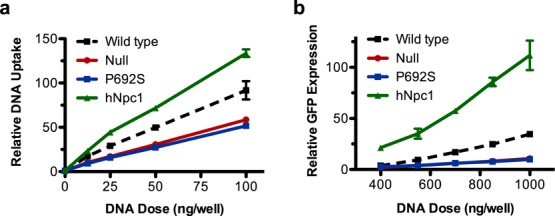
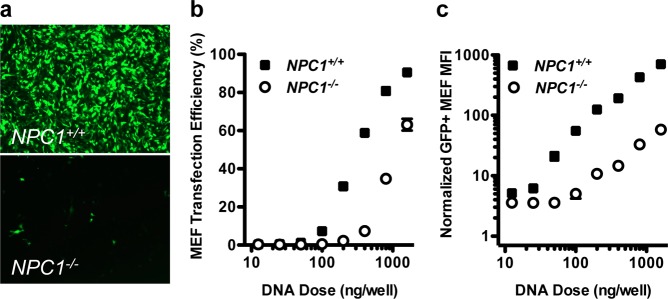
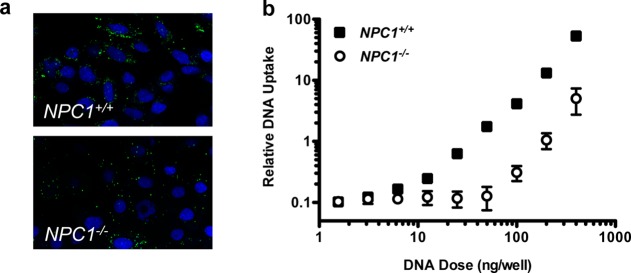
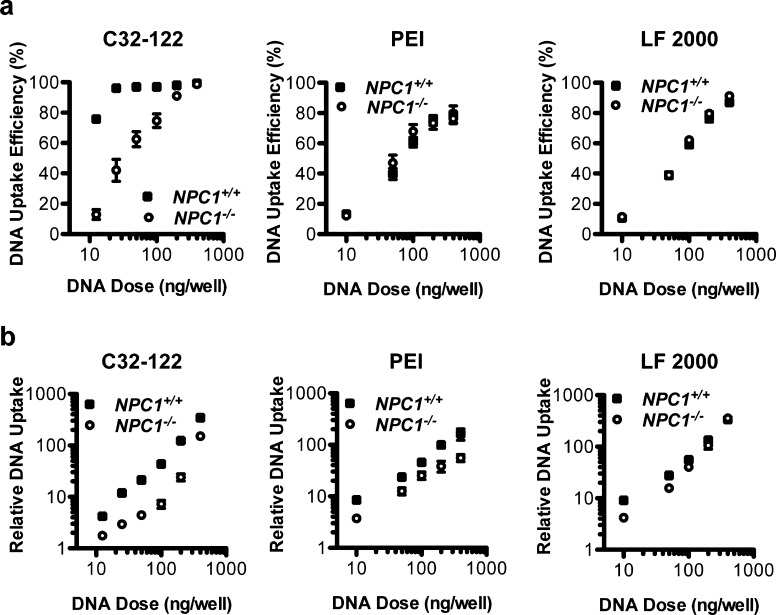
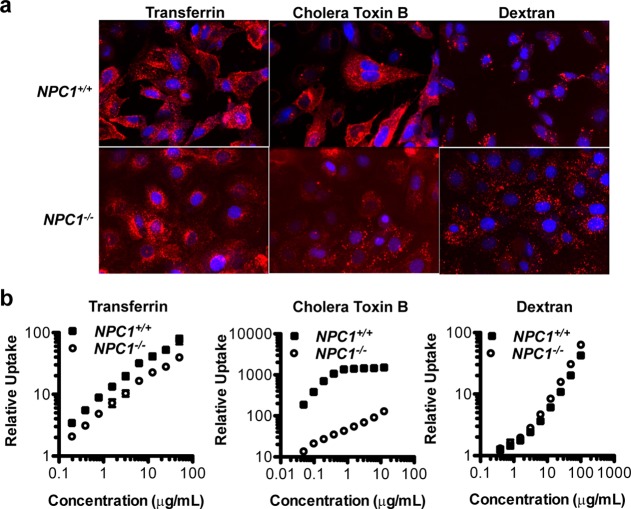
Despite intensive research effort, the rational design of improved nanoparticulate drug carriers remains challenging, in part due to a limited understanding of the determinants of nanoparticle entry and transport in target cells. Recent studies have shown that Niemann-Pick C1 (NPC1), the lysosome membrane protein that mediates trafficking of cholesterol in cells, is involved in the endosomal escape and subsequent infection caused by filoviruses, and that its absence promotes the retention and efficacy of lipid nanoparticles encapsulating siRNA. Here, we report that NPC1 deficiency results in dramatic reduction in internalization and transfection efficiency mediated by degradable cationic gene delivery polymers, poly(β-amino ester)s (PBAEs). PBAEs utilized cholesterol and dynamin-dependent endocytosis pathways, and these were found to be heavily compromised in NPC1-deficient cells. In contrast, the absence of NPC1 had minor effects on DNA uptake mediated by polyethylenimine or Lipofectamine 2000. Strikingly, stable overexpression of human NPC1 in chinese hamster ovary cells was associated with enhanced gene uptake (3-fold) and transfection (10-fold) by PBAEs. These findings reveal a role of NPC1 in the regulation of endocytic mechanisms affecting nanoparticle trafficking. We hypothesize that in-depth understanding sites of entry and endosomal escape may lead to highly efficient nanotechnologies for drug delivery.
尽管进行了深入的研究,但改进纳米颗粒药物载体的合理设计仍然具有挑战性,部分原因是对纳米颗粒进入和在靶细胞中转运的决定因素了解有限。最近的研究表明,尼曼-皮克C1(NPC1),即介导细胞内胆固醇运输的溶酶体膜蛋白,参与丝状病毒引起的内体逃逸和随后的感染,并且其缺失会提高包裹小干扰RNA的脂质纳米颗粒的滞留率和功效。在此,我们报告NPC1缺陷导致可降解阳离子基因递送聚合物聚(β-氨基酯)(PBAE)介导的内化和转染效率显著降低。PBAE利用胆固醇和发动蛋白依赖性内吞途径,并且发现这些途径在NPC1缺陷细胞中严重受损。相比之下,NPC1的缺失对聚乙烯亚胺或脂质体2000介导的DNA摄取影响较小。引人注目的是,中国仓鼠卵巢细胞中人NPC1的稳定过表达与PBAE介导的基因摄取增强(3倍)和转染增强(10倍)相关。这些发现揭示了NPC1在调节影响纳米颗粒运输的内吞机制中的作用。我们假设,深入了解进入位点和内体逃逸可能会带来高效的药物递送纳米技术。