Berka Vladimír, Liu Wen, Wu Gang, Tsai Ah-Lim
Division of Hematology, Department of Internal Medicine, University of Texas Health Science Center at Houston, Houston, TX 77030, United States.
Division of Hematology, Department of Internal Medicine, University of Texas Health Science Center at Houston, Houston, TX 77030, United States.
J Inorg Biochem. 2014 Oct;139:93-105. doi: 10.1016/j.jinorgbio.2014.06.011. Epub 2014 Jun 27.
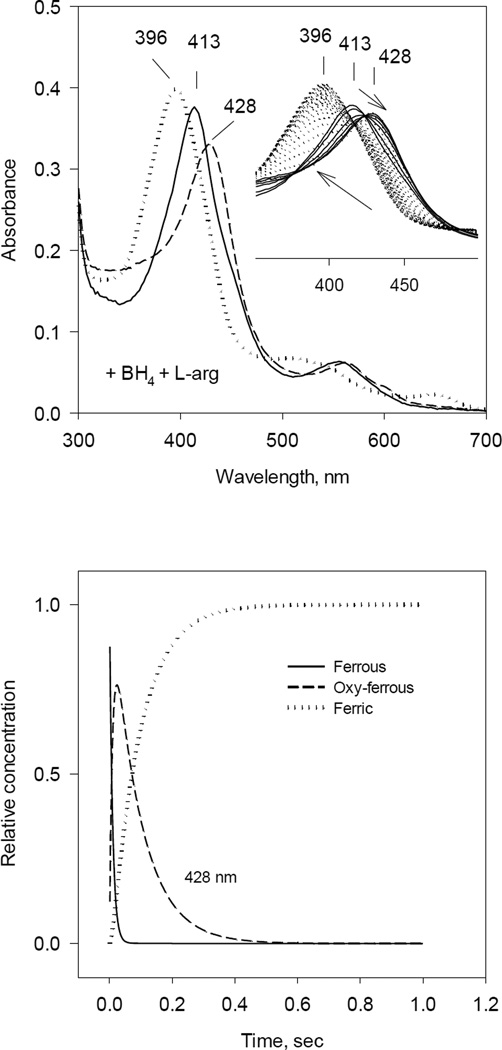
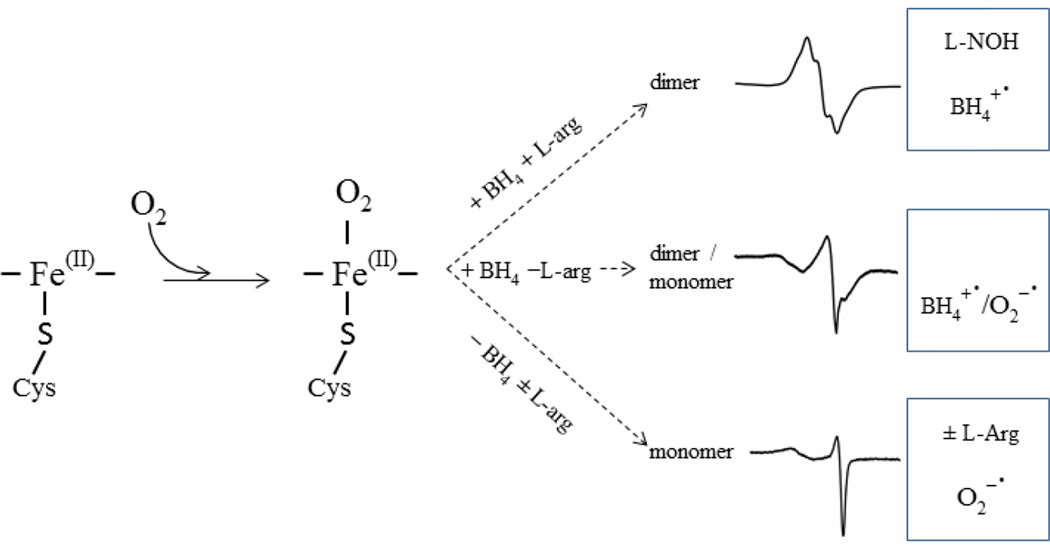
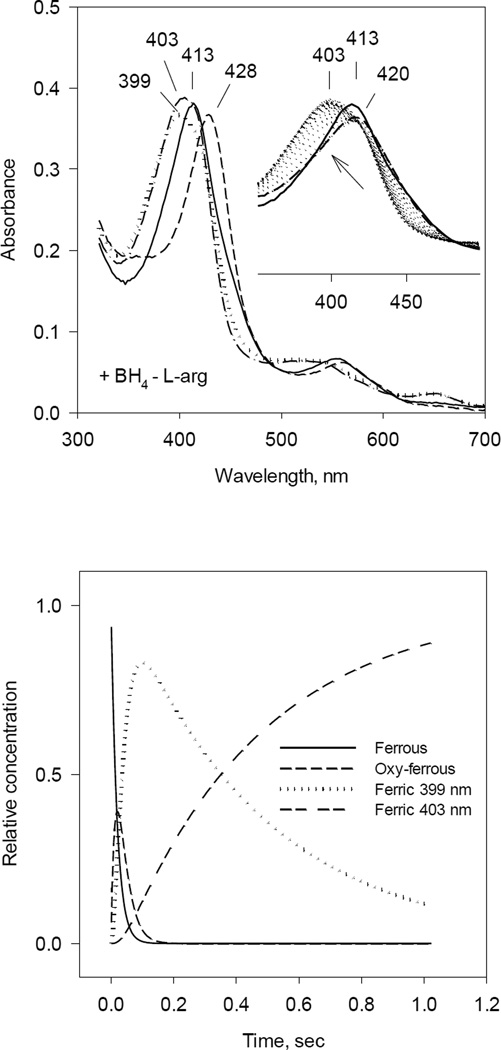
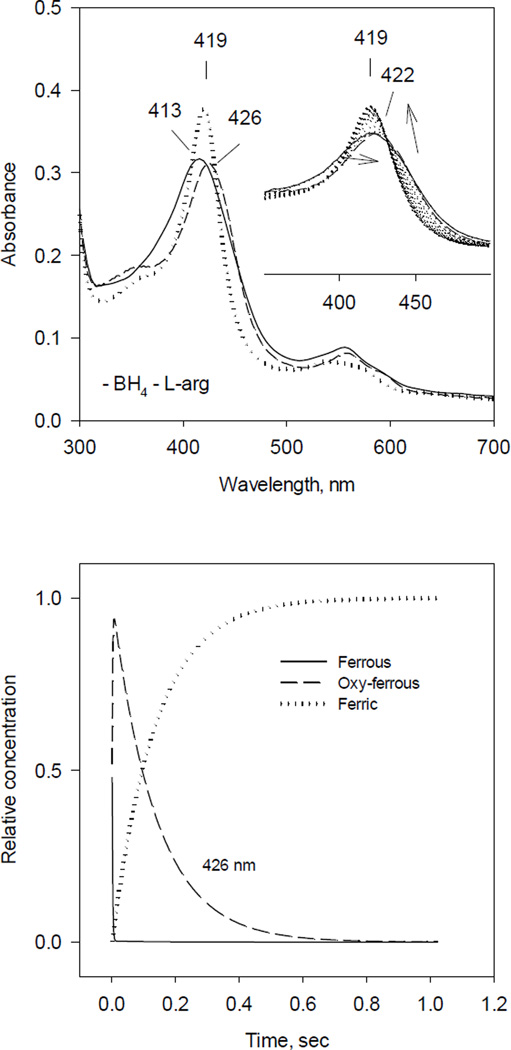
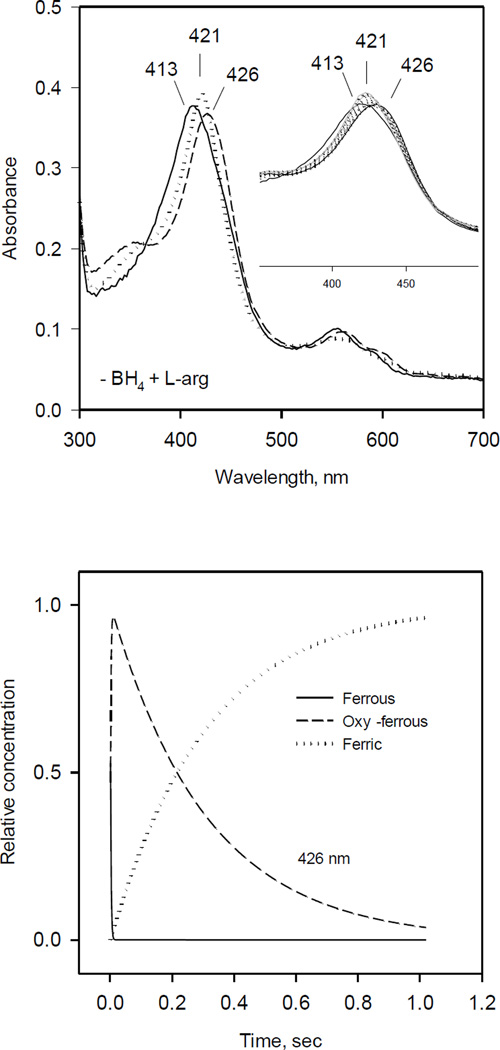
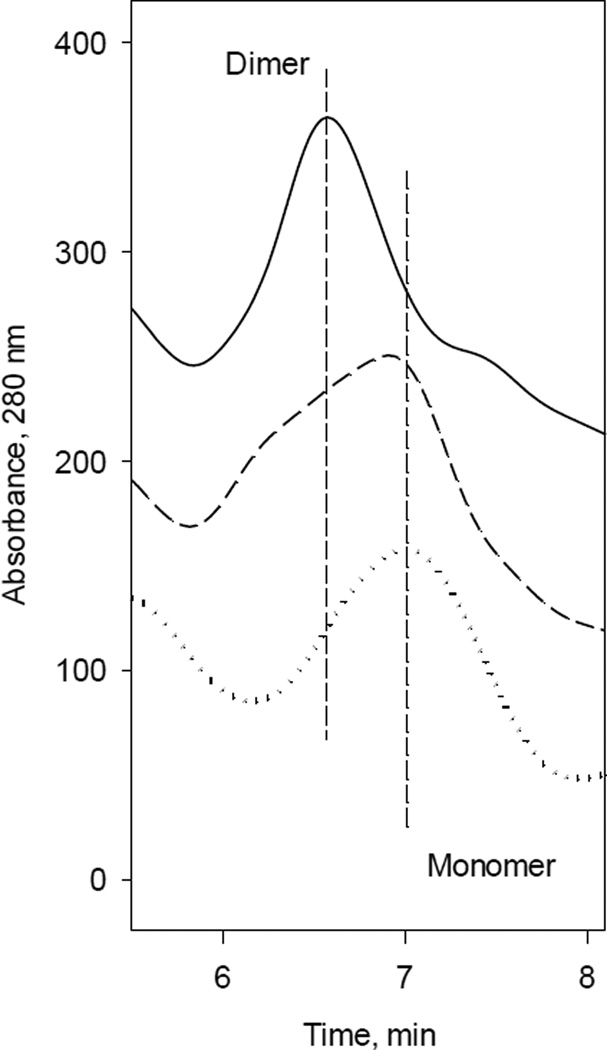
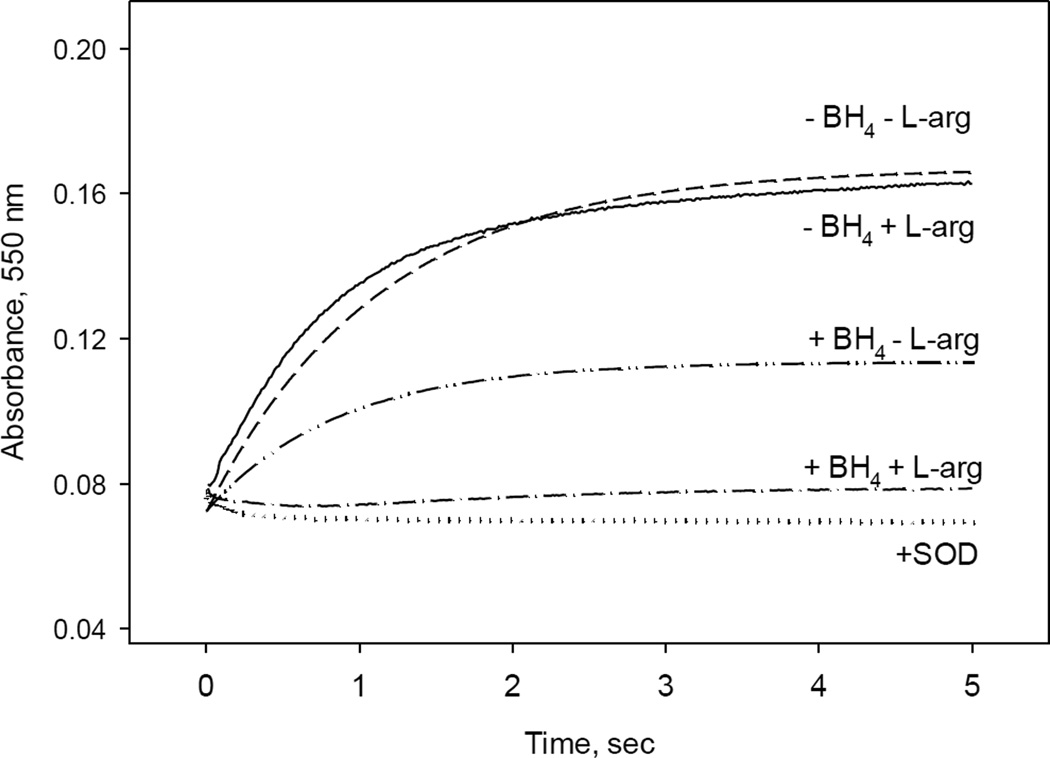
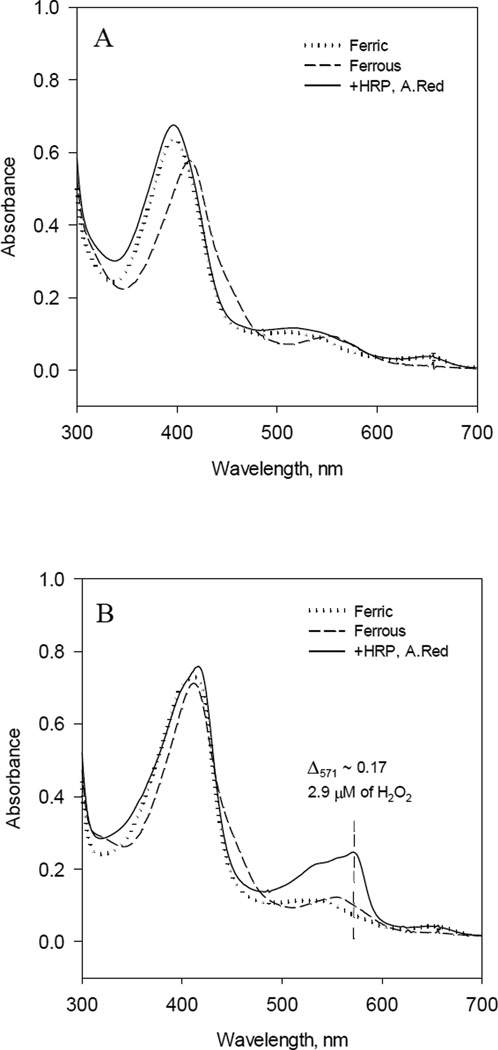
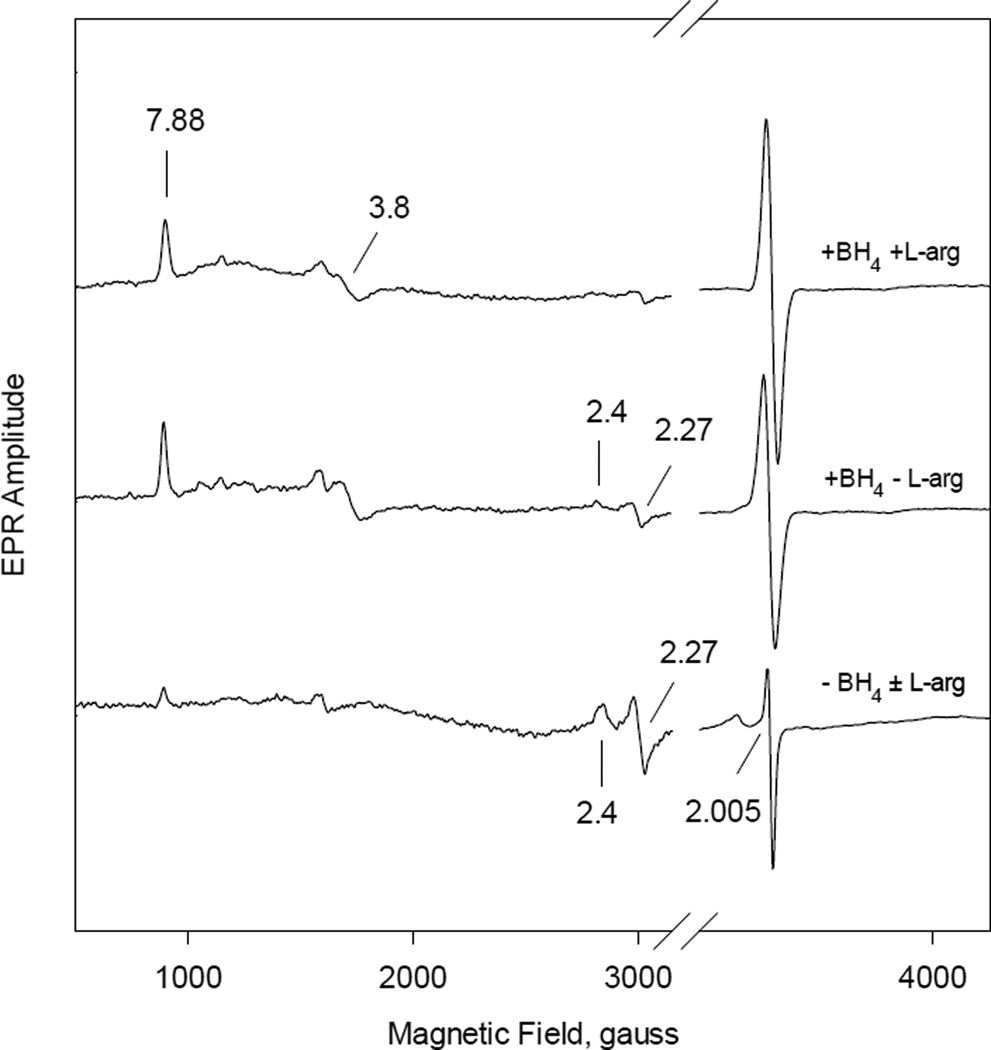
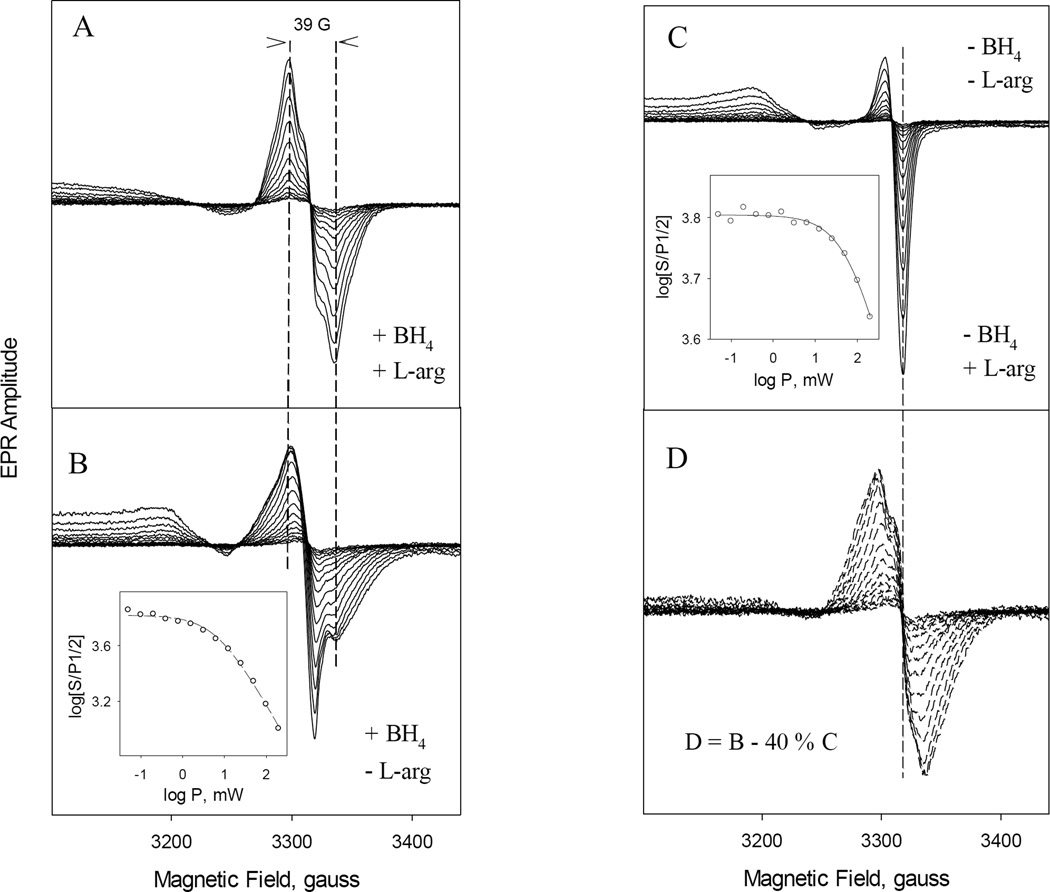
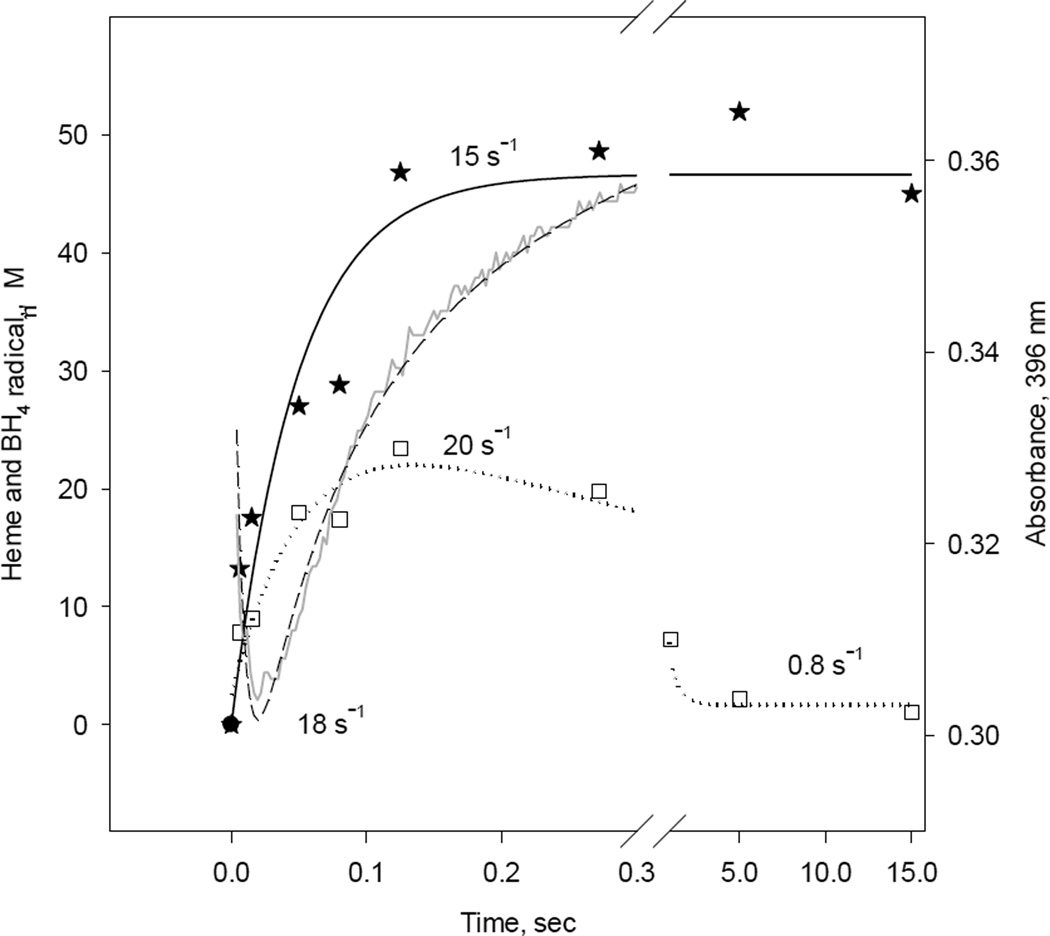
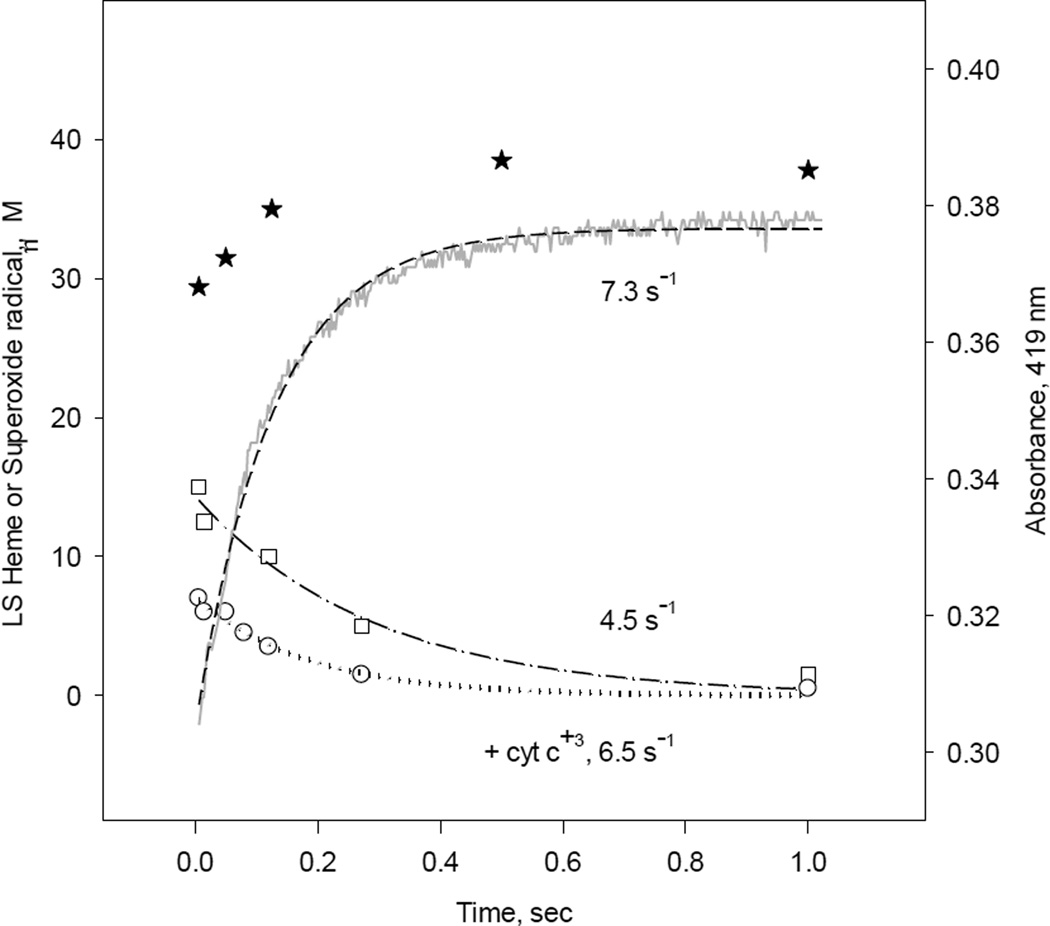
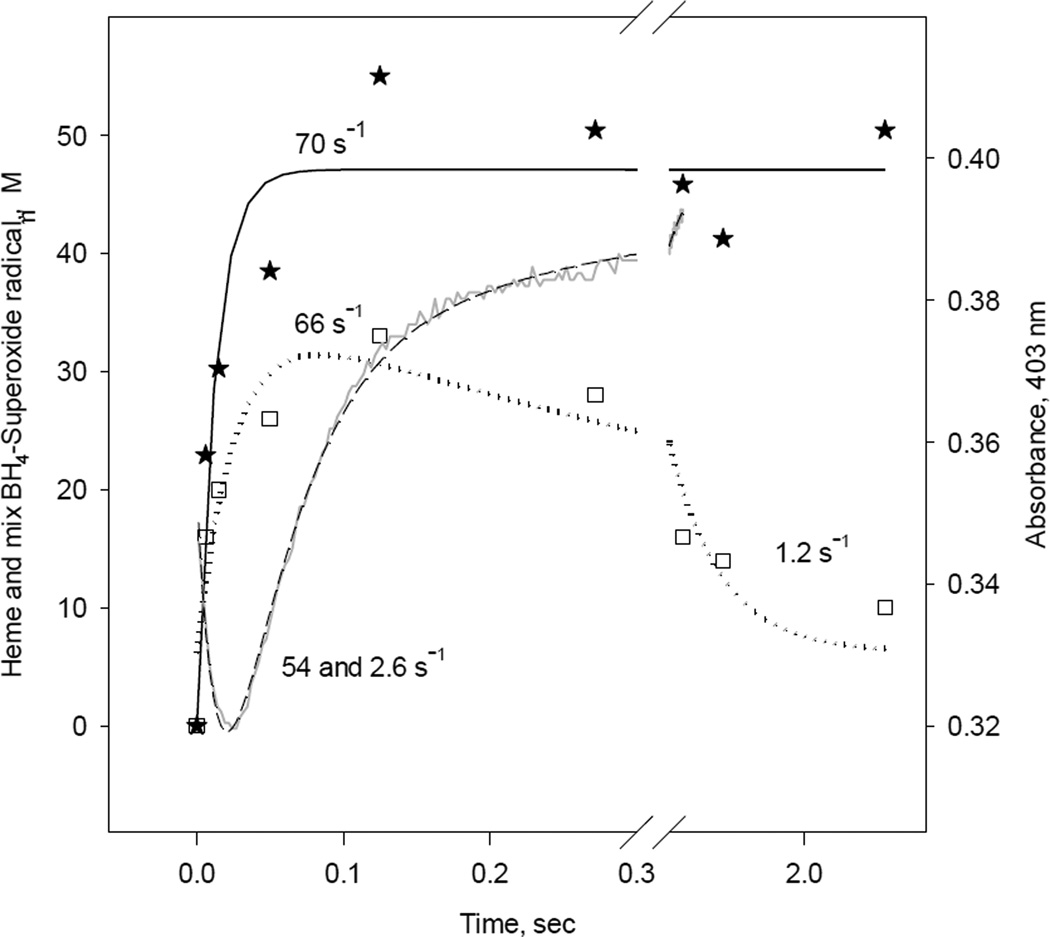
Inducible nitric-oxide synthase (iNOS) produces the reactive oxygen and nitrogen species (ROS/RNS) involved in bacteria killing and is crucial in the host defense mechanism. However, high level ROS/RNS can also be detrimental to normal cells and thus their production has to be tightly controlled. Availability or deficiency of tetrahydrobiopterin (BH4) cofactor and l-arginine substrate controls coupling or uncoupling of NOS catalysis. Fully coupled reaction, with abundant BH4 and l-arginine, produces NO whereas the uncoupled NOS (in the absence of BH4 and/or l-arginine) generates ROS/RNS. In the current work we focus on direct rapid freeze EPR to characterize the structure and kinetics of oxygen-induced radical intermediates produced by ferrous inducible NOS oxygenase domain (iNOSox) in the presence or absence of BH4 and/or l-arginine. Fully reconstituted iNOSox (+BH4, +L-Arg) forms a dimer and yields a typical BH4 radical that indicates coupled reaction. iNOSox (-BH4) remains mainly monomeric and produces exclusively superoxide, that is only marginally affected by the presence of l-arginine. iNOSox (+BH4, -L-Arg) exists as a monomer/dimer mixture and yields both BH4 radical and superoxide. Present study is a natural extension of our previous work on the ferrous endothelial NOSox (eNOSox) [V. Berka, G. Wu, H.C. Yeh, G. Palmer, A.L. Tsai, J. Biol. Chem. 279 (2004) 32243-32251] and ferrous neuronal NOSox (nNOSox) [V. Berka, L.H. Wang, A.L. Tsai, Biochemistry 47 (2008) 405-420]. Overall, our data suggests different regulatory roles of l-arginine and BH4 in the production of oxygen-induced radical intermediates in NOS isoforms which nicely serve individual functional role.
诱导型一氧化氮合酶(iNOS)产生参与细菌杀灭的活性氧和氮物种(ROS/RNS),在宿主防御机制中至关重要。然而,高水平的ROS/RNS也可能对正常细胞有害,因此其产生必须受到严格控制。四氢生物蝶呤(BH4)辅因子和L-精氨酸底物的可用性或缺乏控制着NOS催化的偶联或解偶联。在BH4和L-精氨酸丰富的情况下,完全偶联反应产生NO,而解偶联的NOS(在没有BH4和/或L-精氨酸的情况下)产生ROS/RNS。在当前工作中,我们专注于直接快速冷冻电子顺磁共振,以表征在有或没有BH4和/或L-精氨酸的情况下,亚铁诱导型NOS加氧酶结构域(iNOSox)产生的氧诱导自由基中间体的结构和动力学。完全重构的iNOSox(+BH4,+L-Arg)形成二聚体,并产生典型的BH4自由基,表明发生了偶联反应。iNOSox(-BH4)主要保持单体状态,仅产生超氧化物,L-精氨酸的存在对其影响很小。iNOSox(+BH4,-L-Arg)以单体/二聚体混合物形式存在,同时产生BH4自由基和超氧化物。本研究是我们先前关于亚铁内皮NOSox(eNOSox)[V. Berka,G. Wu,H.C. Yeh,G. Palmer,A.L. Tsai,J. Biol. Chem. 279(2004)32243-32251]和亚铁神经元NOSox(nNOSox)[V. Berka,L.H. Wang,A.L. Tsai,Biochemistry 47(2008)405-420]工作的自然延伸。总体而言,我们的数据表明L-精氨酸和BH4在NOS同工型中氧诱导自由基中间体产生过程中具有不同的调节作用,这很好地服务于各自的功能角色。