Bridges Hannah R, Jones Andrew J Y, Pollak Michael N, Hirst Judy
*Medical Research Council Mitochondrial Biology Unit, Wellcome Trust/MRC Building, Hills Road, Cambridge, CB2 0XY, U.K.
†Department of Oncology, McGill University and Lady Davis Research Institute of the Jewish General Hospital, Montreal, Quebec, Canada, H3T 1E2.
Biochem J. 2014 Sep 15;462(3):475-87. doi: 10.1042/BJ20140620.
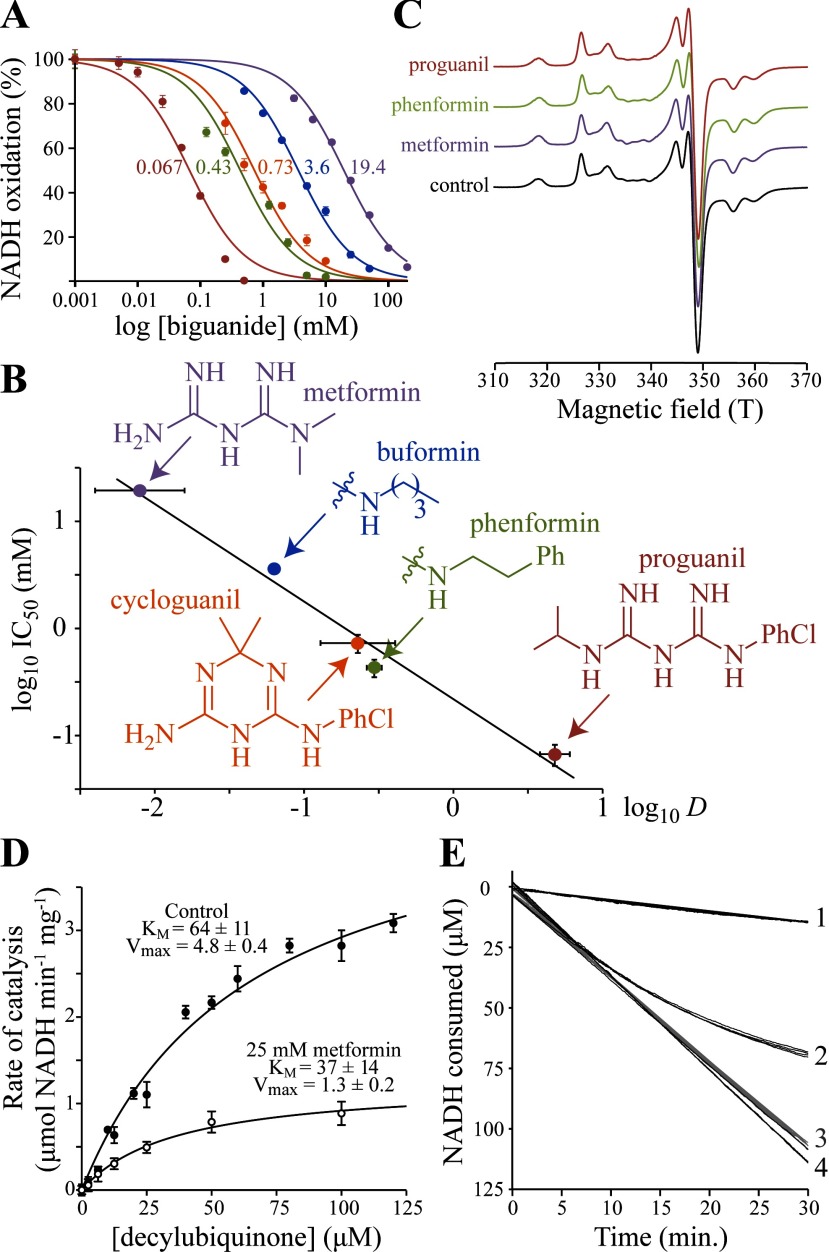
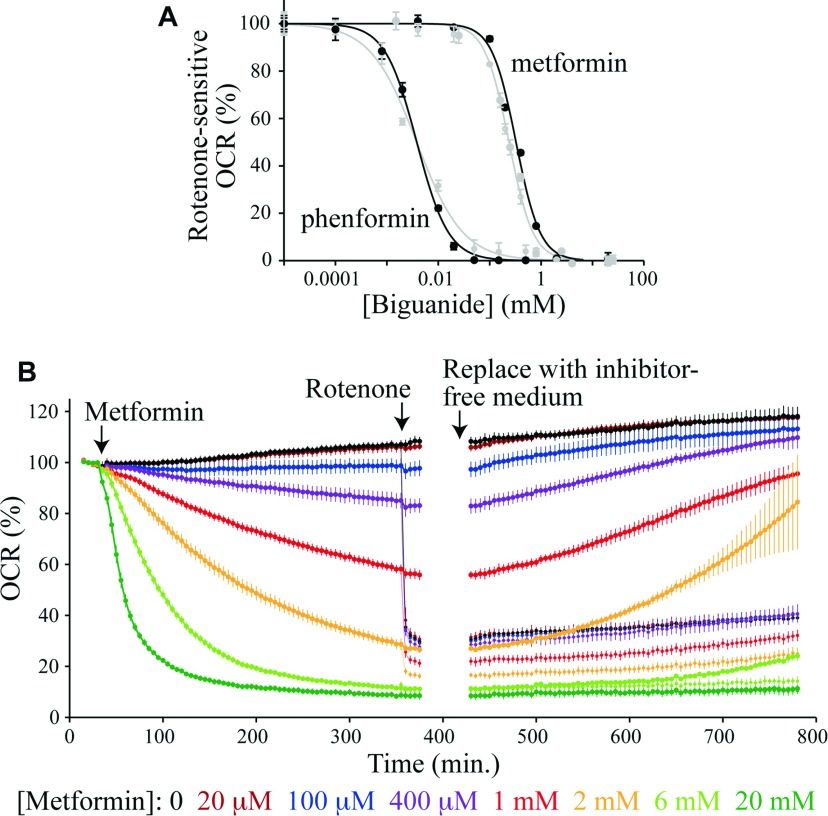
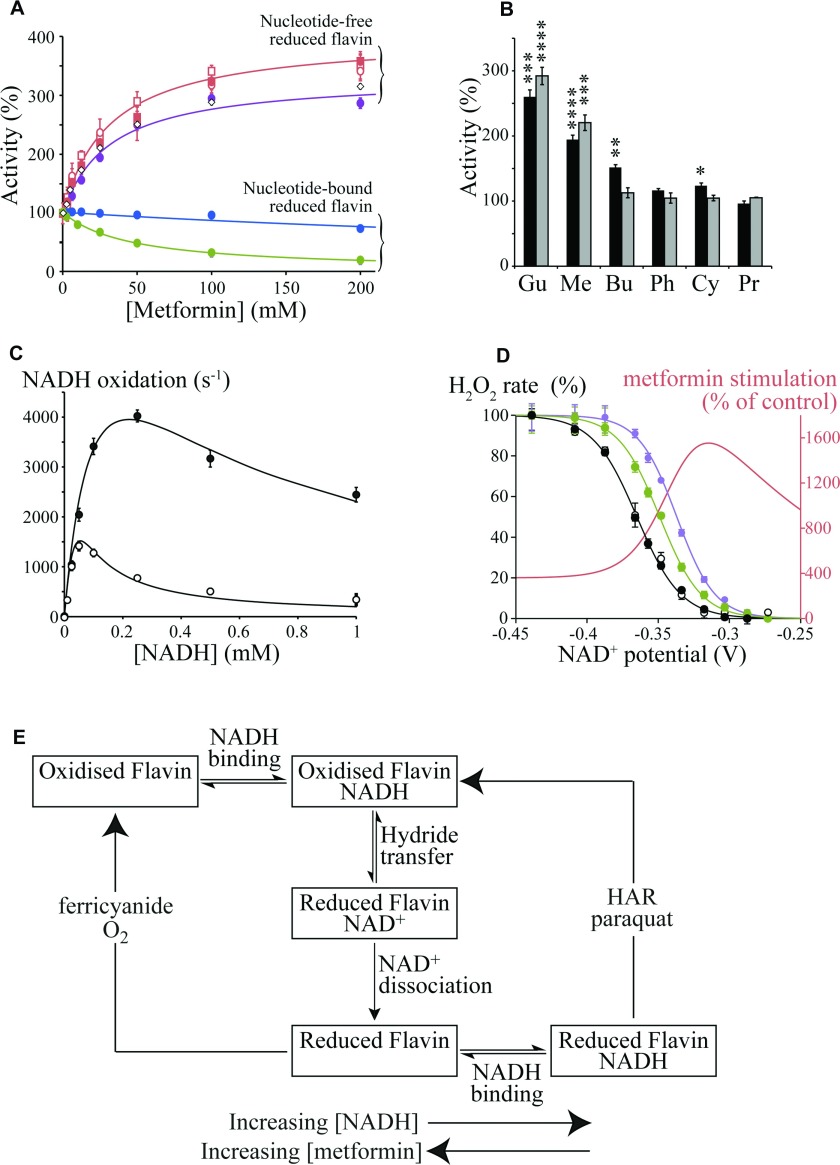
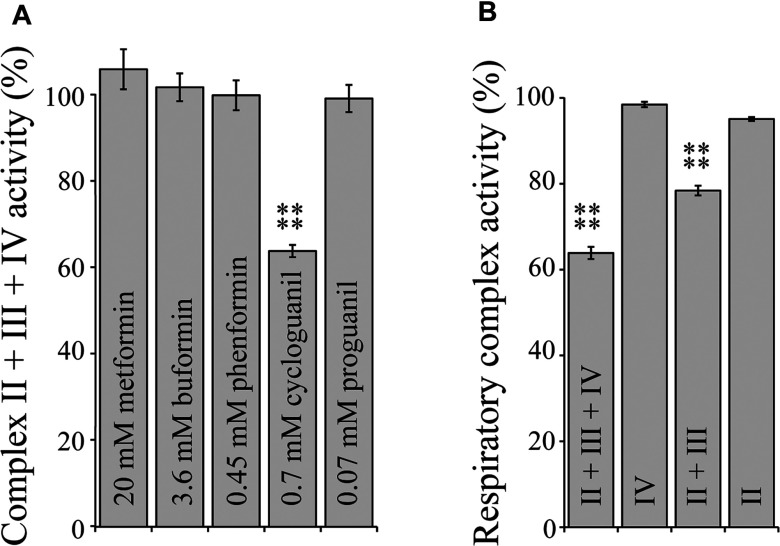
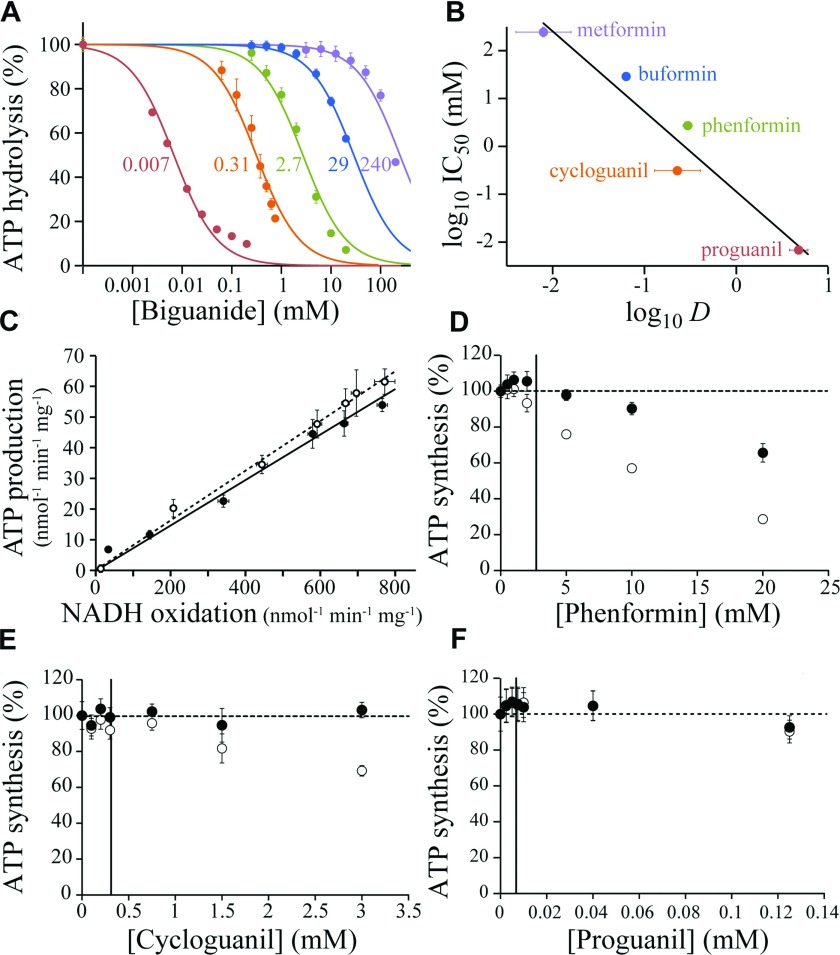
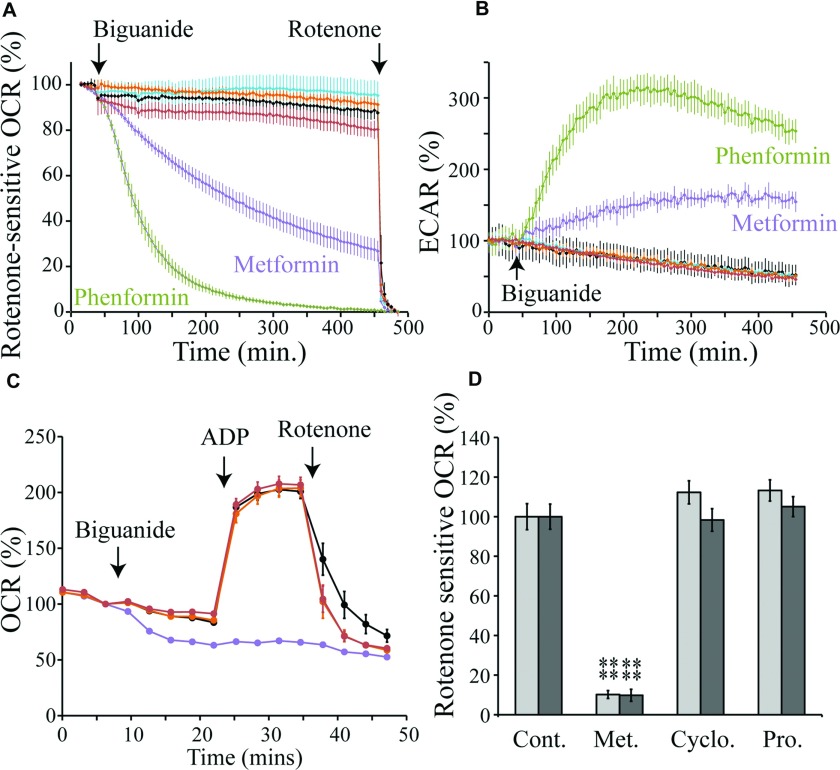
The biguanide metformin is widely prescribed for Type II diabetes and has anti-neoplastic activity in laboratory models. Despite evidence that inhibition of mitochondrial respiratory complex I by metformin is the primary cause of its cell-lineage-specific actions and therapeutic effects, the molecular interaction(s) between metformin and complex I remain uncharacterized. In the present paper, we describe the effects of five pharmacologically relevant biguanides on oxidative phosphorylation in mammalian mitochondria. We report that biguanides inhibit complex I by inhibiting ubiquinone reduction (but not competitively) and, independently, stimulate reactive oxygen species production by the complex I flavin. Biguanides also inhibit mitochondrial ATP synthase, and two of them inhibit only ATP hydrolysis, not synthesis. Thus we identify biguanides as a new class of complex I and ATP synthase inhibitor. By comparing biguanide effects on isolated complex I and cultured cells, we distinguish three anti-diabetic and potentially anti-neoplastic biguanides (metformin, buformin and phenformin) from two anti-malarial biguanides (cycloguanil and proguanil): the former are accumulated into mammalian mitochondria and affect oxidative phosphorylation, whereas the latter are excluded so act only on the parasite. Our mechanistic and pharmacokinetic insights are relevant to understanding and developing the role of biguanides in new and existing therapeutic applications, including cancer, diabetes and malaria.
双胍类药物二甲双胍被广泛用于治疗II型糖尿病,并且在实验室模型中具有抗肿瘤活性。尽管有证据表明二甲双胍对线粒体呼吸复合物I的抑制作用是其细胞谱系特异性作用和治疗效果的主要原因,但二甲双胍与复合物I之间的分子相互作用仍未明确。在本文中,我们描述了五种具有药理学相关性的双胍类药物对哺乳动物线粒体氧化磷酸化的影响。我们报告称,双胍类药物通过抑制泛醌还原(而非竞争性抑制)来抑制复合物I,并独立地通过复合物I黄素刺激活性氧的产生。双胍类药物还抑制线粒体ATP合酶,其中两种仅抑制ATP水解,而非合成。因此,我们将双胍类药物鉴定为一类新型的复合物I和ATP合酶抑制剂。通过比较双胍类药物对分离的复合物I和培养细胞的作用,我们区分出三种抗糖尿病且可能具有抗肿瘤作用的双胍类药物(二甲双胍、丁福明和苯乙双胍)与两种抗疟双胍类药物(环氯胍和氯胍):前者可积聚在哺乳动物线粒体中并影响氧化磷酸化,而后者被排除在外,因此仅作用于寄生虫。我们的机制和药代动力学见解有助于理解和开发双胍类药物在新的和现有的治疗应用中的作用,包括癌症、糖尿病和疟疾。