Xiong Xueyan, Shi Xiujuan, Chen Fengshan
Laboratory of Oral Biomedical Science and Translational Medicine, Department of Orthodontics, School of Stomatology, Tongji University, Shanghai 200072, P.R. China.
School of Medicine, Tongji University, Shanghai 200092, P.R. China.
Int J Mol Med. 2014 Sep;34(3):749-55. doi: 10.3892/ijmm.2014.1837. Epub 2014 Jul 8.
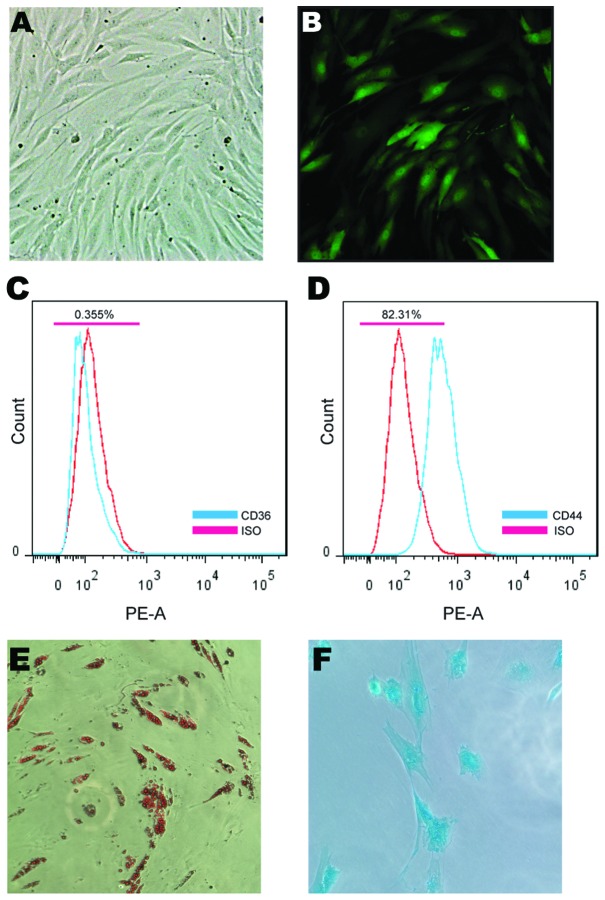
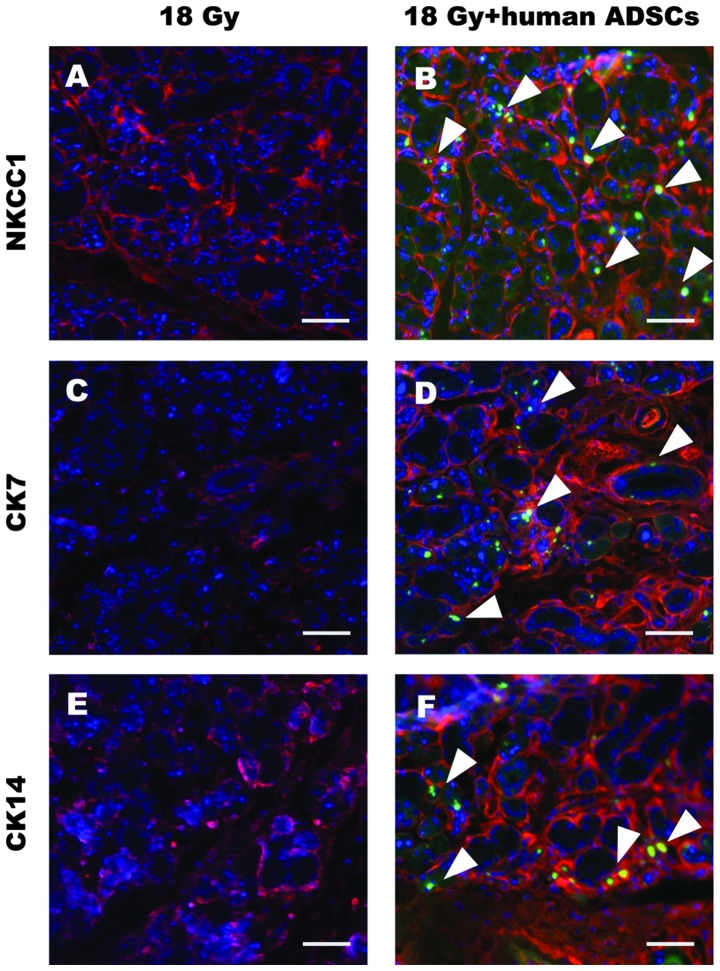
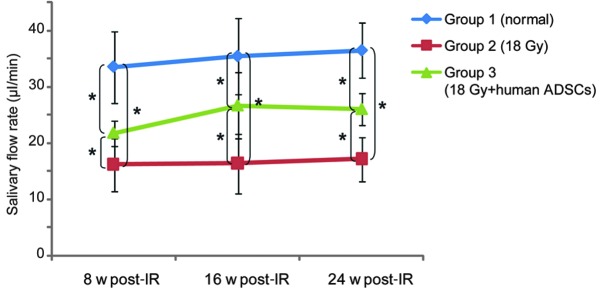
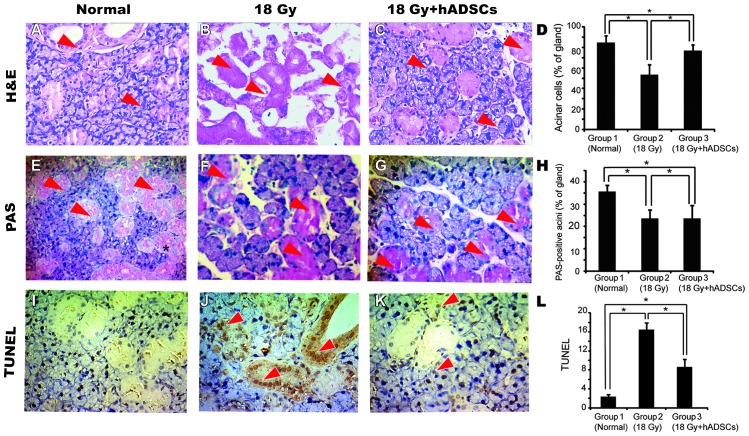
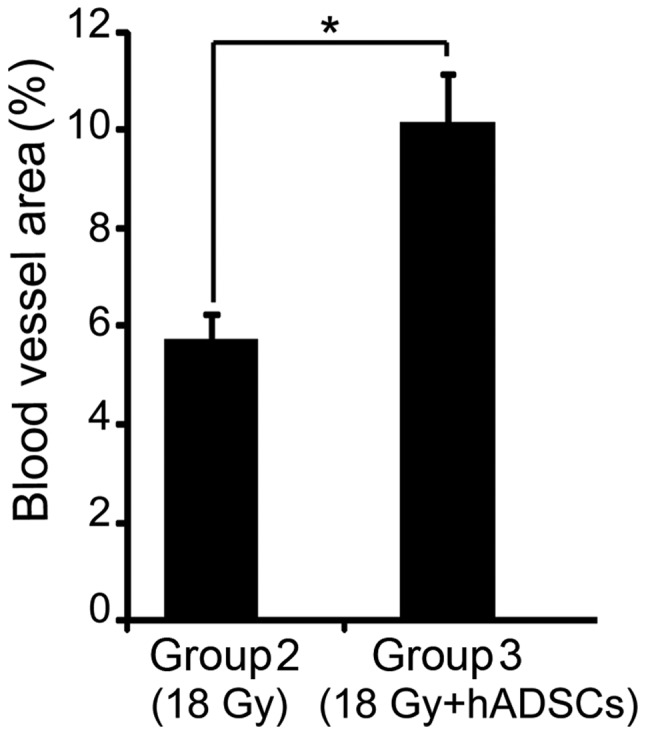
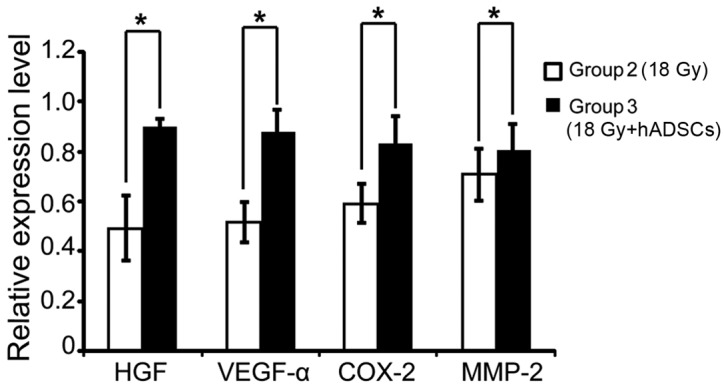
Hyposalivation is an intractable side‑effect of radiotherapy for head and neck cancer. It is caused by the irreversible loss of acinar cells and decreased saliva secretion. However, this situation severely compromises the quality of life of affected patients. Currently, there is no effective treatment for this condition. In the present study, we developed a novel approach to regenerate the function of the irradiation‑damaged salivary glands using human adipose tissue‑derived stem cell (hADSC) intraglandular transplantation. ZsGreen‑labeled hADSCs were adoptively transferred into Sprague‑Dawley (SD) rat submandibular glands immediately following exposure to 18 Gy irradiation. A higher salivary flow rate (SFR) was observed in the hADSC‑treated group. Tissue improvement, including angiogenesis, anti‑apoptosis and anti‑fibrosis, was detected in the hADSC‑treated glands as compared to the untreated glands. Quantitative reverse transcription PCR (RT-qPCR) revealed a significantly higher expression of vascular endothelial growth factor (VEGF), hepatocyte growth factor (HGF), cyclooxygenase‑2 (COX‑2) and matrix metalloproteinase‑2 (MMP‑2) in the hADSC‑treated rats. Furthermore, immunohistochemical analysis indicated that the hADSCs had differentiated into acinar and ductal cells in the rat submandibular glands. Thus, our results suggest that hADSCs are able to regenerate irradiation‑damaged salivary glands through glandular transplantation.
唾液分泌减少是头颈部癌放疗难以处理的副作用。它是由腺泡细胞不可逆丧失和唾液分泌减少引起的。然而,这种情况严重损害了受影响患者的生活质量。目前,针对这种病症尚无有效治疗方法。在本研究中,我们开发了一种新方法,即通过人脂肪组织衍生干细胞(hADSC)腺体内移植来恢复受辐射损伤唾液腺的功能。在对Sprague-Dawley(SD)大鼠下颌下腺进行18 Gy照射后,立即将ZsGreen标记的hADSCs过继转移至大鼠体内。在hADSC治疗组中观察到较高的唾液流速(SFR)。与未治疗的腺体相比,在hADSC治疗的腺体中检测到包括血管生成、抗凋亡和抗纤维化在内的组织改善。定量逆转录PCR(RT-qPCR)显示,在hADSC治疗的大鼠中,血管内皮生长因子(VEGF)、肝细胞生长因子(HGF)、环氧化酶-2(COX-2)和基质金属蛋白酶-2(MMP-2)的表达显著更高。此外,免疫组织化学分析表明,hADSCs已在大鼠下颌下腺中分化为腺泡细胞和导管细胞。因此,我们的结果表明,hADSCs能够通过腺体移植使受辐射损伤的唾液腺再生。