Crack Jason C, Stapleton Melanie R, Green Jeffrey, Thomson Andrew J, Le Brun Nick E
*Centre for Molecular and Structural Biochemistry, School of Chemistry, University of East Anglia, Norwich Research Park, Norwich NR4 7TJ, U.K.
†Department of Molecular Biology and Biotechnology, University of Sheffield, Sheffield S10 2TN, U.K.
Biochem J. 2014 Oct 1;463(1):83-92. doi: 10.1042/BJ20140169.
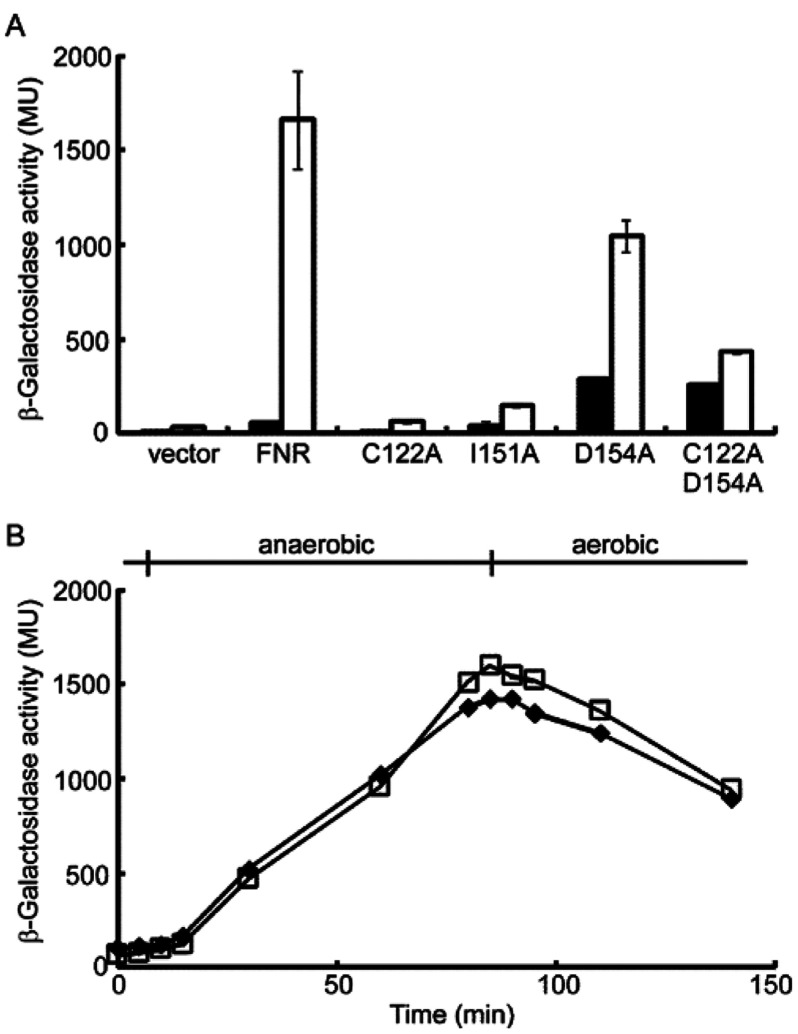
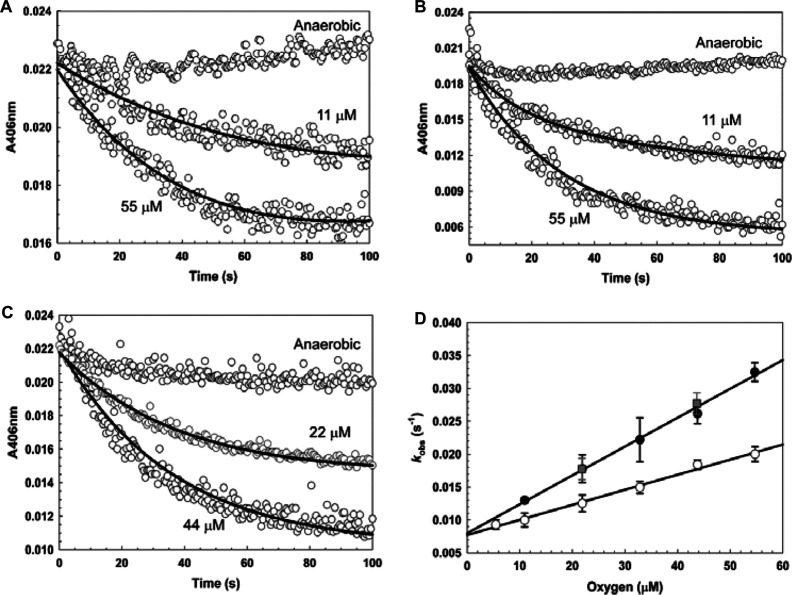
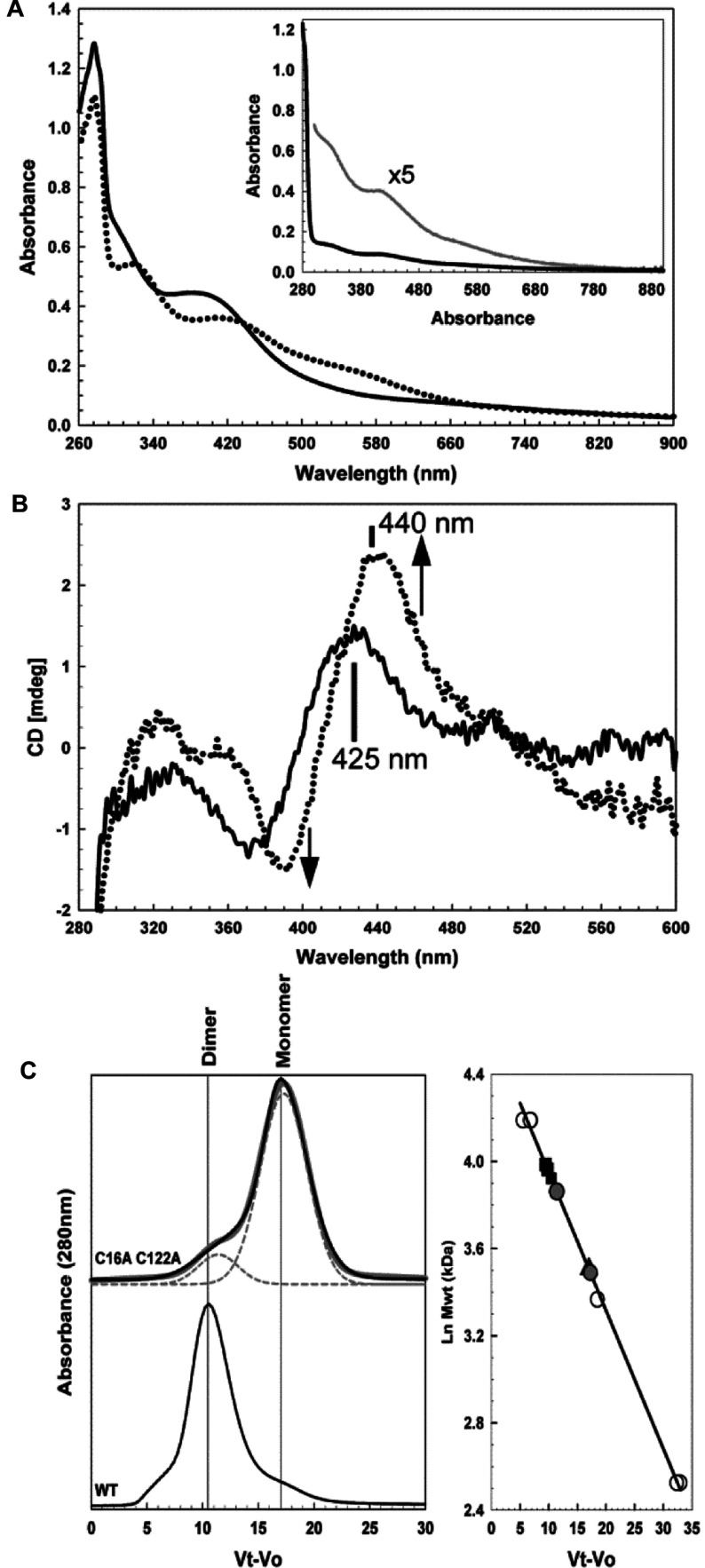
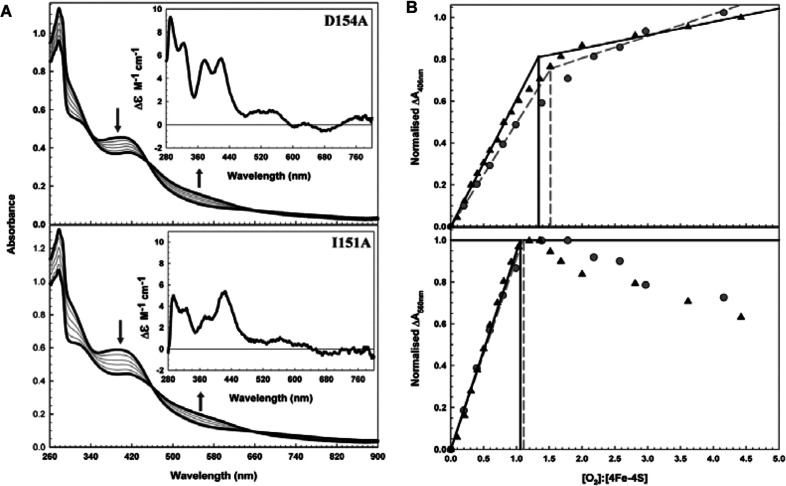
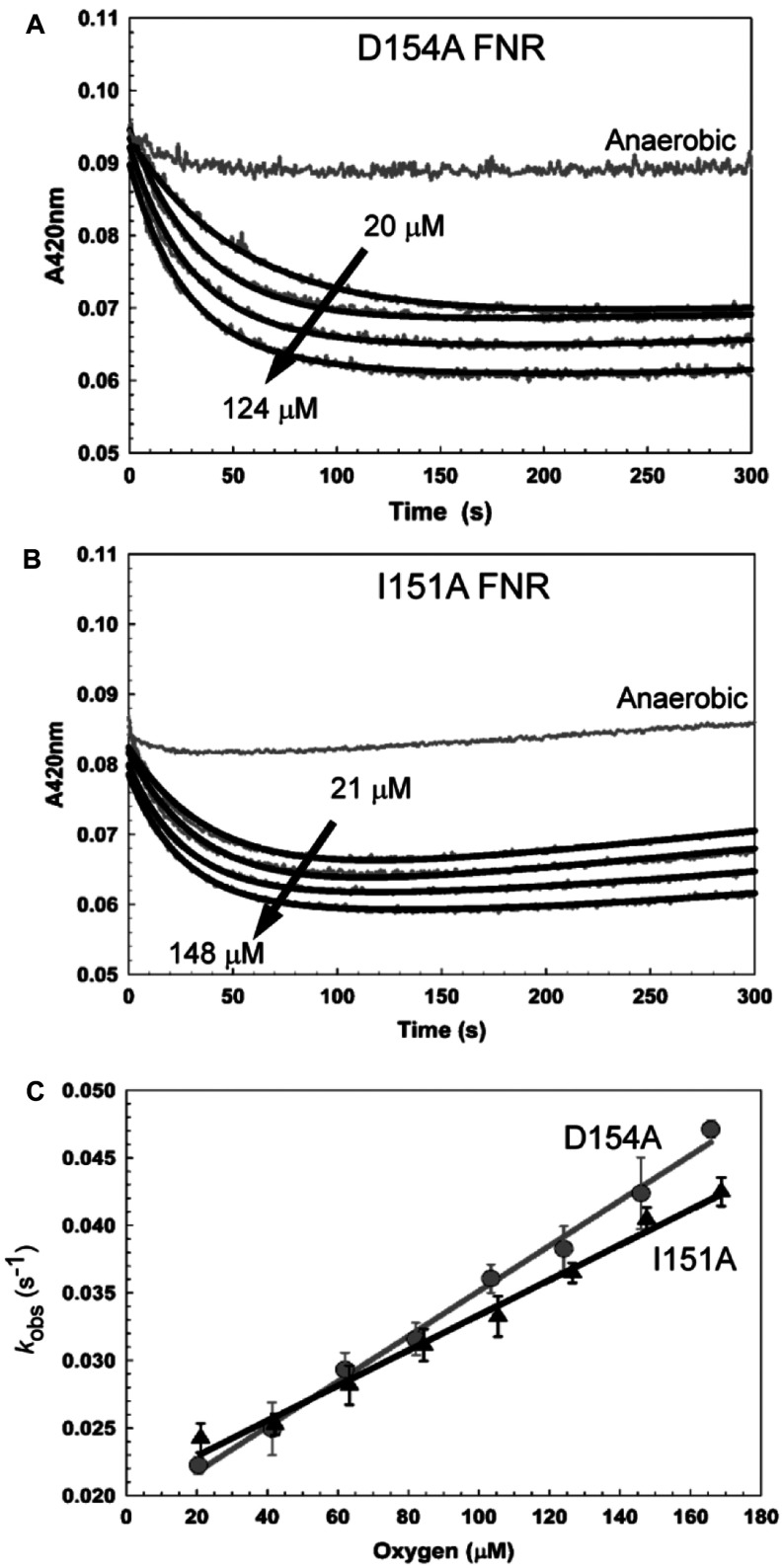
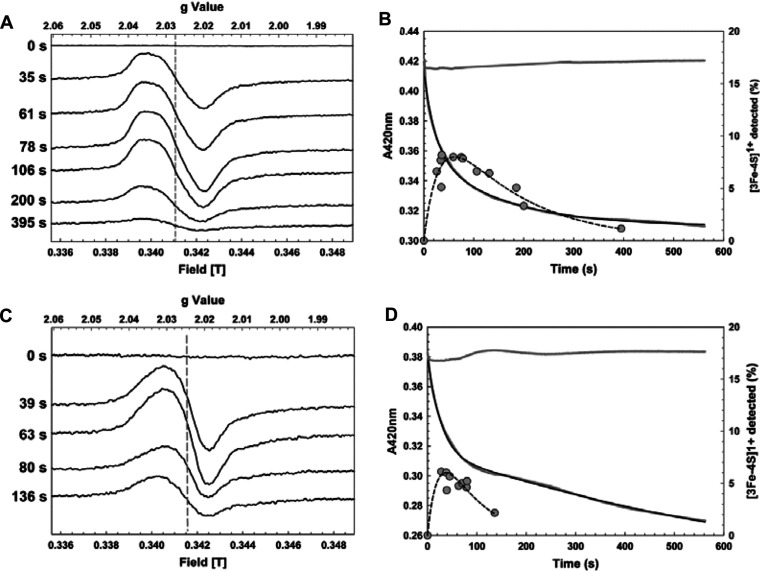
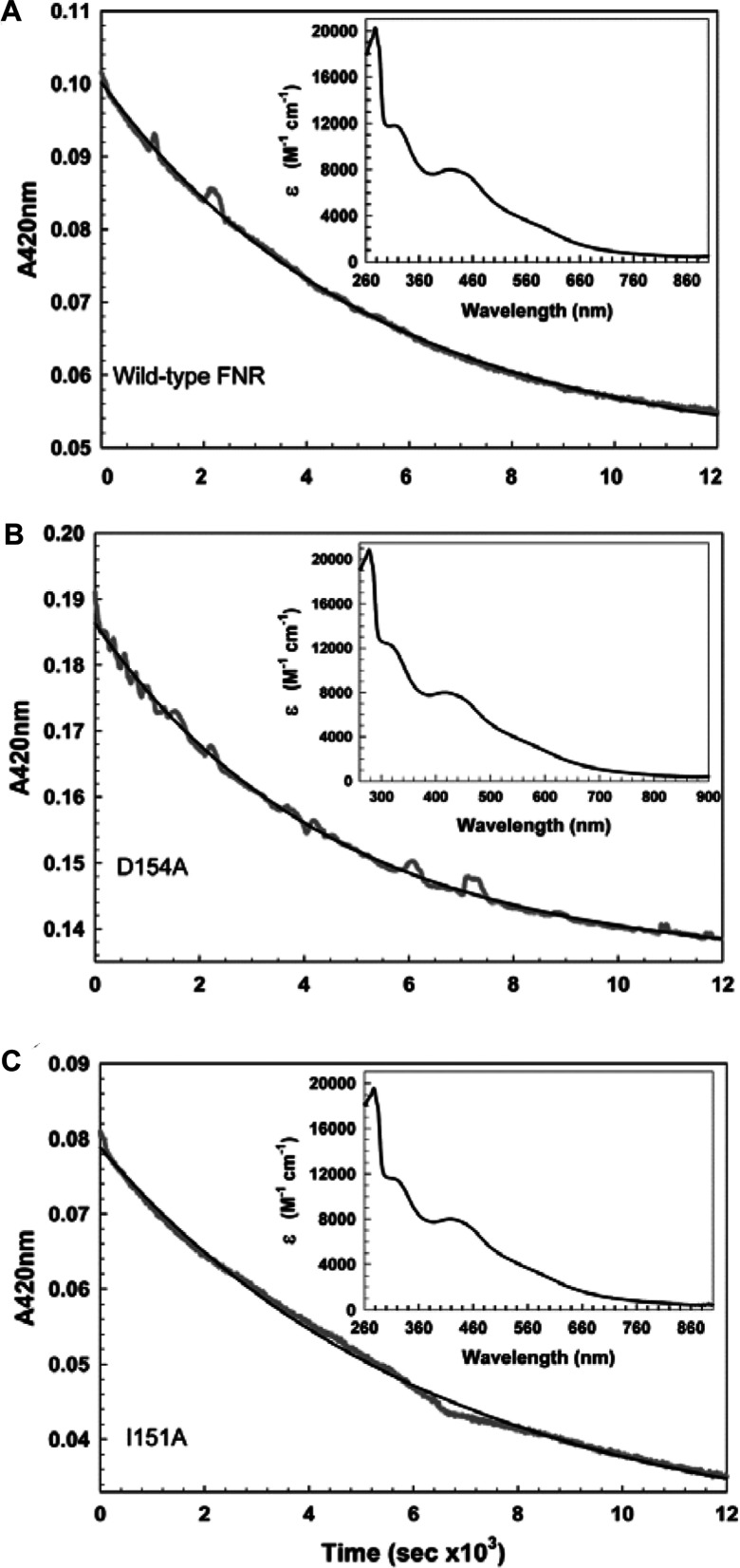
The fumarate and nitrate reduction (FNR) regulator is the master switch for the transition between anaerobic and aerobic respiration in Escherichia coli. Reaction of dimeric [4Fe-4S] FNR with O2 results in conversion of the cluster into a [2Fe-2S] form, via a [3Fe-4S] intermediate, leading to the loss of DNA binding through dissociation of the dimer into monomers. In the present paper, we report studies of two previously identified variants of FNR, D154A and I151A, in which the form of the cluster is decoupled from the association state. In vivo studies of permanently dimeric D154A FNR show that DNA binding does not affect the rate of cluster incorporation into the apoprotein or the rate of O2-mediated cluster loss. In vitro studies show that O2-mediated cluster conversion for D154A and the permanent monomer I151A FNR is the same as in wild-type FNR, but with altered kinetics. Decoupling leads to an increase in the rate of the [3Fe-4S]1+ into [2Fe-2S]2+ conversion step, consistent with the suggestion that this step drives association state changes in the wild-type protein. We have also shown that DNA-bound FNR reacts more rapidly with O2 than FNR free in solution, implying that transcriptionally active FNR is the preferred target for reaction with O2.
延胡索酸和硝酸盐还原(FNR)调节因子是大肠杆菌中厌氧呼吸与需氧呼吸转换的主开关。二聚体[4Fe-4S] FNR与O₂反应,会使该簇通过[3Fe-4S]中间体转化为[2Fe-2S]形式,导致二聚体解离成单体从而失去DNA结合能力。在本文中,我们报告了对FNR的两个先前已鉴定变体D154A和I151A的研究,其中簇的形式与缔合状态解耦。对永久二聚体D154A FNR的体内研究表明,DNA结合并不影响簇掺入脱辅基蛋白的速率或O₂介导的簇丢失速率。体外研究表明,D154A和永久单体I151A FNR的O₂介导的簇转化与野生型FNR相同,但动力学有所改变。解耦导致[3Fe-4S]¹⁺向[2Fe-2S]²⁺转化步骤的速率增加,这与该步骤驱动野生型蛋白质缔合状态变化的观点一致。我们还表明,与溶液中游离的FNR相比,与DNA结合的FNR与O₂反应更快,这意味着转录活性FNR是与O₂反应的首选靶点。