National Centre for Cell Science, Pune, India.
Front Cell Infect Microbiol. 2019 Feb 4;9:15. doi: 10.3389/fcimb.2019.00015. eCollection 2019.
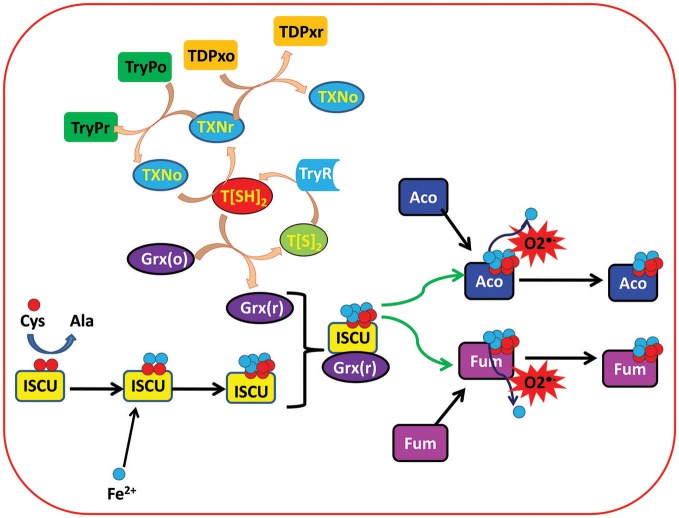
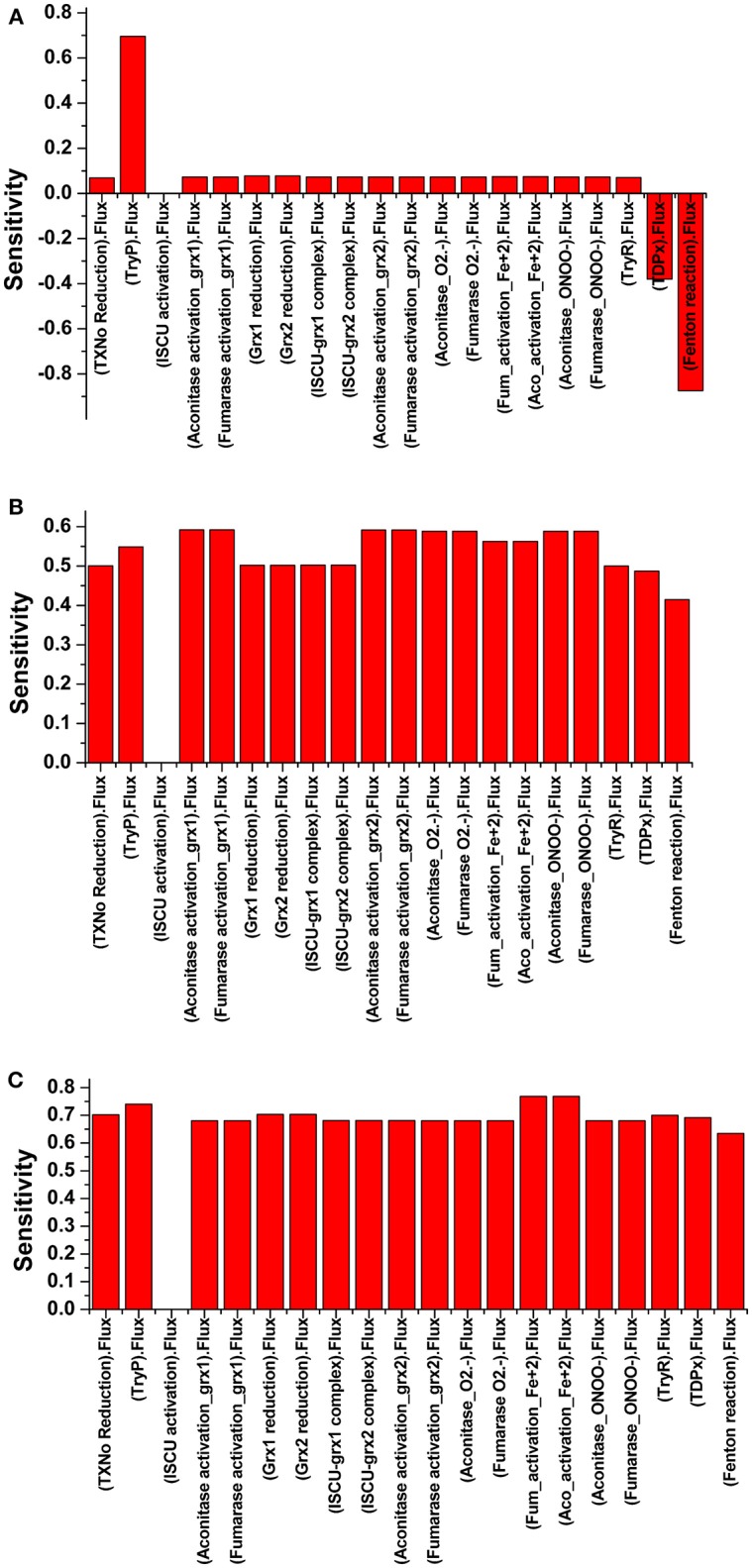
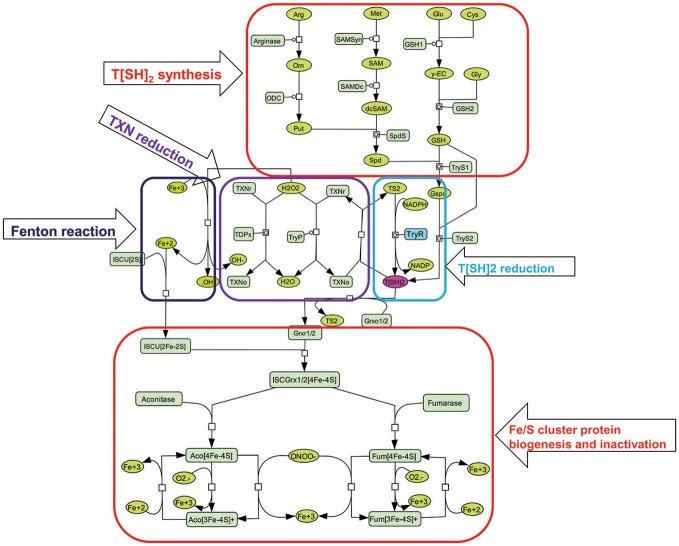
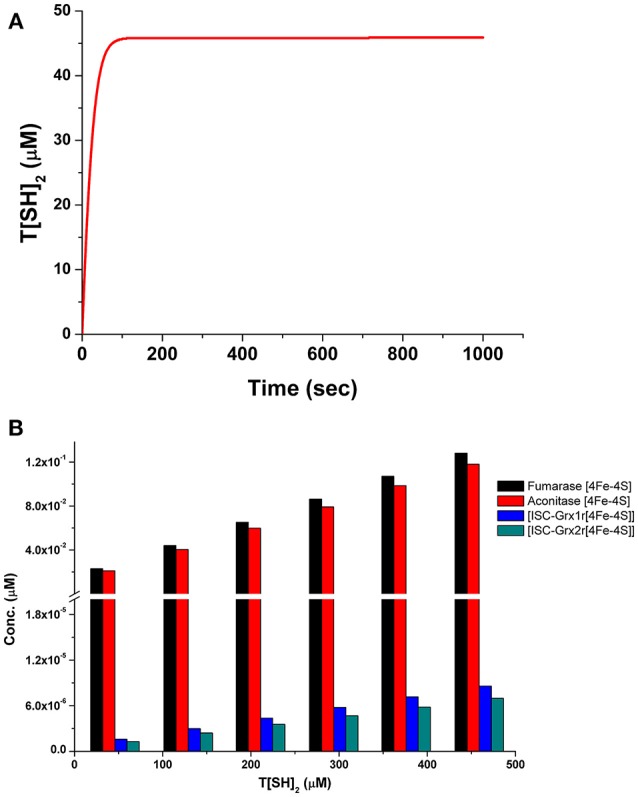
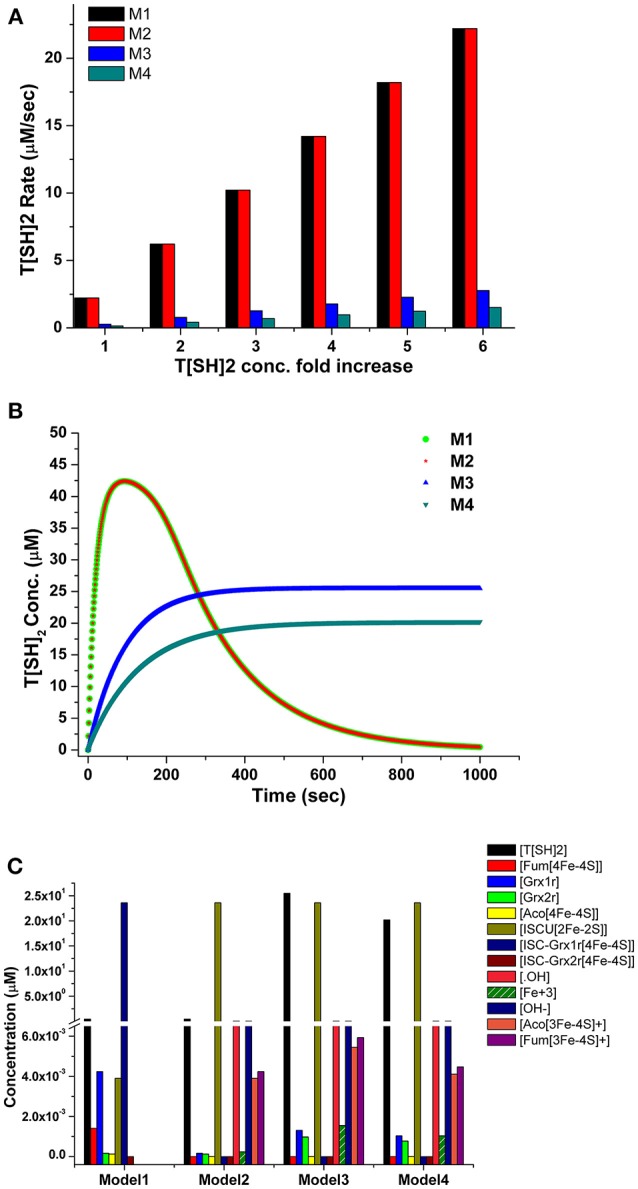
Leishmania parasites possess an exceptional oxidant and chemical defense mechanism, involving a very unique small molecular weight thiol, trypanothione (T[SH]), that helps the parasite to manage its survival inside the host macrophage. The reduced state of T[SH] is maintained by NADPH-dependent trypanothione reductase (TryR) by recycling trypanothione disulfide (TS). Along with its most important role as central reductant, T[SH] have also been assumed to regulate the activation of iron-sulfur cluster proteins (Fe/S). Fe/S clusters are versatile cofactors of various proteins and execute a much broader range of essential biological processes viz., TCA cycle, redox homeostasis, etc. Although, several Fe/S cluster proteins and their roles have been identified in Leishmania, some of the components of how T[SH] is involved in the regulation of Fe/S proteins remains to be explored. In pursuit of this aim, a systems biology approach was undertaken to get an insight into the overall picture to unravel how T[SH] synthesis and reduction is linked with the regulation of Fe/S cluster proteins and controls the redox homeostasis at a larger scale. In the current study, we constructed an kinetic model of T[SH] metabolism. T[SH] reduction reaction was introduced with a perturbation in the form of its inhibition to predict the overall behavior of the model. The main control of reaction fluxes were exerted by TryR reaction rate that affected almost all the important reactions in the model. It was observed that the model was more sensitive to the perturbation introduced in TryR reaction, 5 to 6-fold. Furthermore, due to inhibition, the T[SH] synthesis rate was observed to be gradually decreased by 8 to 14-fold. This has also caused an elevated level of free radicals which apparently affected the activation of Fe/S cluster proteins. The present kinetic model has demonstrated the importance of T[SH] in leishmanial cellular redox metabolism. Hence, we suggest that, by designing highly potent and specific inhibitors of TryR enzyme, inhibition of T[SH] reduction and overall inhibition of most of the downstream pathways including Fe/S protein activation reactions, can be accomplished.
利什曼原虫寄生虫拥有一种特殊的氧化剂和化学防御机制,涉及一种非常独特的小分子硫醇,即 trypanothione(T[SH]),它有助于寄生虫在宿主巨噬细胞内生存。T[SH]的还原状态由 NADPH 依赖性 trypanothione 还原酶(TryR)通过回收 trypanothione 二硫化物(TS)来维持。除了作为中央还原剂的最重要作用外,T[SH] 还被认为可以调节铁硫簇蛋白(Fe/S)的激活。Fe/S 簇是各种蛋白质的多功能辅助因子,执行更广泛的基本生物过程,例如 TCA 循环、氧化还原平衡等。尽管已经在利什曼原虫中鉴定出了几种 Fe/S 簇蛋白及其作用,但 T[SH] 如何参与 Fe/S 蛋白的调节以及如何控制更大规模的氧化还原平衡的一些组成部分仍有待探索。为了实现这一目标,采用系统生物学方法深入了解整体情况,以揭示 T[SH] 合成和还原如何与 Fe/S 簇蛋白的调节以及控制更大规模的氧化还原平衡相关联。在当前的研究中,我们构建了 T[SH] 代谢的动力学模型。T[SH] 还原反应被引入了一种抑制形式,以预测模型的整体行为。TryR 反应速率对反应通量的主要控制作用几乎影响了模型中的所有重要反应。观察到模型对 TryR 反应中引入的扰动更加敏感,达到 5 到 6 倍。此外,由于抑制作用,T[SH] 合成速率逐渐降低了 8 到 14 倍。这也导致自由基水平升高,显然影响了 Fe/S 簇蛋白的激活。目前的动力学模型证明了 T[SH] 在利什曼原虫细胞氧化还原代谢中的重要性。因此,我们建议通过设计高效且特异性的 TryR 酶抑制剂,可以抑制 T[SH] 的还原和包括 Fe/S 蛋白激活反应在内的大多数下游途径的整体抑制。