Degagné Emilie, Saba Julie D
Children's Hospital Oakland Research Institute, Oakland, CA, USA.
Clin Exp Gastroenterol. 2014 Jun 30;7:205-14. doi: 10.2147/CEG.S43453. eCollection 2014.
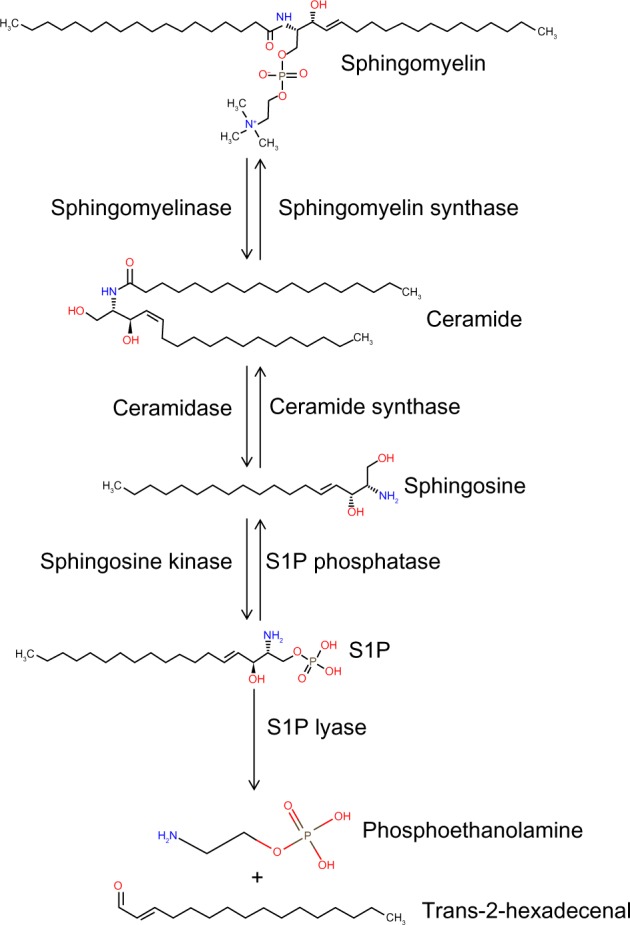
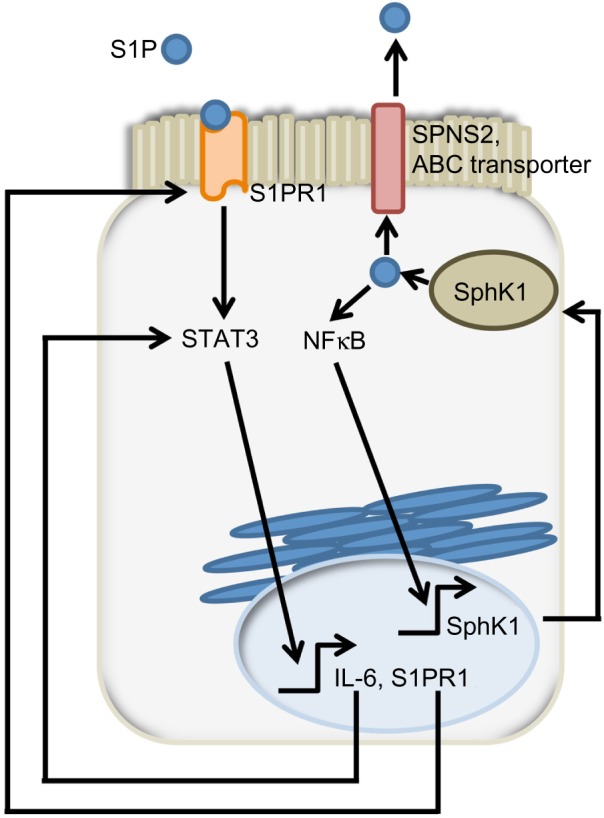
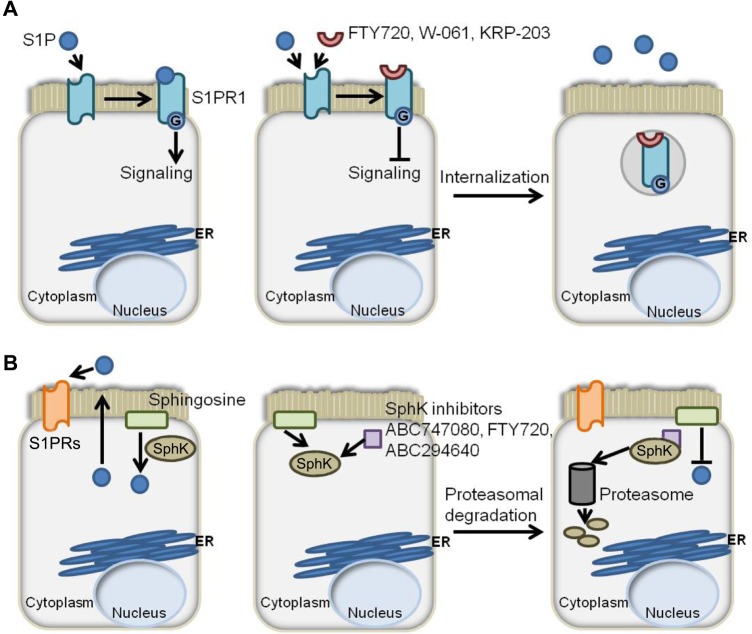
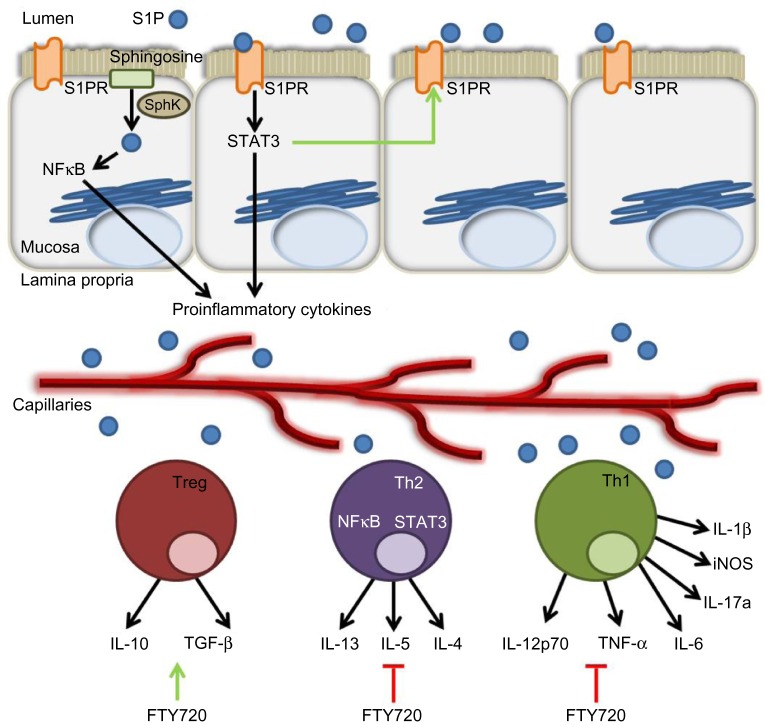
Inflammatory bowel disease (IBD) is a complex disease that involves unpredictable and destructive inflammation in the gastrointestinal tract resulting in gastrointestinal symptoms, infection, and tissue destruction, and which can be associated with an increased risk of colon cancer. The underlying cause of IBD involves disruption of the innate and adaptive immune mechanisms that maintain homeostasis between the gut mucosa and its environment. Elucidating how the homeostatic mechanisms controlling gut mucosal immunity and inflammation are disrupted in IBD represents the first steps to identifying novel therapeutic targets. Sphingosine-1-phosphate (S1P) is a bioactive sphingolipid that is enriched in the blood and lymph, and functions in innate and adaptive immunity. S1P signaling regulates inflammation via its impact on the trafficking, differentiation, and effector functions of bone marrow-derived immune cells. S1P also activates nuclear factor kappa B and signal transducer and activator of transcription 3 inflammatory pathways. S1P is generated by the ubiquitously expressed lipid kinase, sphingosine kinase (SphK)1 and its tissue-restricted homolog, SphK2. S1P is irreversibly degraded by S1P lyase, which is highly expressed in enterocytes. Recent studies targeting S1P metabolism and signaling have shown promise in preclinical models of IBD and have shed light on the mechanisms by which S1P signaling impacts IBD. The evidence suggests that targeting S1P signaling and metabolism may represent a novel strategy in treating IBD and it may reduce colon cancer risk by interrupting the progression from inflammation to carcinogenesis.
炎症性肠病(IBD)是一种复杂的疾病,涉及胃肠道中不可预测的破坏性炎症,导致胃肠道症状、感染和组织破坏,并且可能与结肠癌风险增加相关。IBD的潜在病因涉及维持肠道黏膜与其环境之间稳态的先天性和适应性免疫机制的破坏。阐明在IBD中控制肠道黏膜免疫和炎症的稳态机制是如何被破坏的,是确定新治疗靶点的第一步。1-磷酸鞘氨醇(S1P)是一种生物活性鞘脂,在血液和淋巴中含量丰富,在先天性和适应性免疫中发挥作用。S1P信号通过影响骨髓来源免疫细胞的运输、分化和效应功能来调节炎症。S1P还激活核因子κB以及信号转导和转录激活因子3炎症途径。S1P由普遍表达的脂质激酶鞘氨醇激酶(SphK)1及其组织限制性同源物SphK2产生。S1P被在肠细胞中高表达的S1P裂解酶不可逆地降解。最近针对S1P代谢和信号传导的研究在IBD临床前模型中显示出前景,并揭示了S1P信号影响IBD的机制。证据表明,靶向S1P信号传导和代谢可能是治疗IBD的一种新策略,并且它可能通过中断从炎症到致癌的进展来降低结肠癌风险。