Department of Orthopaedics, Khoula Hospital, Muscat, Sultanate of Oman.
Global Spine J. 2014 Jun;4(2):93-100. doi: 10.1055/s-0034-1370789. Epub 2014 Mar 3.
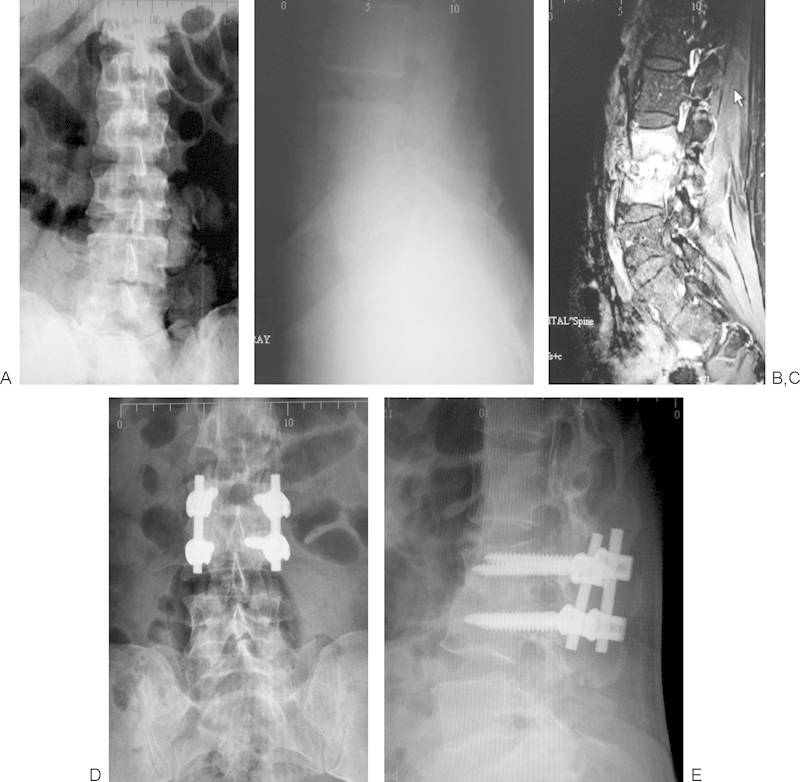
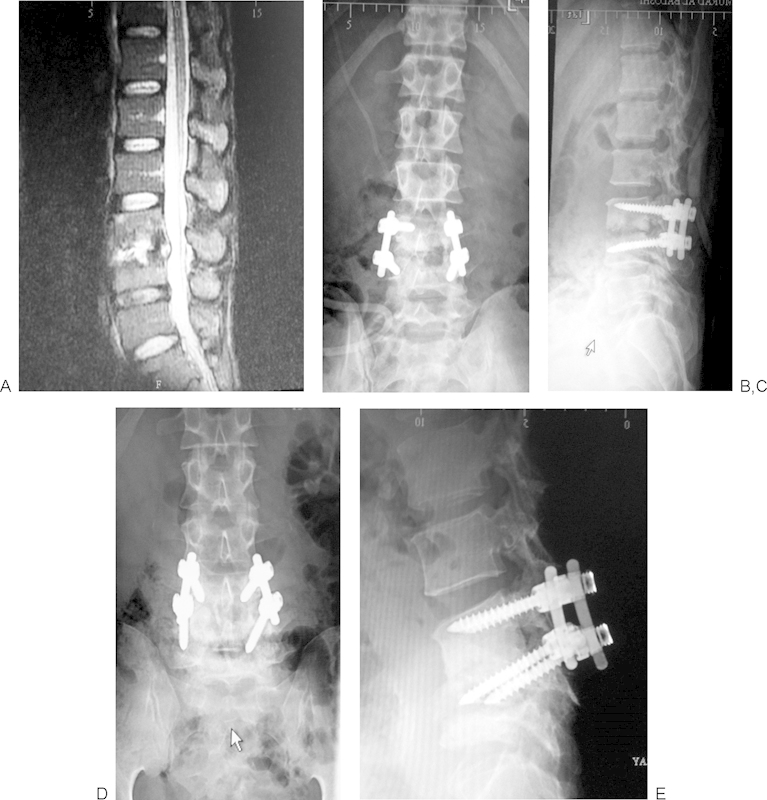
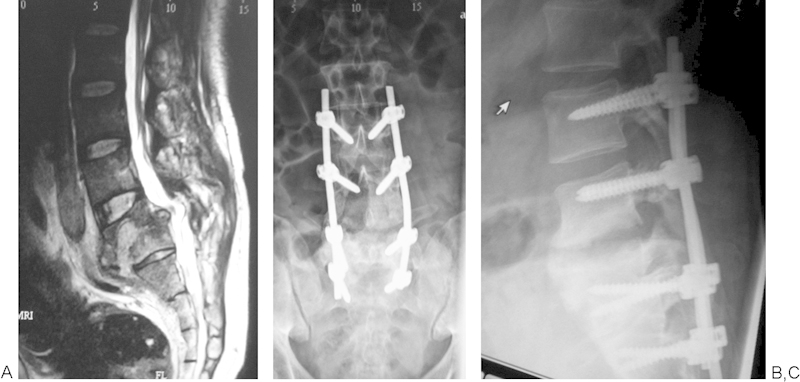
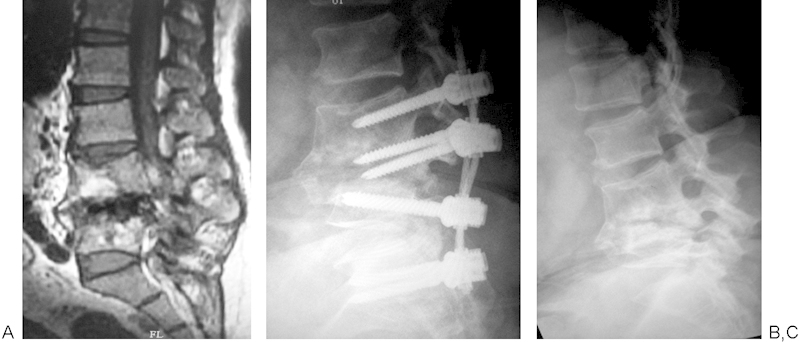
Study Design Retrospective cohort study. Objective To evaluate whether the proposed one-stage biopsy, culture, debridement, and reconstruction with stabilization strategy is a viable option for pyogenic vertebral osteomyelitis (PVO). PVO is increasing in frequency globally, particularly in immunologically compromised individuals. Typically, biopsy and culture sensitivity followed by staged surgery and long-term antibiotic therapy is the mainstay of therapy. Methods This is a study of a group of 32 consecutive cases of PVO (spondylodiskitis) treated in our institution from 2010 to 2012. All cases had one-stage biopsy, culture sensitivity, debridement, reconstruction with iliac bone graft, and stabilization with titanium implants. The mean age in this series was 51 years, and the male-to-female ratio was 2.2:1. Approximately 50% of the patients had impaired immunity status. The commonest organism isolated was Pseudomonas aeruginosa. Culture-specific antibiotics were given for a minimum of 6 weeks to all patients. The follow-up period ranged from 6 months to a maximum of 2 years. All patients were assessed for wound healing, recurrence of infection, deformity progression, pain, and healing by radiologic and biochemical parameters. No generic or disease-specific outcome tools were used for this study. Results All patients had good wound healing, although there was one case of superficial infection that was resolved with debridement. There were two implant failures with pseudarthrosis and one localized kyphosis in this series. Conclusions The one-stage technique of biopsy, debridement, bone grafting, and stabilization can be recommended for most cases of PVO.
回顾性队列研究。目的:评估一期活检、培养、清创和稳定化重建策略是否是治疗化脓性椎体骨髓炎(PVO)的可行选择。PVO 在全球范围内的发病率正在增加,尤其是在免疫功能受损的人群中。通常,活检和培养敏感性,然后进行分期手术和长期抗生素治疗是主要的治疗方法。方法:这是对 2010 年至 2012 年期间在我们机构治疗的 32 例连续 PVO(椎间盘炎)患者的研究。所有病例均采用一期活检、培养敏感性、清创、髂骨移植重建和钛植入物稳定化治疗。该系列的平均年龄为 51 岁,男女比例为 2.2:1。约 50%的患者存在免疫功能受损。最常见的分离菌是铜绿假单胞菌。所有患者均给予特定抗生素治疗至少 6 周。随访时间从 6 个月到最长 2 年不等。所有患者均通过影像学和生化参数评估伤口愈合、感染复发、畸形进展、疼痛和愈合情况。本研究未使用通用或疾病特异性的结局工具。结果:所有患者的伤口均愈合良好,尽管有一例浅表感染,经清创后治愈。该系列中有两例植入物失败导致假关节形成,一例局部后凸畸形。结论:一期活检、清创、植骨和稳定化技术可推荐用于大多数 PVO 病例。