Ji Xiaona, Huang Qiang, Yu Long, Nussinov Ruth, Ma Buyong
State Key Laboratory of Genetic Engineering, School of Life Sciences, Fudan University, Shanghai 200433, China.
Basic Science Program, Leidos Biomedical Research, Inc., Cancer and Inflammation Program, National Cancer Institute, Frederick, MD 21702, USA.
Int J Mol Sci. 2014 Jul 29;15(8):13275-98. doi: 10.3390/ijms150813275.
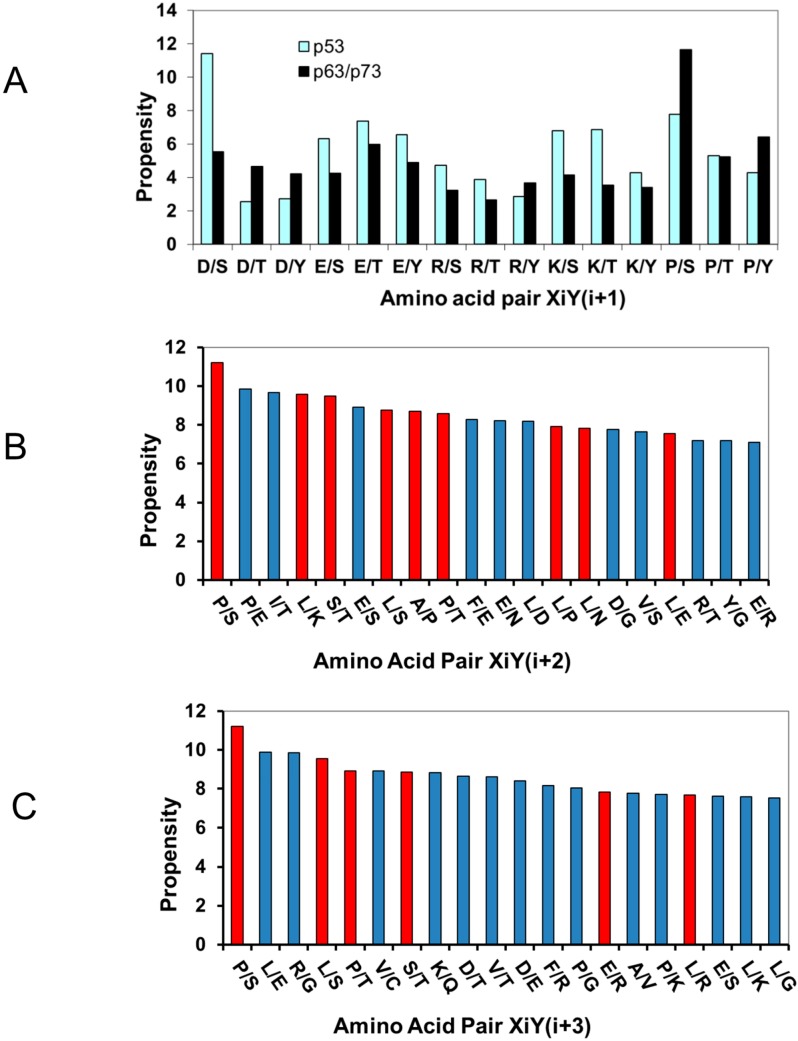
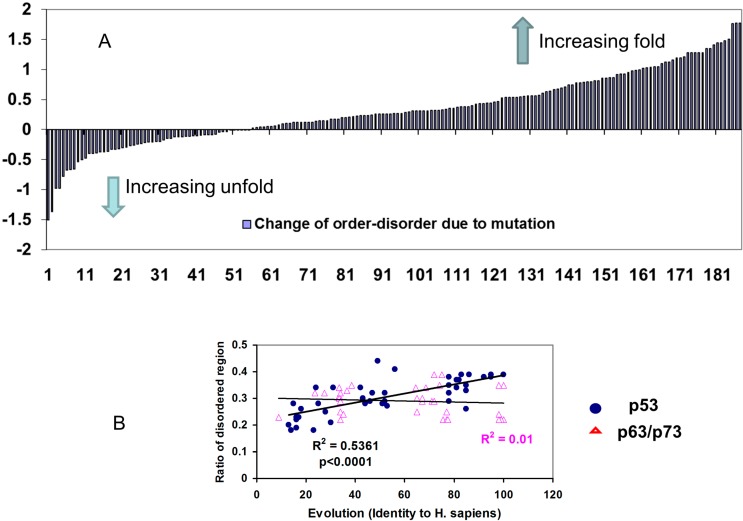
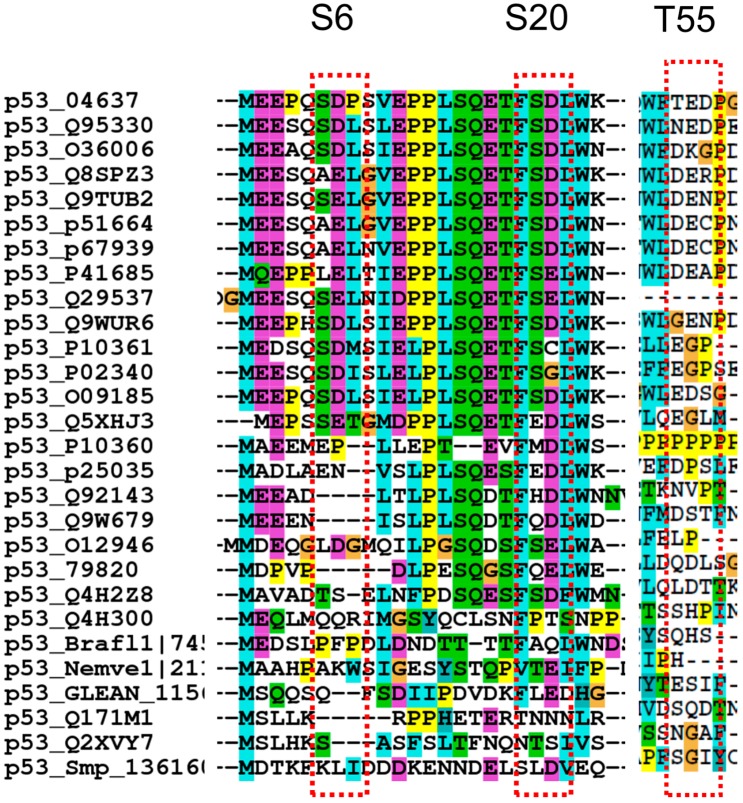
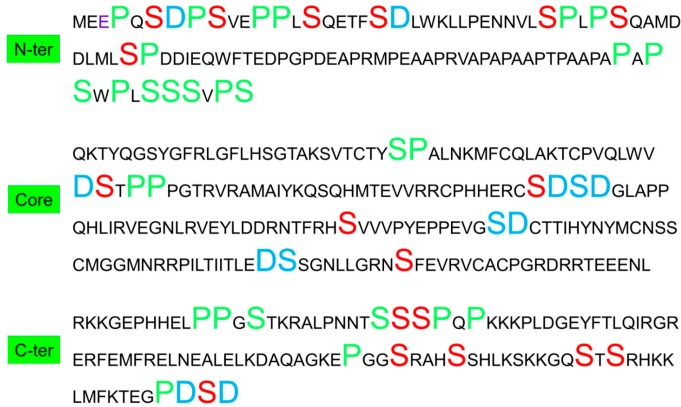
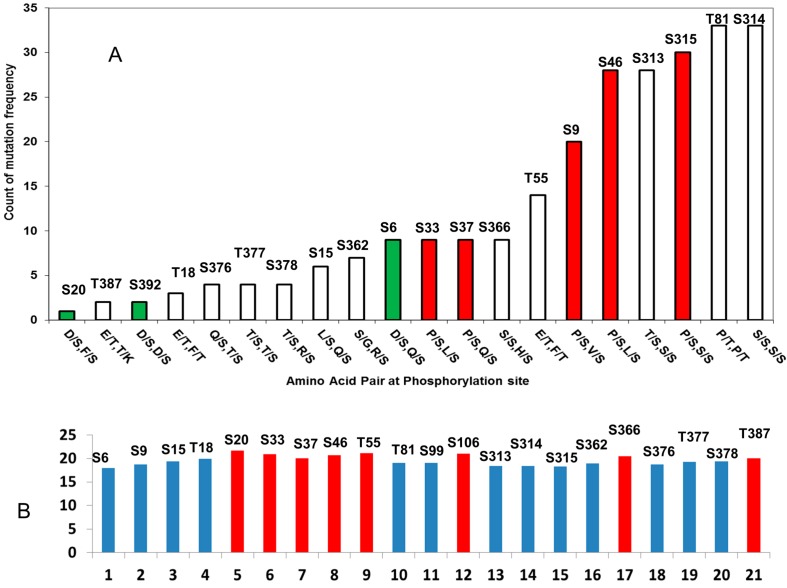
p53 protein has about thirty phosphorylation sites located at the N- and C-termini and in the core domain. The phosphorylation sites are relatively less mutated than other residues in p53. To understand why and how p53 phosphorylation sites are rarely mutated in human cancer, using a bioinformatics approaches, we examined the phosphorylation site and its nearby flanking residues, focusing on the consensus phosphorylation motif pattern, amino-acid correlations within the phosphorylation motifs, the propensity of structural disorder of the phosphorylation motifs, and cancer mutations observed within the phosphorylation motifs. Many p53 phosphorylation sites are targets for several kinases. The phosphorylation sites match 17 consensus sequence motifs out of the 29 classified. In addition to proline, which is common in kinase specificity-determining sites, we found high propensity of acidic residues to be adjacent to phosphorylation sites. Analysis of human cancer mutations in the phosphorylation motifs revealed that motifs with adjacent acidic residues generally have fewer mutations, in contrast to phosphorylation sites near proline residues. p53 phosphorylation motifs are mostly disordered. However, human cancer mutations within phosphorylation motifs tend to decrease the disorder propensity. Our results suggest that combination of acidic residues Asp and Glu with phosphorylation sites provide charge redundancy which may safe guard against loss-of-function mutations, and that the natively disordered nature of p53 phosphorylation motifs may help reduce mutational damage. Our results further suggest that engineering acidic amino acids adjacent to potential phosphorylation sites could be a p53 gene therapy strategy.
p53蛋白在其N端、C端及核心结构域约有30个磷酸化位点。与p53中的其他残基相比,这些磷酸化位点的突变相对较少。为了理解为何以及p53磷酸化位点在人类癌症中很少发生突变,我们采用生物信息学方法,研究了磷酸化位点及其附近的侧翼残基,重点关注共有磷酸化基序模式、磷酸化基序内的氨基酸相关性、磷酸化基序的结构无序倾向以及在磷酸化基序中观察到的癌症突变。许多p53磷酸化位点是多种激酶的作用靶点。这些磷酸化位点与29种分类中的17种共有序列基序相匹配。除了在激酶特异性决定位点常见的脯氨酸外,我们发现酸性残基紧邻磷酸化位点的倾向较高。对磷酸化基序中的人类癌症突变分析表明,与脯氨酸残基附近的磷酸化位点相比,具有紧邻酸性残基的基序通常突变较少。p53磷酸化基序大多是无序的。然而,磷酸化基序内的人类癌症突变往往会降低无序倾向。我们的结果表明,酸性残基天冬氨酸和谷氨酸与磷酸化位点的组合提供了电荷冗余,这可能有助于防止功能丧失突变,并且p53磷酸化基序的天然无序性质可能有助于减少突变损伤。我们的结果进一步表明,在潜在磷酸化位点附近设计酸性氨基酸可能是一种p53基因治疗策略。