King's College London, School of Biomedical Sciences, Department of Biochemistry & Randall Division of Cell and Molecular Biophysics, New Hunt's House, London, United Kingdom ; Department of Pharmacy, University of Naples "Federico II", Napoli, Italy.
PLoS One. 2013 Oct 4;8(10):e76014. doi: 10.1371/journal.pone.0076014. eCollection 2013.
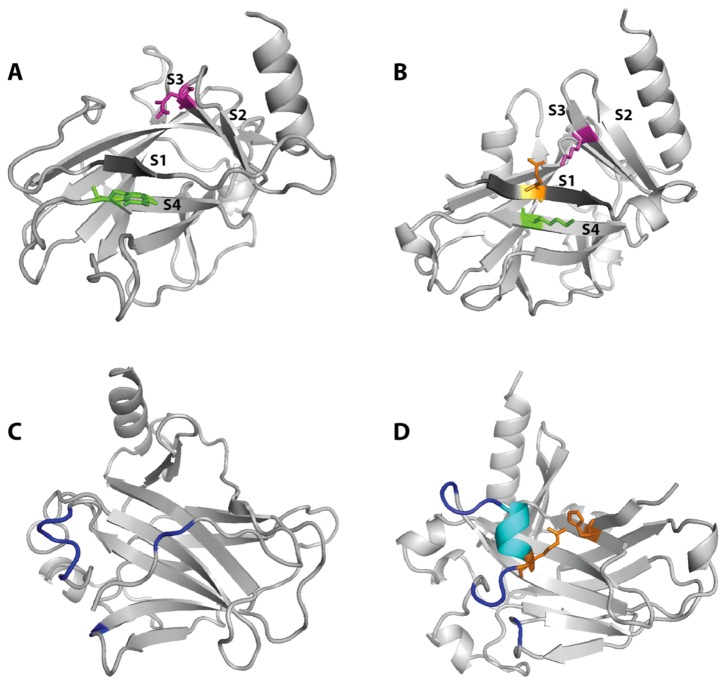
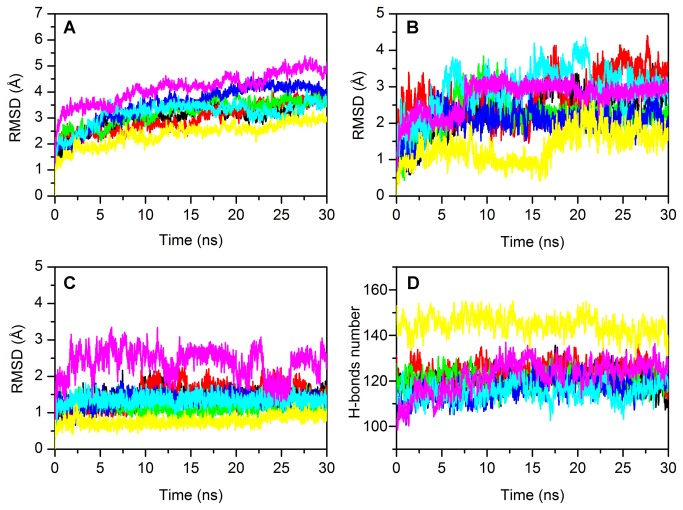
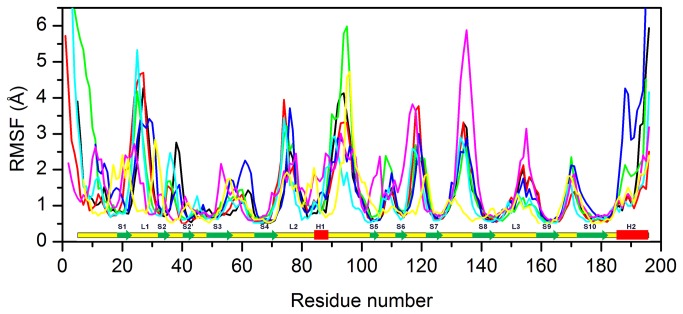
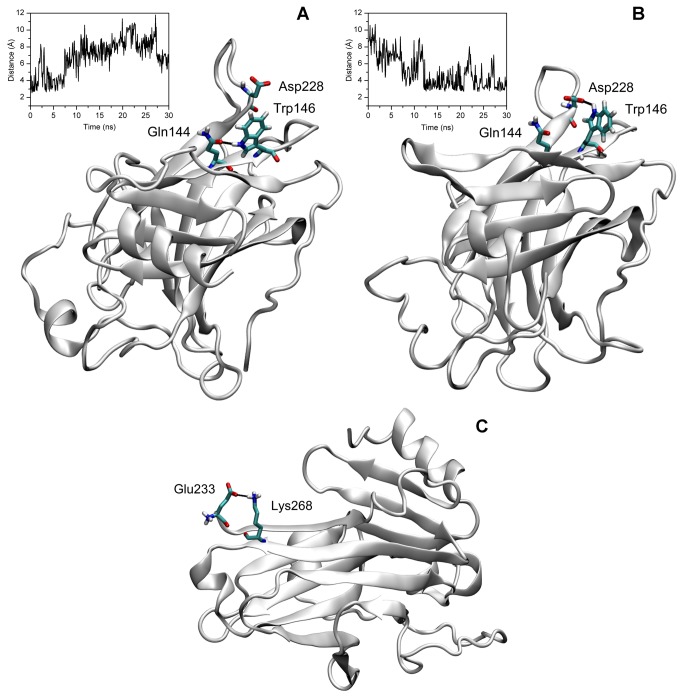
The p53 family of genes and their protein products, namely, p53, p63 and p73, have over one billion years of evolutionary history. Advances in computational biology and genomics are enabling studies of the complexities of the molecular evolution of p53 protein family to decipher the underpinnings of key biological conditions spanning from cancer through to various metabolic and developmental disorders and facilitate the design of personalised medicines. However, a complete understanding of the inherent nature of the thermodynamic and structural stability of the p53 protein family is still lacking. This is due, to a degree, to the lack of comprehensive structural information for a large number of homologous proteins and to an incomplete knowledge of the intrinsic factors responsible for their stability and how these might influence function. Here we investigate the thermal stability, secondary structure and folding properties of the DNA-binding domains (DBDs) of a range of proteins from the p53 family using biophysical methods. While the N- and the C-terminal domains of the p53 family show sequence diversity and are normally targets for post-translational modifications and alternative splicing, the central DBD is highly conserved. Together with data obtained from Molecular Dynamics simulations in solution and with structure based homology modelling, our results provide further insights into the molecular properties of evolutionary related p53 proteins. We identify some marked structural differences within the p53 family, which could account for the divergence in biological functions as well as the subtleties manifested in the oligomerization properties of this family.
p53 基因家族及其蛋白产物,即 p53、p63 和 p73,拥有超过十亿年的进化历史。计算生物学和基因组学的进步使我们能够研究 p53 蛋白家族的分子进化的复杂性,从而揭示从癌症到各种代谢和发育障碍等关键生物学条件的基础,并促进个性化药物的设计。然而,人们对 p53 蛋白家族的热力学和结构稳定性的固有性质仍缺乏全面的了解。这在一定程度上是由于缺乏大量同源蛋白的全面结构信息,以及对其稳定性负责的内在因素及其如何影响功能的了解不完整。在这里,我们使用生物物理方法研究了一系列 p53 家族蛋白的 DNA 结合域(DBD)的热稳定性、二级结构和折叠特性。虽然 p53 家族的 N-和 C-末端结构域显示出序列多样性,并且通常是翻译后修饰和选择性剪接的靶标,但中央 DBD 高度保守。结合在溶液中进行的分子动力学模拟和基于结构的同源建模获得的数据,我们的结果为进化相关的 p53 蛋白的分子特性提供了进一步的见解。我们在 p53 家族内发现了一些明显的结构差异,这些差异可能解释了生物学功能的差异,以及该家族的寡聚化特性所表现出的细微差别。