Department of Immunology, Boston Children's Hospital , Boston, MA , USA.
Department of Hematology/Oncology, Boston Children's Hospital , Boston, MA , USA.
Front Immunol. 2014 Jul 18;5:340. doi: 10.3389/fimmu.2014.00340. eCollection 2014.
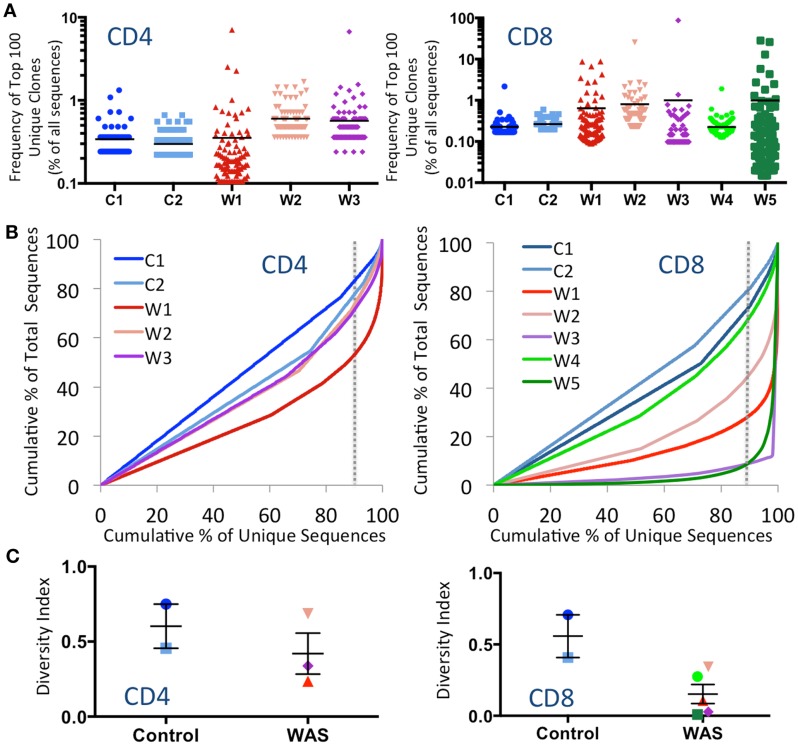
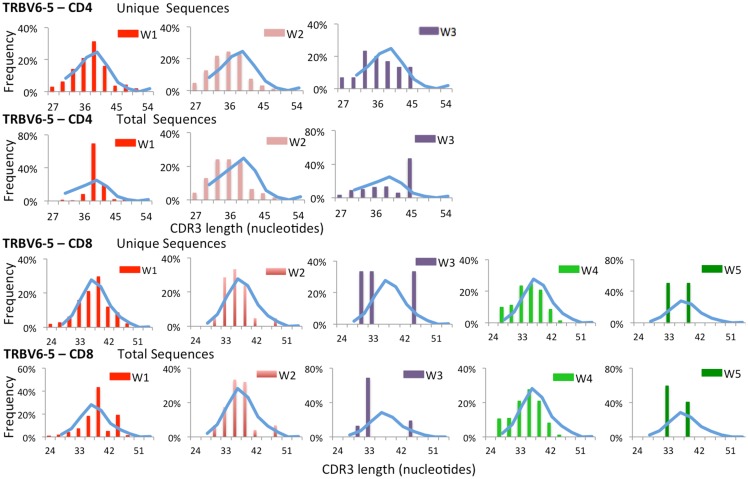
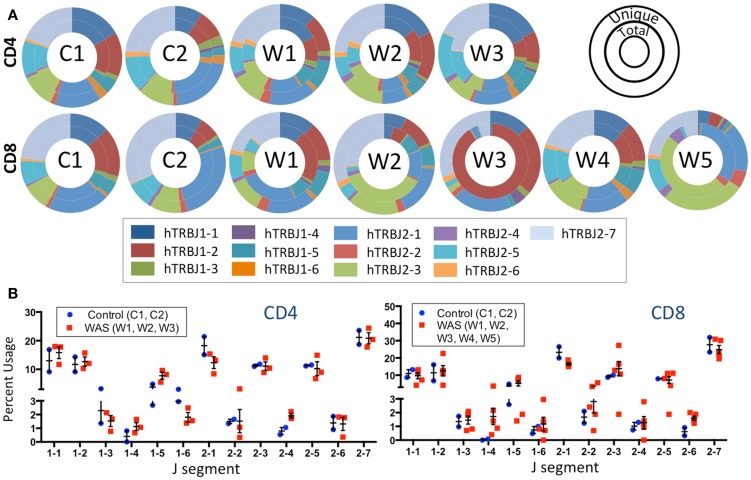
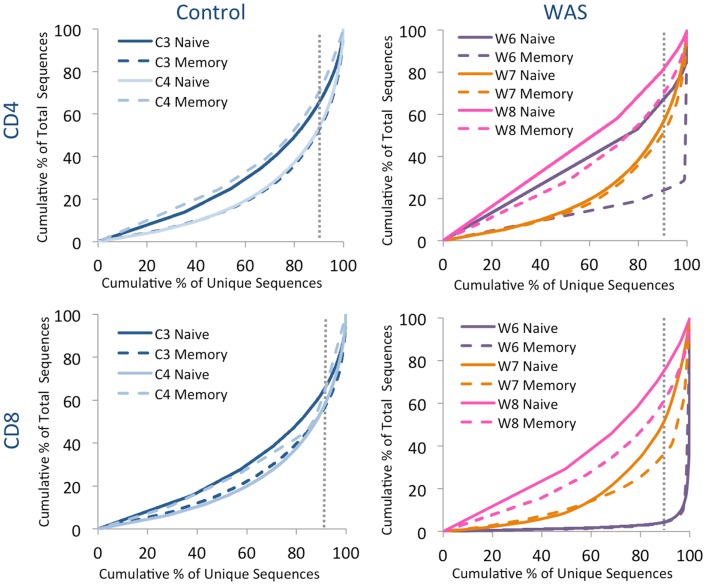
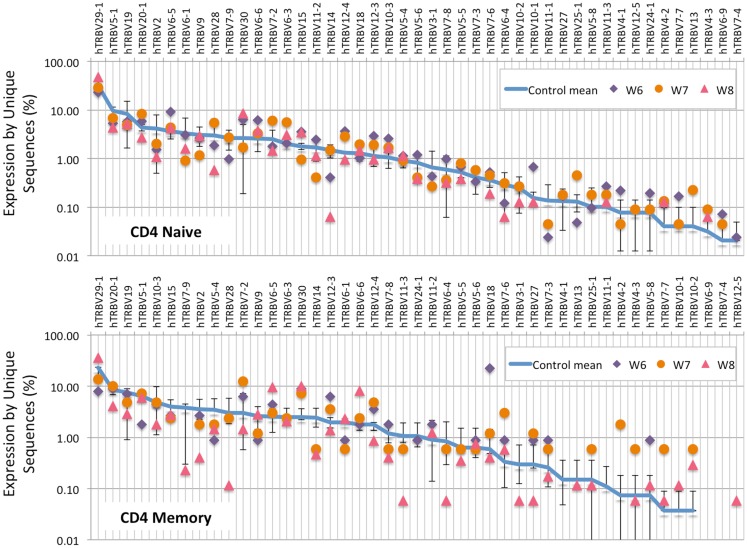
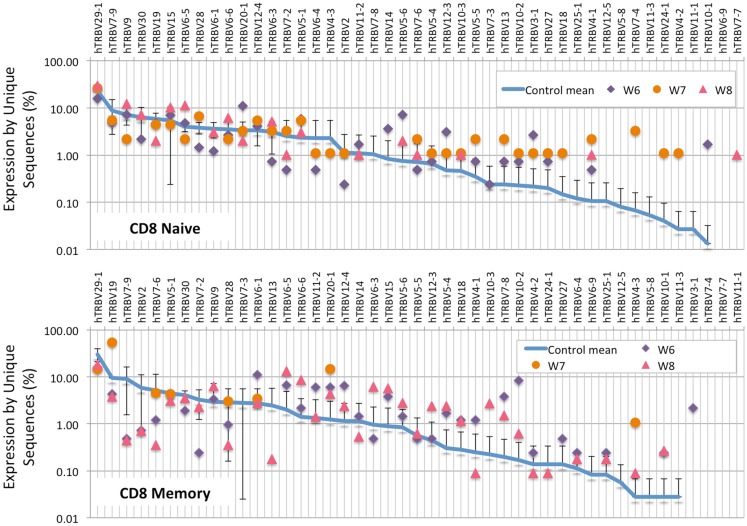
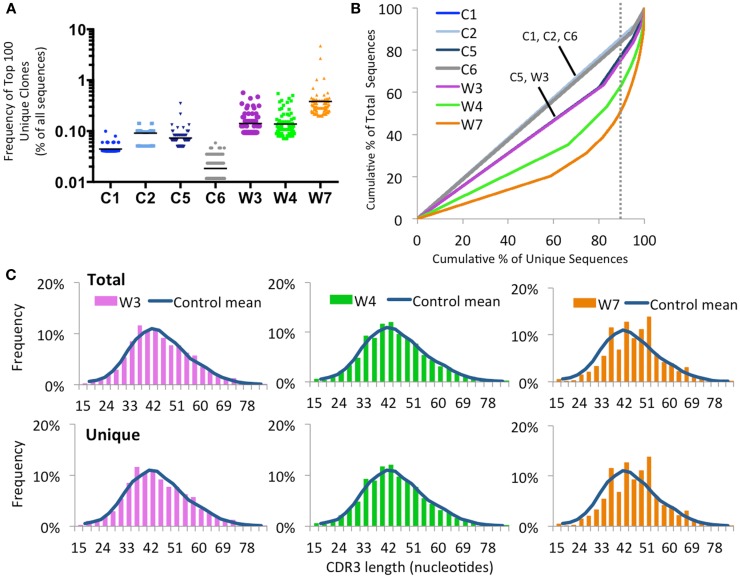
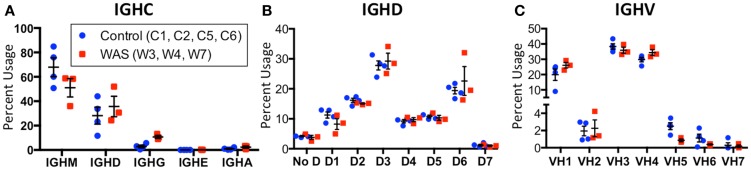
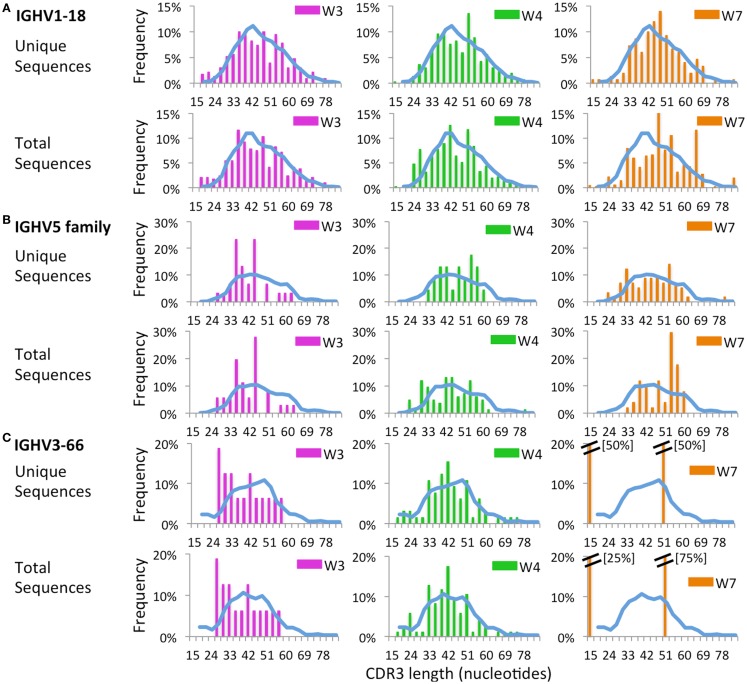
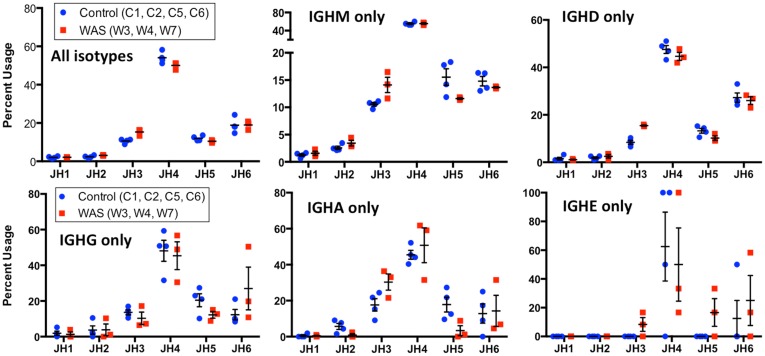
The Wiskott-Aldrich syndrome (WAS) is due to mutations of the WAS gene encoding for the cytoskeletal WAS protein, leading to abnormal downstream signaling from the T cell and B cell antigen receptors (TCR and BCR). We hypothesized that the impaired signaling through the TCR and BCR in WAS would subsequently lead to aberrations in the immune repertoire of WAS patients. Using next generation sequencing (NGS), the T cell receptor β and B cell immunoglobulin heavy chain (IGH) repertoires of eight patients with WAS and six controls were sequenced. Clonal expansions were identified within memory CD4(+) cells as well as in total, naïve and memory CD8(+) cells from WAS patients. In the B cell compartment, WAS patient IGH repertoires were also clonally expanded and showed skewed usage of IGHV and IGHJ genes, and increased usage of IGHG constant genes, compared with controls. To our knowledge, this is the first study that demonstrates significant abnormalities of the immune repertoire in WAS patients using NGS.
威斯科特-奥尔德里奇综合征(WAS)是由于编码细胞骨架 WAS 蛋白的 WAS 基因突变引起的,导致 T 细胞和 B 细胞抗原受体(TCR 和 BCR)的下游信号异常。我们假设 WAS 中 TCR 和 BCR 的信号转导受损会导致 WAS 患者的免疫库发生异常。我们使用下一代测序(NGS)对 8 名 WAS 患者和 6 名对照的 T 细胞受体 β 和 B 细胞免疫球蛋白重链(IGH)库进行了测序。在 WAS 患者的记忆 CD4(+)细胞以及总、幼稚和记忆 CD8(+)细胞中均鉴定到了克隆性扩增。在 B 细胞库中,与对照组相比,WAS 患者的 IGH 库也发生了克隆性扩增,并且显示出 IGHV 和 IGHJ 基因的使用偏向性以及 IGHG 恒定基因的使用增加。据我们所知,这是第一项使用 NGS 证明 WAS 患者免疫库存在显著异常的研究。