Faculty of Education and Sports Sciences, University of Vigo, Spain.
Instituto de Investigaciones Marinas (IIM-CSIC), Spain.
J Hum Kinet. 2014 Jul 8;41:253-63. doi: 10.2478/hukin-2014-0053. eCollection 2014 Jun 28.
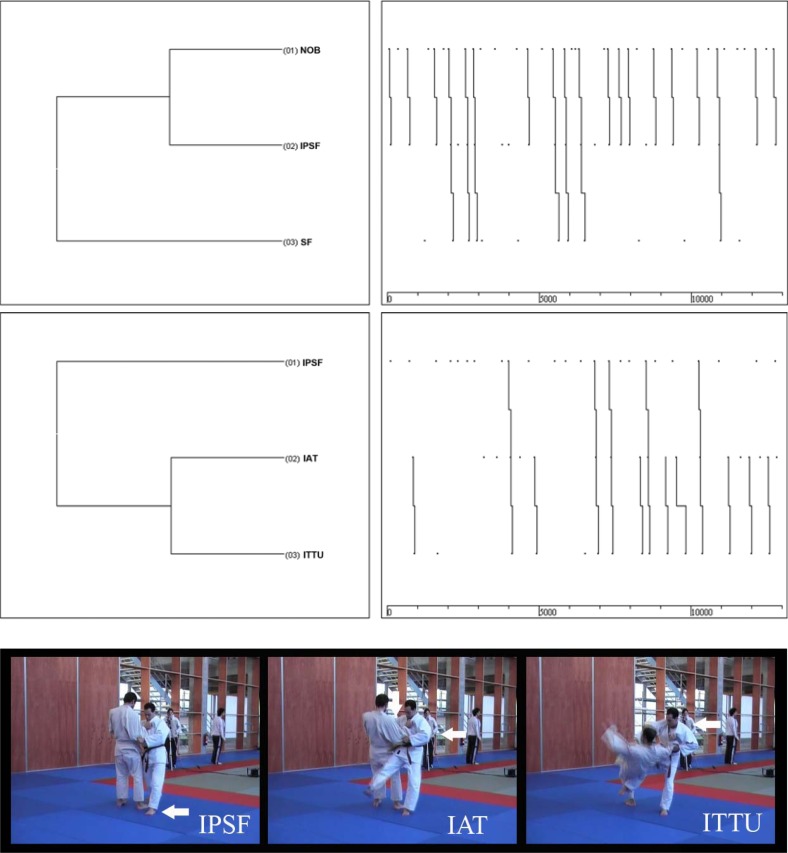
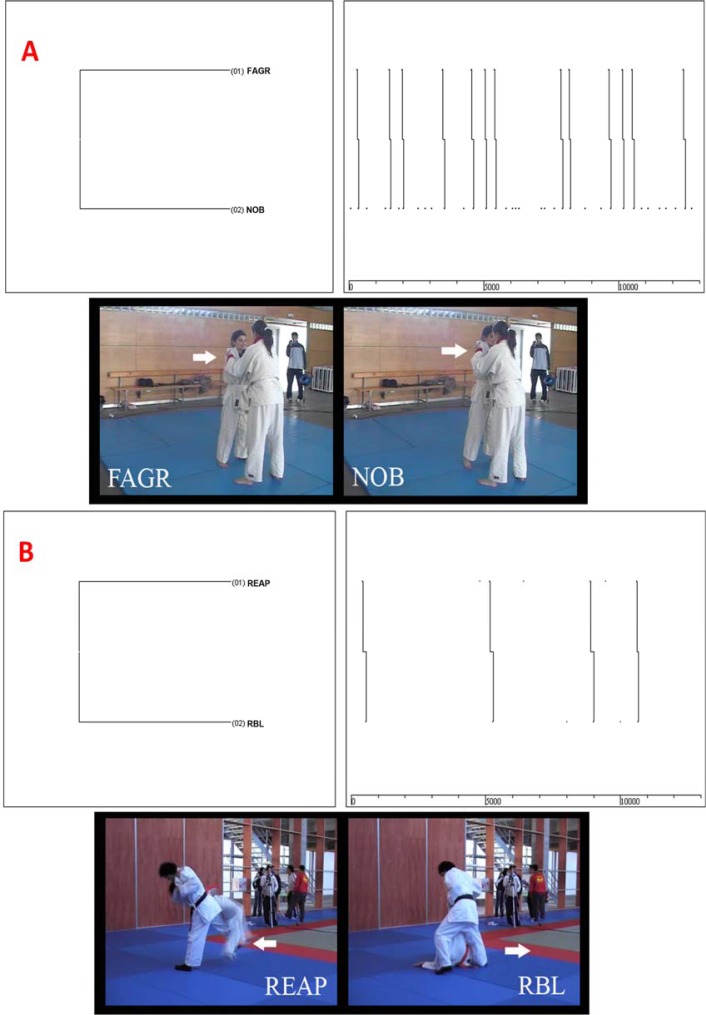
The aim of this article was to suggest some changes in the teaching-learning process methodology of the judo osoto-guruma technique, establishing the action sequences and the most frequent technical errors committed when performing them. The study was carried out with the participation of 45 students with no experience regarding the fundamentals of judo (21 men and 24 women; age=24.02±3.98 years old) from the Bachelor of Science of Physical Activity and Sport Science at the University of Vigo. The proceeding consisted of a systematic observation of a video recording registered during the technique execution. Data obtained were analyzed by means of descriptive statistics and sequential analysis of T-Patterns (obtained with THEME v.5. Software), identifying: a) the presence of typical inaccuracies during the technique performance; b) a number of chained errors affecting body balance, the position of the supporting foot, the blocking action and the final action of the arms. Findings allowed to suggest some motor tasks to correct the identified inaccuracies, the proper sequential actions to make the execution more effective and some recommendations for the use of feedback. Moreover, these findings could be useful for other professionals in order to correct the key technical errors and prevent diverse injuries.
本文旨在提出一些柔道大外刈技术的教与学方法的改变,确定动作顺序和执行过程中最常见的技术错误。该研究由来自维哥大学体育活动与运动科学学士的 45 名没有柔道基础的学生(21 名男性和 24 名女性;年龄=24.02±3.98 岁)参与完成。该过程包括对技术执行过程中记录的视频进行系统观察。通过描述性统计和 T 模式的顺序分析(使用 THEME v.5 软件获得)来分析获得的数据,确定:a)技术表现过程中存在的典型不准确;b)影响身体平衡、支撑脚位置、阻挡动作和手臂最终动作的一系列错误。研究结果表明,可以提出一些运动任务来纠正所确定的不准确之处,以及使执行更有效的适当连续动作,并提出一些关于使用反馈的建议。此外,这些发现对于其他专业人士纠正关键技术错误和预防各种伤害可能是有用的。