Ogorzalek Loo Rachel R, Lakshmanan Rajeswari, Loo Joseph A
Department of Biological Chemistry, David Geffen School of Medicine at UCLA, University of California-Los Angeles, Los Angeles, CA, 90095, USA,
J Am Soc Mass Spectrom. 2014 Oct;25(10):1675-93. doi: 10.1007/s13361-014-0965-1. Epub 2014 Aug 19.
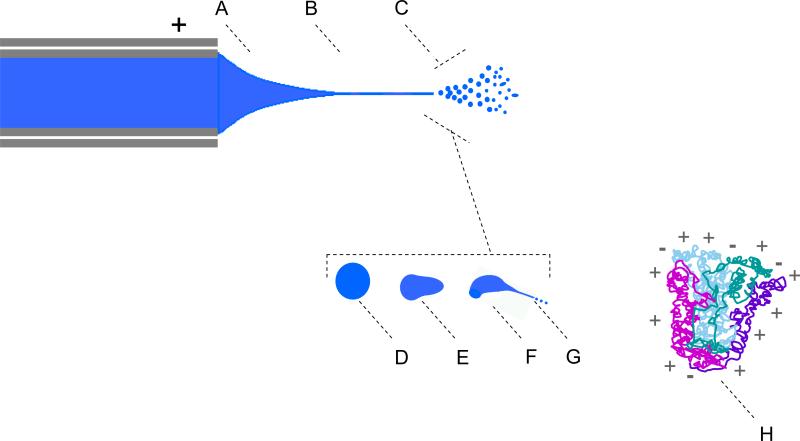
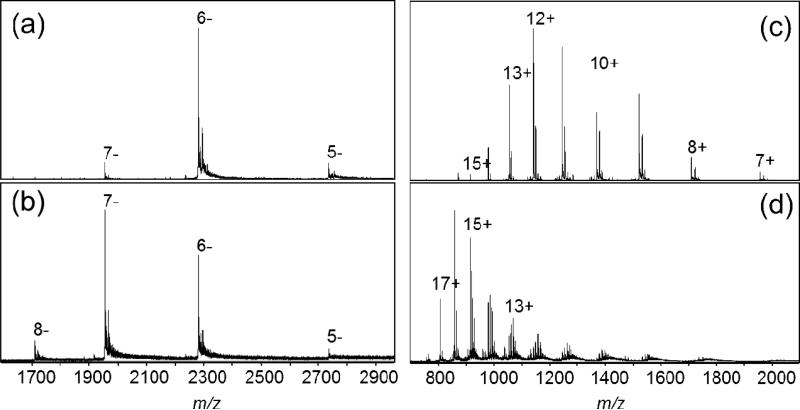
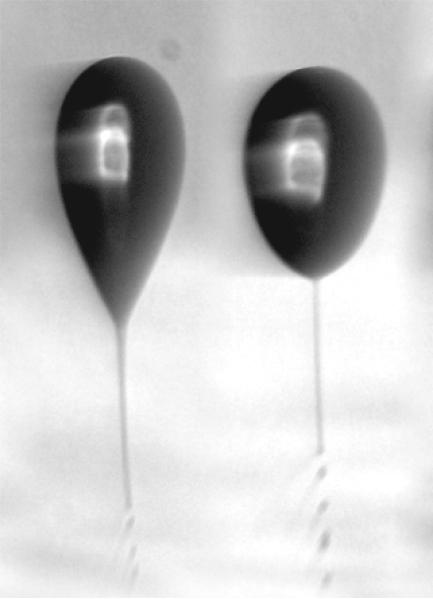
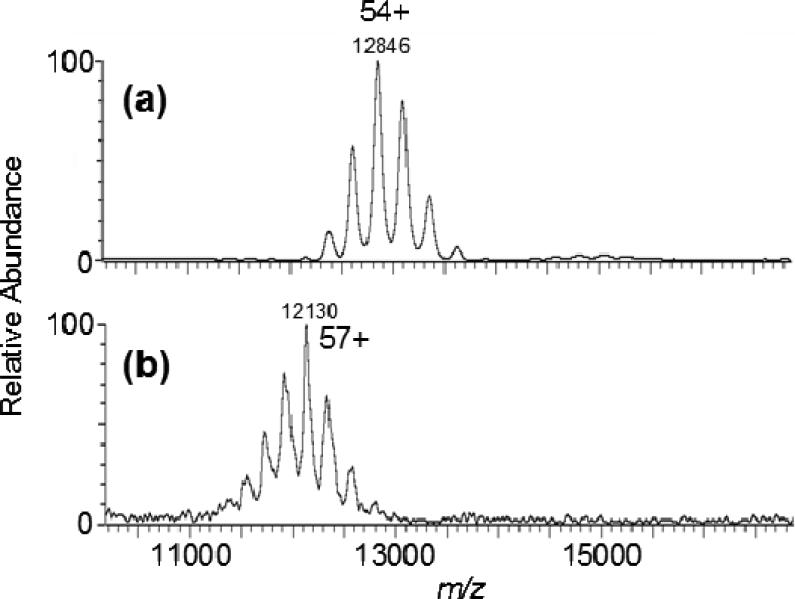
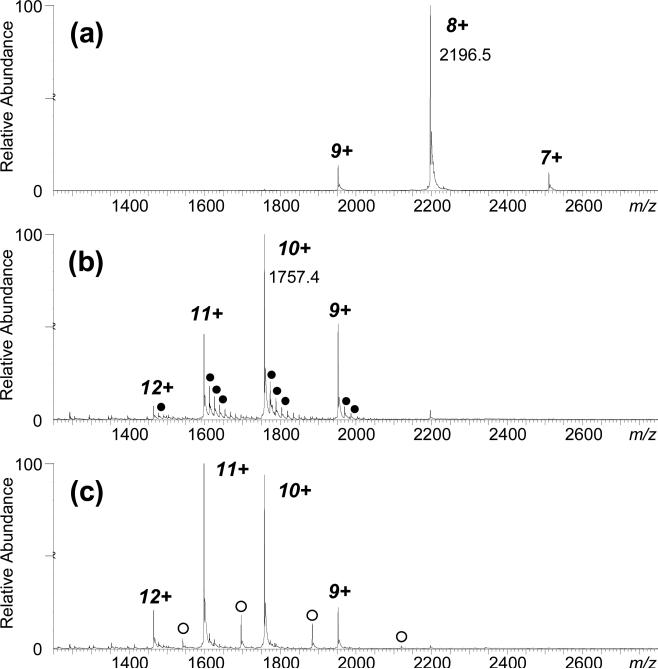
Understanding the charging mechanism of electrospray ionization is central to overcoming shortcomings such as ion suppression or limited dynamic range, and explaining phenomena such as supercharging. Towards that end, we explore what accumulated observations reveal about the mechanism of electrospray. We introduce the idea of an intermediate region for electrospray ionization (and other ionization methods) to account for the facts that solution charge state distributions (CSDs) do not correlate with those observed by ESI-MS (the latter bear more charge) and that gas phase reactions can reduce, but not increase, the extent of charging. This region incorporates properties (e.g., basicities) intermediate between solution and gas phase. Assuming that droplet species polarize within the high electric field leads to equations describing ion emission resembling those from the equilibrium partitioning model. The equations predict many trends successfully, including CSD shifts to higher m/z for concentrated analytes and shifts to lower m/z for sprays employing smaller emitter opening diameters. From this view, a single mechanism can be formulated to explain how reagents that promote analyte charging ("supercharging") such as m-NBA, sulfolane, and 3-nitrobenzonitrile increase analyte charge from "denaturing" and "native" solvent systems. It is suggested that additives' Brønsted basicities are inversely correlated to their ability to shift CSDs to lower m/z in positive ESI, as are Brønsted acidities for negative ESI. Because supercharging agents reduce an analyte's solution ionization, excess spray charge is bestowed on evaporating ions carrying fewer opposing charges. Brønsted basicity (or acidity) determines how much ESI charge is lost to the agent (unavailable to evaporating analyte).
了解电喷雾电离的充电机制对于克服诸如离子抑制或有限动态范围等缺点,以及解释诸如超荷电等现象至关重要。为此,我们探讨了累积观察结果揭示的电喷雾机制。我们引入了电喷雾电离(以及其他电离方法)的中间区域概念,以解释溶液电荷态分布(CSD)与电喷雾电离质谱(ESI-MS)观察到的电荷态分布不相关(后者携带更多电荷)这一事实,以及气相反应可以降低但不能增加充电程度这一事实。该区域包含溶液相和气相之间的中间性质(例如碱度)。假设液滴物质在高电场中极化会导致描述离子发射的方程类似于平衡分配模型中的方程。这些方程成功地预测了许多趋势,包括浓缩分析物的CSD向更高m/z的偏移以及采用较小发射器开口直径的喷雾向更低m/z的偏移。从这个角度来看,可以制定一个单一机制来解释促进分析物充电(“超荷电”)的试剂,如间硝基苯甲酸(m-NBA)、环丁砜和3-硝基苯腈,如何从“变性”和“天然”溶剂系统中增加分析物电荷。有人提出,添加剂的布朗斯特碱度与其在正ESI中将CSD向更低m/z偏移的能力呈负相关,负ESI中的布朗斯特酸度也是如此。因为超荷电剂会降低分析物的溶液电离,所以多余的喷雾电荷会赋予携带较少相反电荷的蒸发离子。布朗斯特碱度(或酸度)决定了有多少ESI电荷损失给该试剂(无法用于蒸发分析物)。