Bal Chinmaya Kumar, Bhatia Vikram, Khillan Vikas, Rathor Neha, Saini Deepak, Daman Ripu, Sarin Shiv Kumar
Department of Hepatology, Institute of Liver and Biliary Sciences, New Delhi, India.
Department of Microbiology, Institute of Liver and Biliary Sciences, New Delhi, India.
Indian J Crit Care Med. 2014 Aug;18(8):536-9. doi: 10.4103/0972-5229.138161.
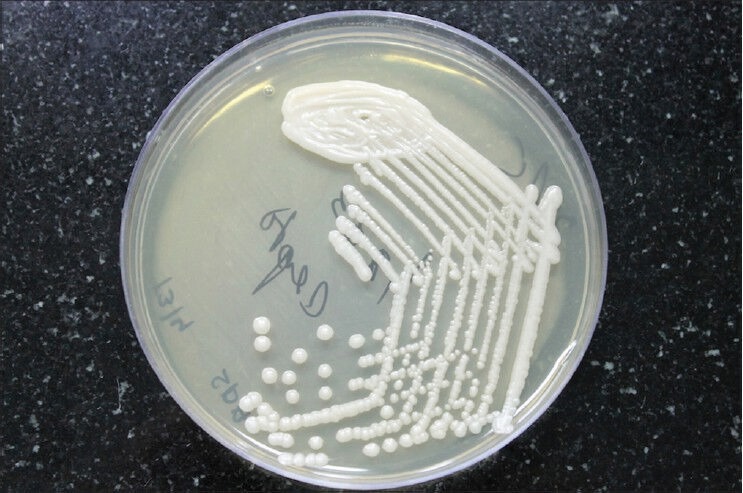
Cryptococcus neoformans is encapsulated yeast that predominately infects immunocompromised individuals. Liver disease is an under-recognized predisposition for cryptococcal disease. We report two nonalcoholic, nondiabetic, and human immunodeficiency virus - negative cirrhotic patients, with spontaneous cryptococcal peritonitis. Cryptococcus infection was diagnosed by culture of ascitic fluid and peripheral blood in both. We treated the first patient with amphotericin-B, but he expired. The second patient with earlier diagnosis, survived to discharge with fluconazole treatment. We suggest a high clinical suspicion for Cryptococcus as a possible etiology of spontaneous peritonitis in cirrhotic patients.
新型隐球菌是一种有荚膜的酵母菌,主要感染免疫功能低下的个体。肝脏疾病是隐球菌病一种未被充分认识的易感因素。我们报告了两名非酒精性、非糖尿病且人类免疫缺陷病毒阴性的肝硬化患者,他们均患有自发性隐球菌性腹膜炎。两名患者均通过腹水和外周血培养确诊为隐球菌感染。我们用两性霉素B治疗了第一名患者,但他去世了。第二名患者诊断较早,接受氟康唑治疗后存活出院。我们建议对肝硬化患者自发性腹膜炎的可能病因——隐球菌保持高度的临床怀疑。