Cai Yufeng, Myint Wazo, Paulsen Janet L, Schiffer Celia A, Ishima Rieko, Kurt Yilmaz Nese
Department of Biochemistry and Molecular Pharmacology, University of Massachusetts Medical School , Worcester, Massachusetts 01605, United States.
Department of Structural Biology, School of Medicine, University of Pittsburgh Biomedical Science Tower 3 , 3501 Fifth Avenue, Pittsburgh, Pennsylvania 15260, United States.
J Chem Theory Comput. 2014 Aug 12;10(8):3438-3448. doi: 10.1021/ct4010454. Epub 2014 Jun 12.
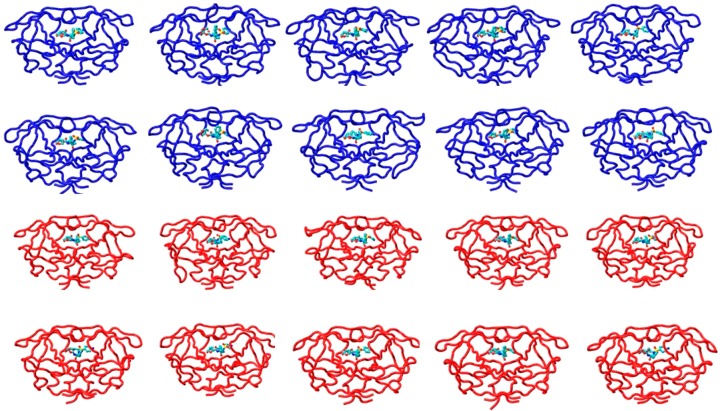
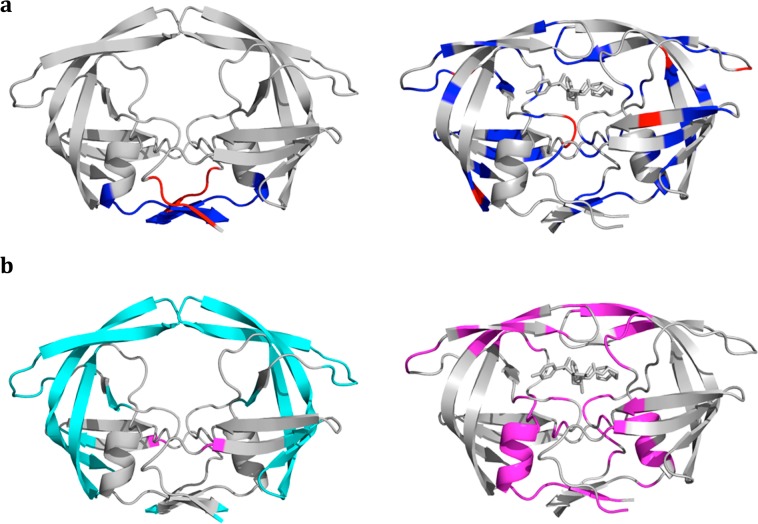
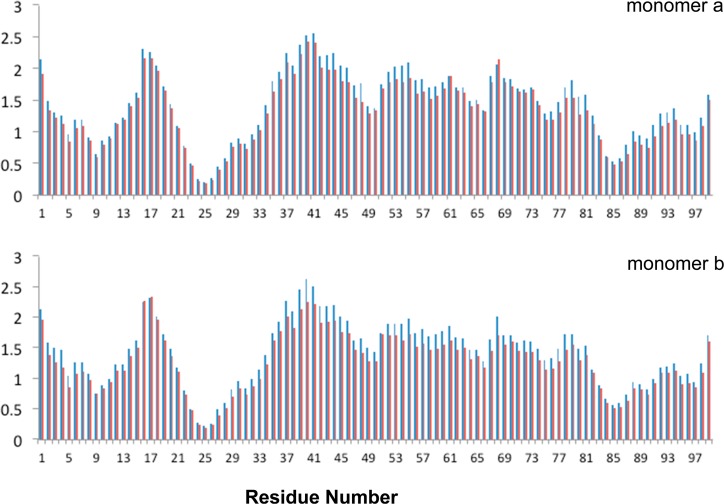
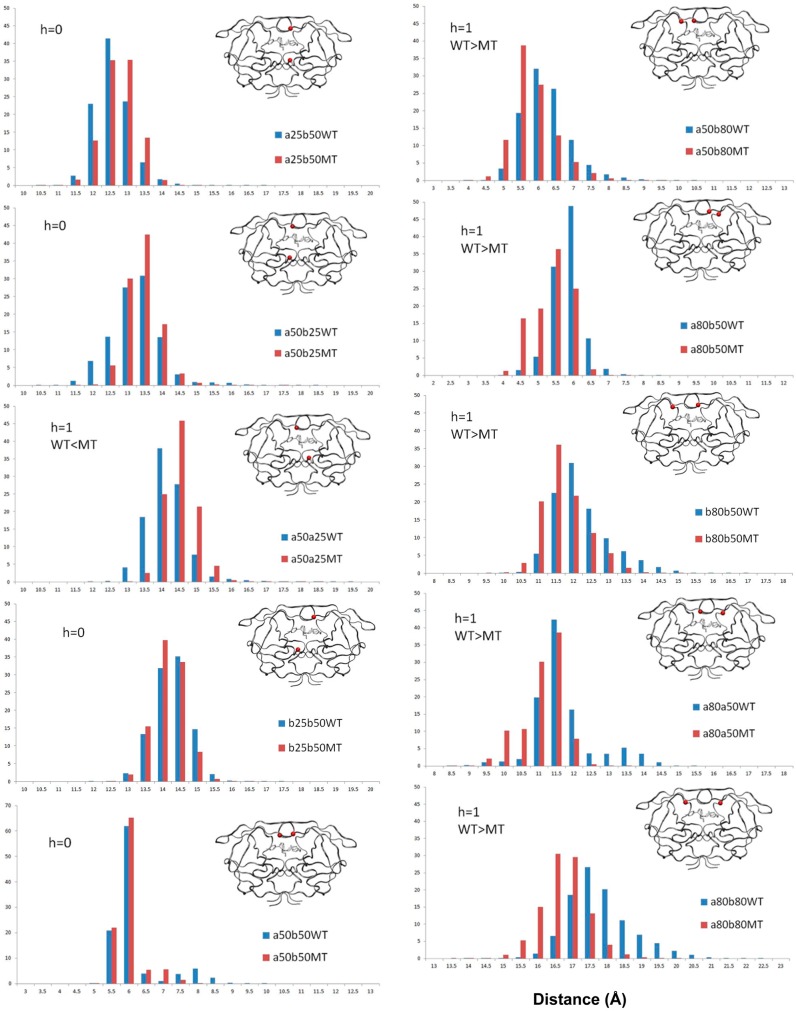
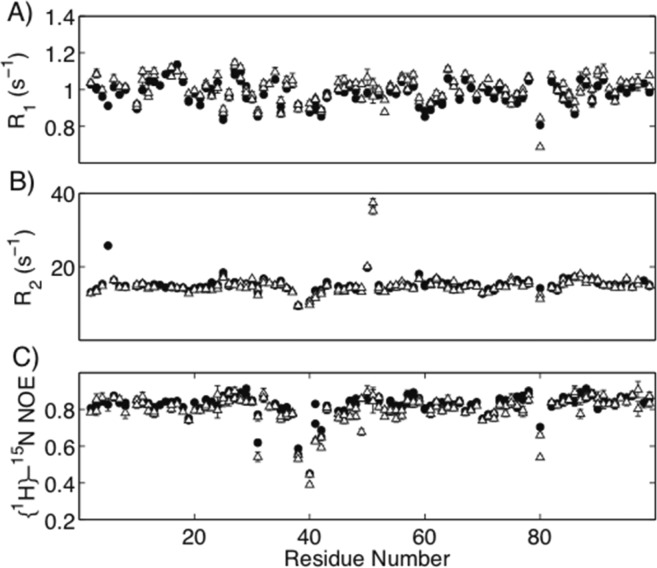
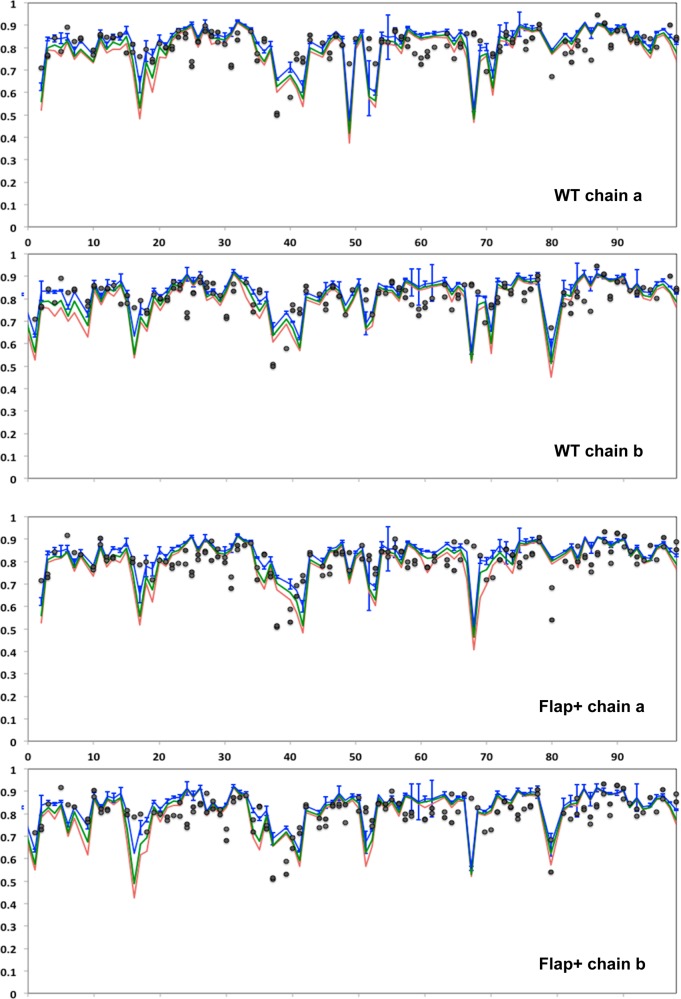
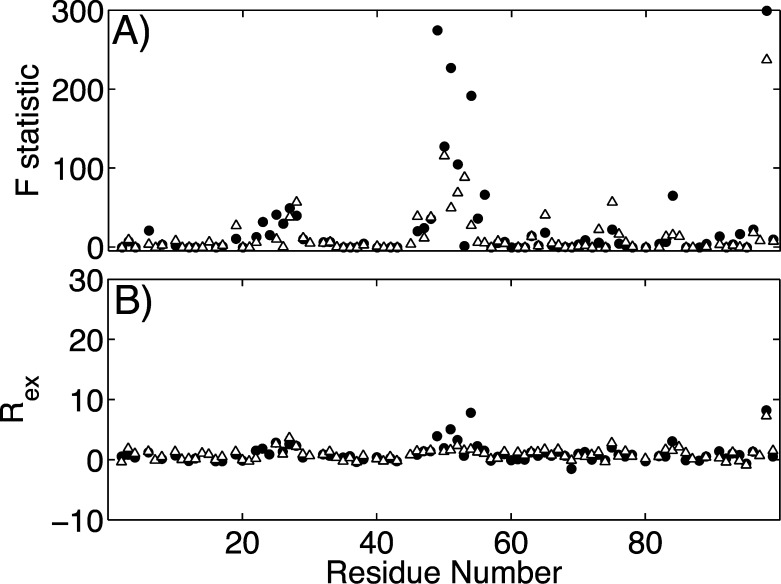
Under the selective pressure of therapy, HIV-1 protease mutants resistant to inhibitors evolve to confer drug resistance. Such mutations can impact both the dynamics and structures of the bound and unbound forms of the enzyme. Flap+ is a multidrug-resistant variant of HIV-1 protease with a combination of primary and secondary resistance mutations (L10I, G48V, I54V, V82A) and a strikingly altered thermodynamic profile for darunavir (DRV) binding relative to the wild-type protease. We elucidated the impact of these mutations on protein dynamics in the DRV-bound state using molecular dynamics simulations and NMR relaxation experiments. Both methods concur in that the conformational ensemble and dynamics of protease are impacted by the drug resistance mutations in Flap+ variant. Surprisingly this change in ensemble dynamics is different from that observed in the unliganded form of the same variant (Cai, Y. et al. , , 3452-3462). Our comparative analysis of both inhibitor-free and bound states presents a comprehensive picture of the altered dynamics in drug-resistant mutant HIV-1 protease and underlies the importance of incorporating dynamic analysis of the whole system, including the unliganded state, into revealing drug resistance mechanisms.
在治疗的选择压力下,对抑制剂耐药的HIV-1蛋白酶突变体不断进化以产生耐药性。此类突变会影响该酶结合态与游离态的动力学和结构。Flap+是HIV-1蛋白酶的一种多药耐药变体,具有一级和二级耐药突变(L10I、G48V、I54V、V82A)的组合,并且相对于野生型蛋白酶,其对达芦那韦(DRV)结合的热力学概况有显著改变。我们使用分子动力学模拟和核磁共振弛豫实验阐明了这些突变对处于DRV结合状态的蛋白质动力学的影响。两种方法均一致认为,蛋白酶的构象集合和动力学受到Flap+变体中耐药突变的影响。令人惊讶的是,这种集合动力学的变化与在同一变体的无配体形式中观察到的不同(Cai, Y.等人,,3452 - 3462)。我们对无抑制剂状态和结合状态的比较分析呈现了耐药突变型HIV-1蛋白酶中动力学改变的全面情况,并突出了将包括无配体状态在内的整个系统的动力学分析纳入揭示耐药机制的重要性。