Luo Min, Christgen Shelbi, Sanyal Nikhilesh, Arentson Benjamin W, Becker Donald F, Tanner John J
Department of Chemistry, University of Missouri-Columbia , Columbia, Missouri 65211, United States.
Biochemistry. 2014 Sep 9;53(35):5661-73. doi: 10.1021/bi500693a. Epub 2014 Aug 26.
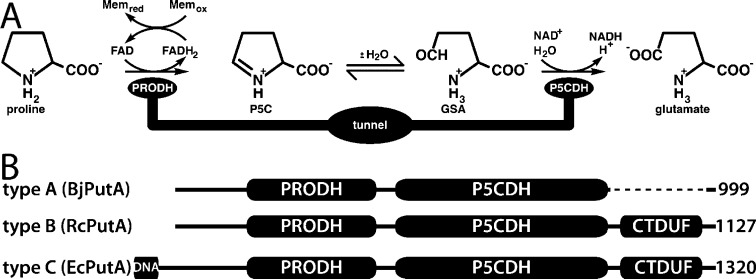
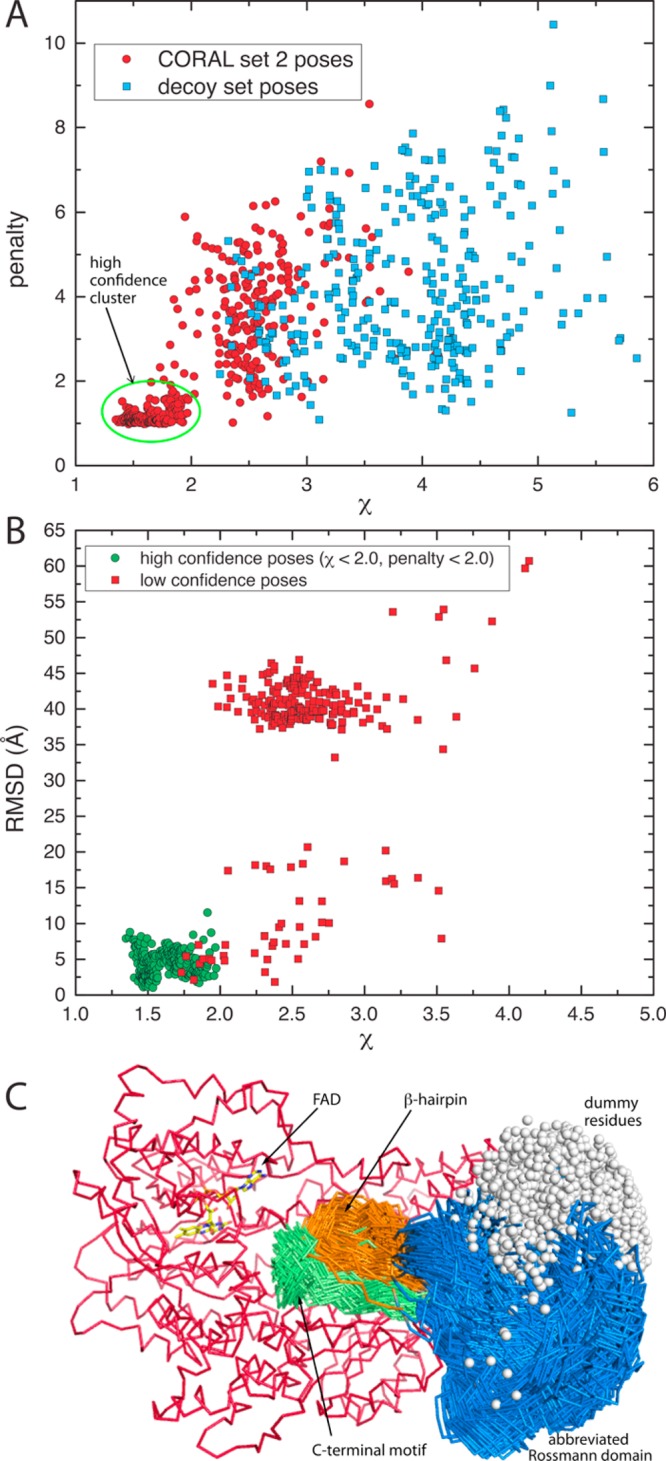
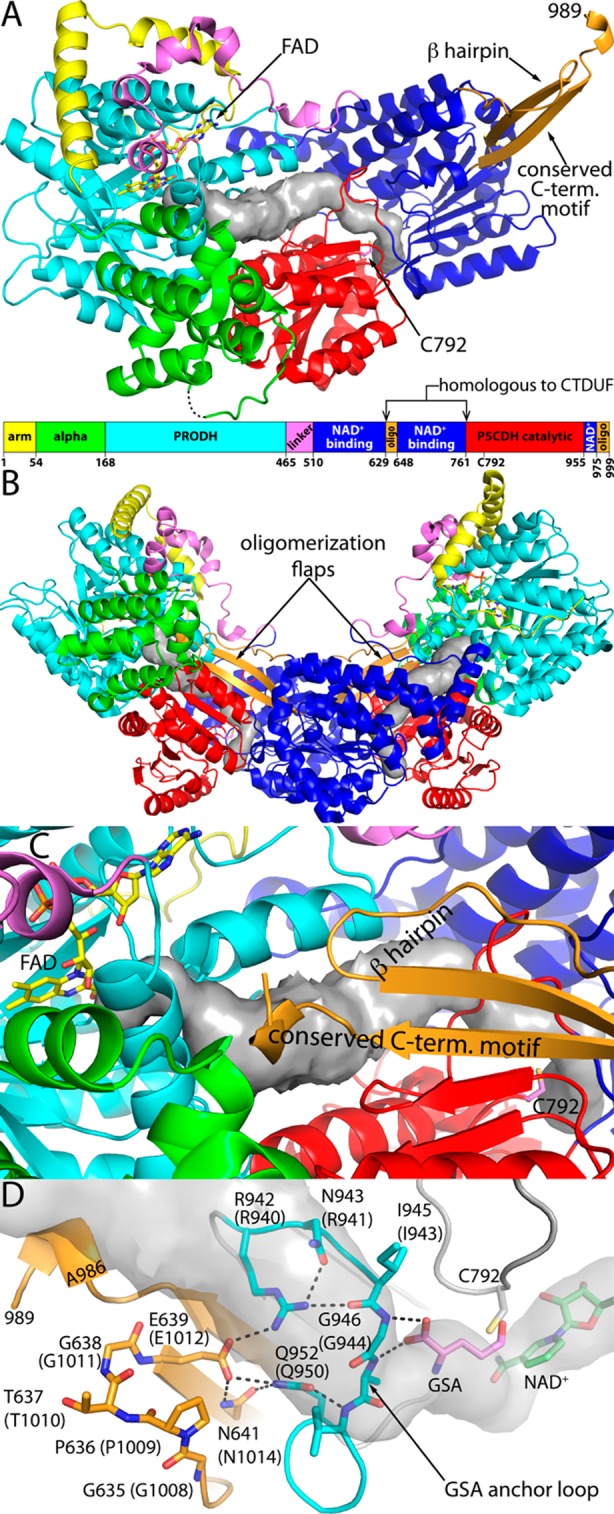
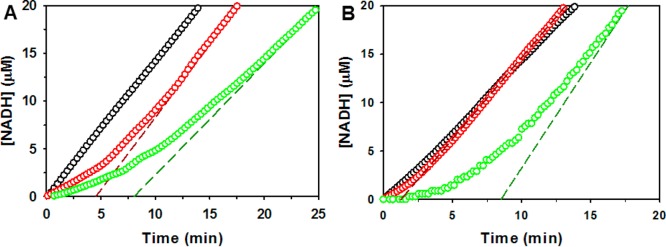
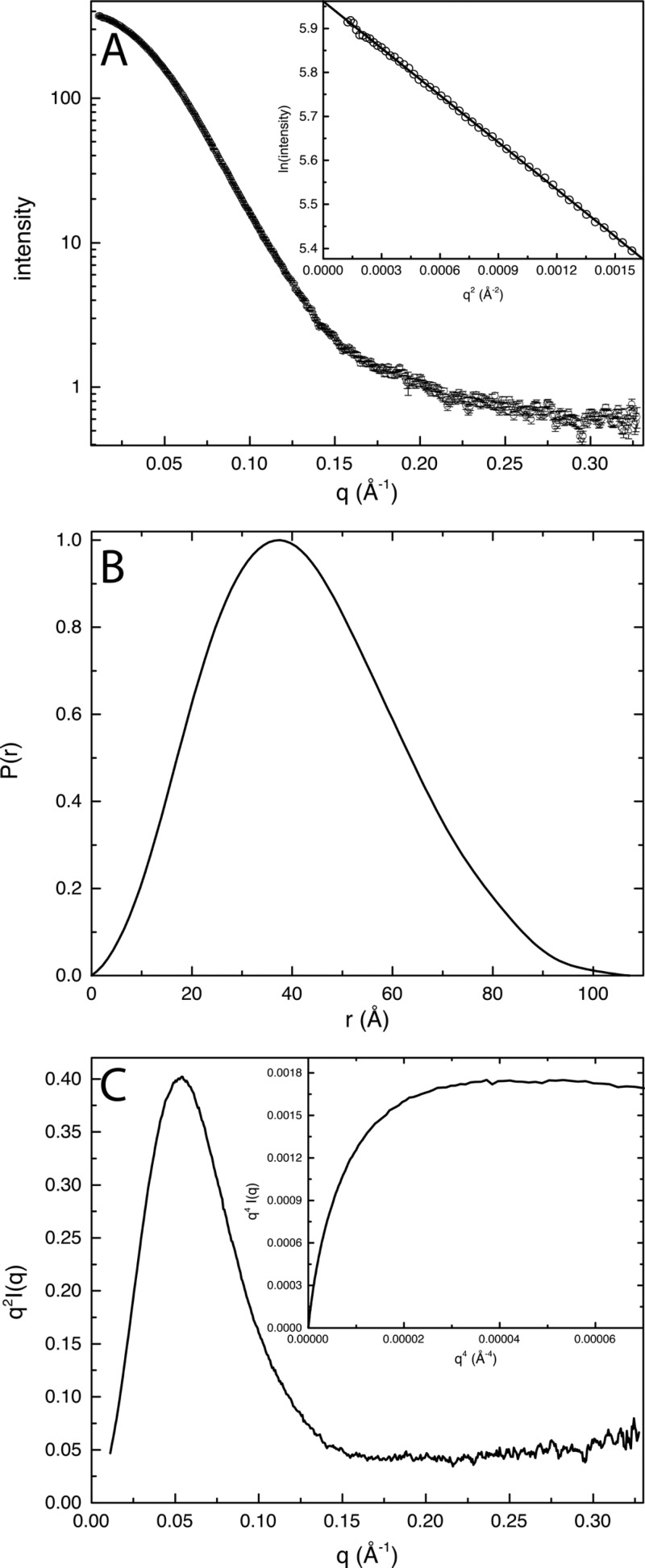
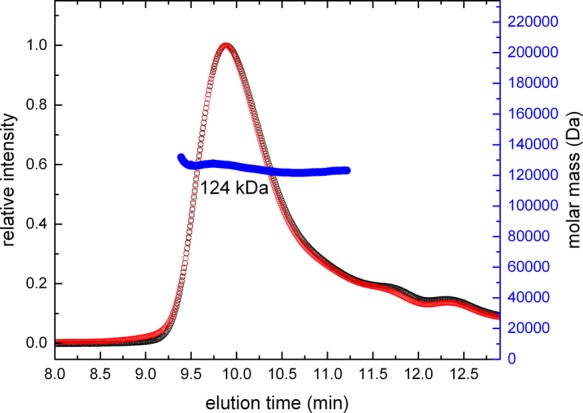
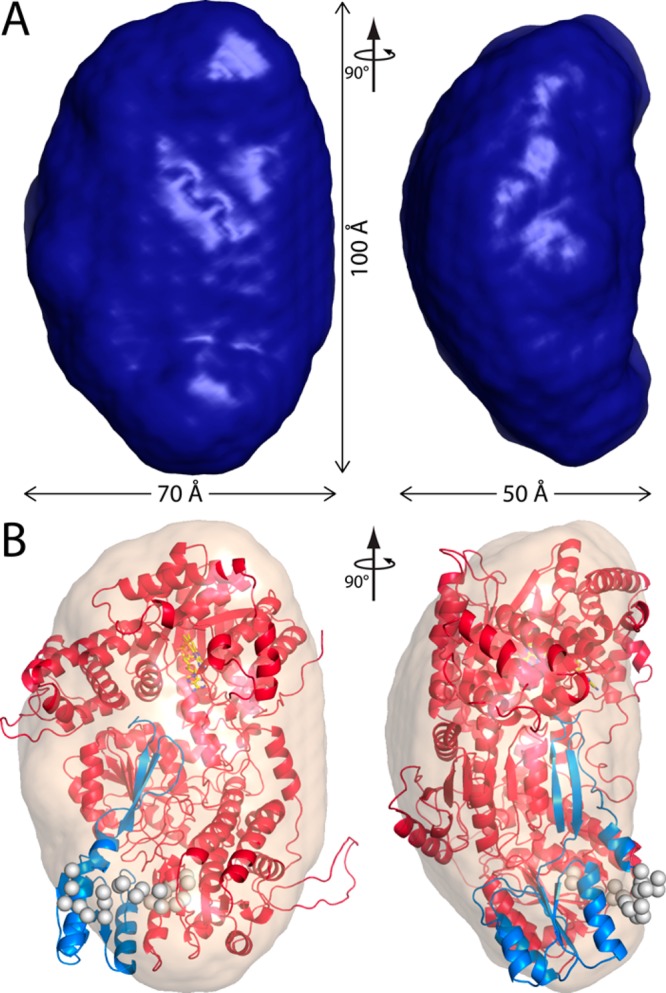
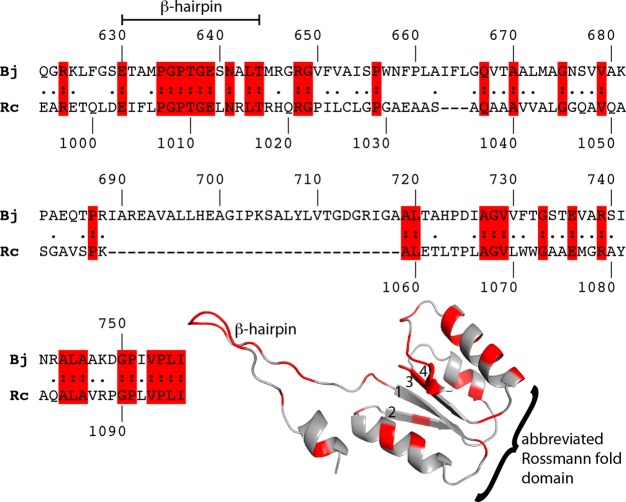
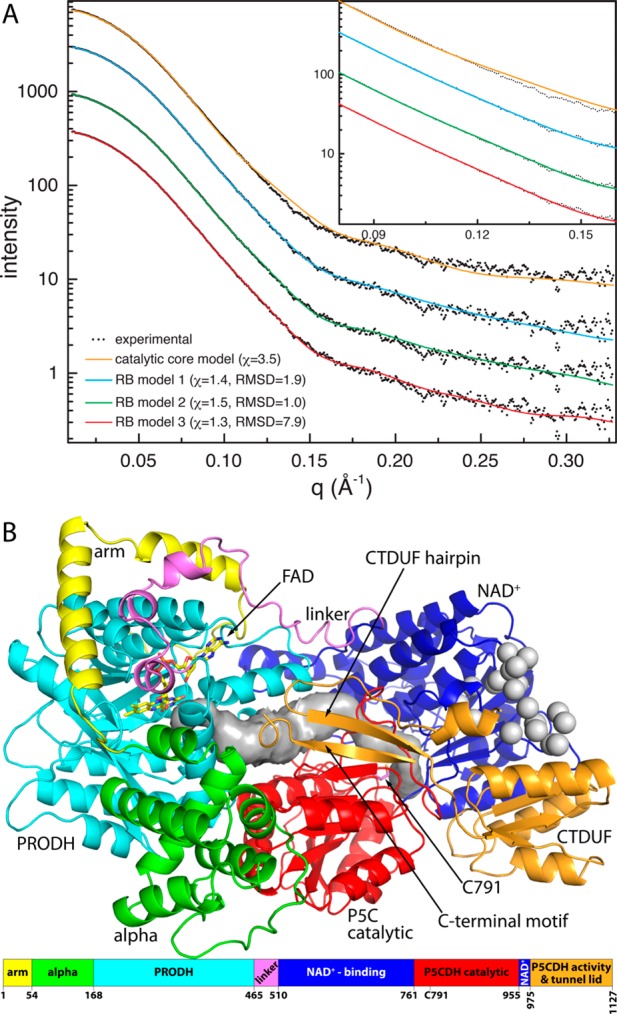
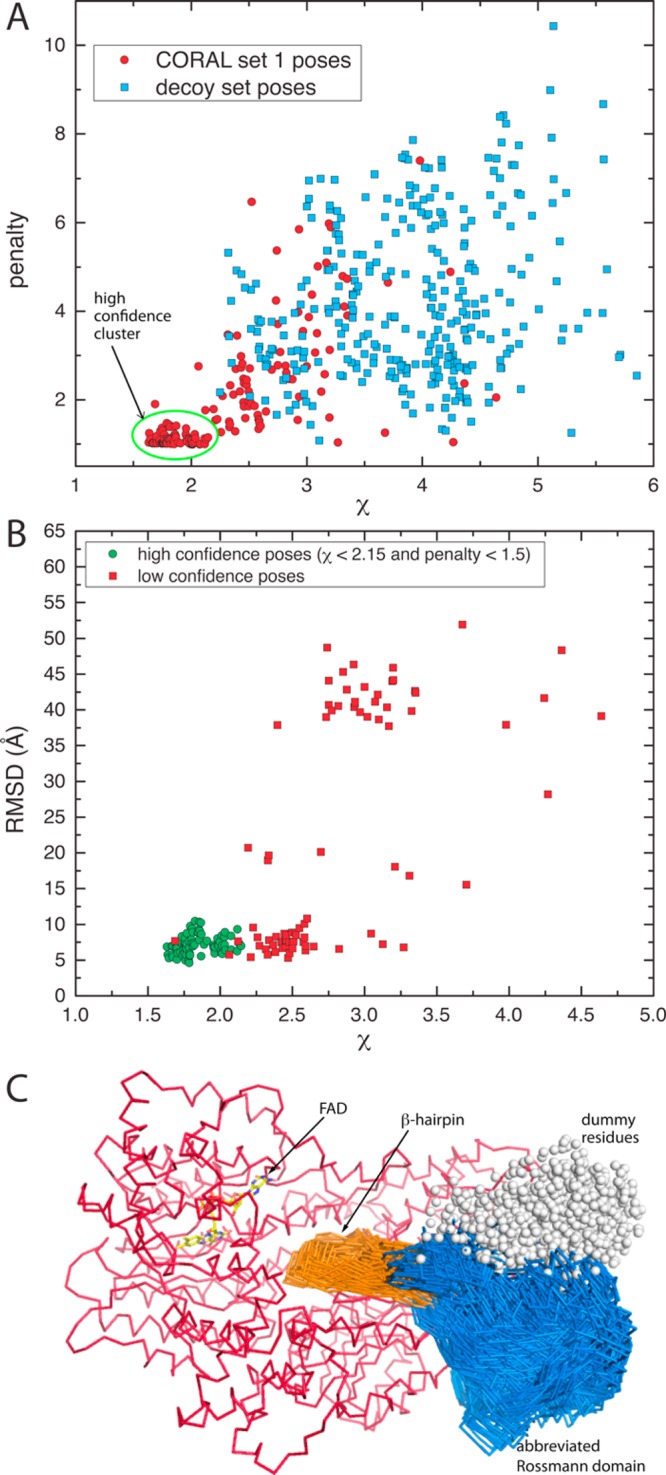
Proline utilization A (PutA) is a bifunctional enzyme that catalyzes the oxidation of proline to glutamate. Structures of type A PutAs have revealed the catalytic core consisting of proline dehydrogenase (PRODH) and Δ(1)-pyrroline-5-carboxylate dehydrogenase (P5CDH) modules connected by a substrate-channeling tunnel. Type B PutAs also have a C-terminal domain of unknown function (CTDUF) that is absent in type A PutAs. Small-angle X-ray scattering (SAXS), mutagenesis, and kinetics are used to determine the contributions of this domain to PutA structure and function. The 1127-residue Rhodobacter capsulatus PutA (RcPutA) is used as a representative CTDUF-containing type B PutA. The reaction progress curve for the coupled PRODH-P5CDH activity of RcPutA does not exhibit a time lag, implying a substrate channeling mechanism. RcPutA is monomeric in solution, which is unprecedented for PutAs. SAXS rigid body modeling with target-decoy validation is used to build a model of RcPutA. On the basis of homology to aldehyde dehydrogenases (ALDHs), the CTDUF is predicted to consist of a β-hairpin fused to a noncatalytic Rossmann fold domain. The predicted tertiary structural interactions of the CTDUF resemble the quaternary structural interactions in the type A PutA dimer interface. The model is tested by mutagenesis of the dimerization hairpin of a type A PutA and the CTDUF hairpin of RcPutA. Similar functional phenotypes are observed in the two sets of variants, supporting the hypothesis that the CTDUF mimics the type A PutA dimer interface. These results suggest annotation of the CTDUF as an ALDH superfamily domain that facilitates P5CDH activity and substrate channeling by stabilizing the aldehyde-binding site and sealing the substrate-channeling tunnel from the bulk medium.
脯氨酸利用蛋白A(PutA)是一种双功能酶,可催化脯氨酸氧化为谷氨酸。A型PutA的结构显示其催化核心由脯氨酸脱氢酶(PRODH)和Δ(1)-吡咯啉-5-羧酸脱氢酶(P5CDH)模块组成,二者通过底物通道连接。B型PutA还有一个功能未知的C端结构域(CTDUF),而A型PutA没有该结构域。利用小角X射线散射(SAXS)、诱变和动力学方法来确定该结构域对PutA结构和功能的贡献。1127个氨基酸残基的荚膜红细菌PutA(RcPutA)用作含CTDUF的代表性B型PutA。RcPutA的PRODH-P5CDH偶联活性反应进程曲线没有显示出时间延迟,这意味着存在底物通道机制。RcPutA在溶液中是单体,这在PutA中是前所未有的。使用带有目标-诱饵验证的SAXS刚体建模来构建RcPutA的模型。基于与醛脱氢酶(ALDH)的同源性,预测CTDUF由一个β-发夹结构与一个非催化的Rossmann折叠结构域融合而成。预测的CTDUF三级结构相互作用类似于A型PutA二聚体界面中的四级结构相互作用。通过对A型PutA的二聚化发夹和RcPutA的CTDUF发夹进行诱变来测试该模型。在两组变体中观察到相似的功能表型,支持了CTDUF模拟A型PutA二聚体界面的假设。这些结果表明,CTDUF可注释为一个ALDH超家族结构域,通过稳定醛结合位点并将底物通道与主体介质密封来促进P5CDH活性和底物通道作用。