Chapanian Rafi, Kwan David H, Constantinescu Iren, Shaikh Fathima A, Rossi Nicholas A A, Withers Stephen G, Kizhakkedathu Jayachandran N
1] Centre for Blood Research, University of British Columbia, 2350 Health Sciences Mall, Life Sciences Centre, Vancouver, British Columbia, Canada V6T 1Z3 [2] Department of Pathology and Laboratory Medicine, University of British Columbia, 2350 Health Sciences Mall, Life Sciences Centre, Vancouver, British Columbia, Canada V6T 1Z3.
1] Department of Chemistry, University of British Columbia, 2036 Main Mall, Vancouver, British Columbia, Canada V6T 1Z1 [2] Centre for High-Throughput Biology, University of British Columbia, Vancouver, British Columbia, Canada V6T 1Z3.
Nat Commun. 2014 Aug 20;5:4683. doi: 10.1038/ncomms5683.
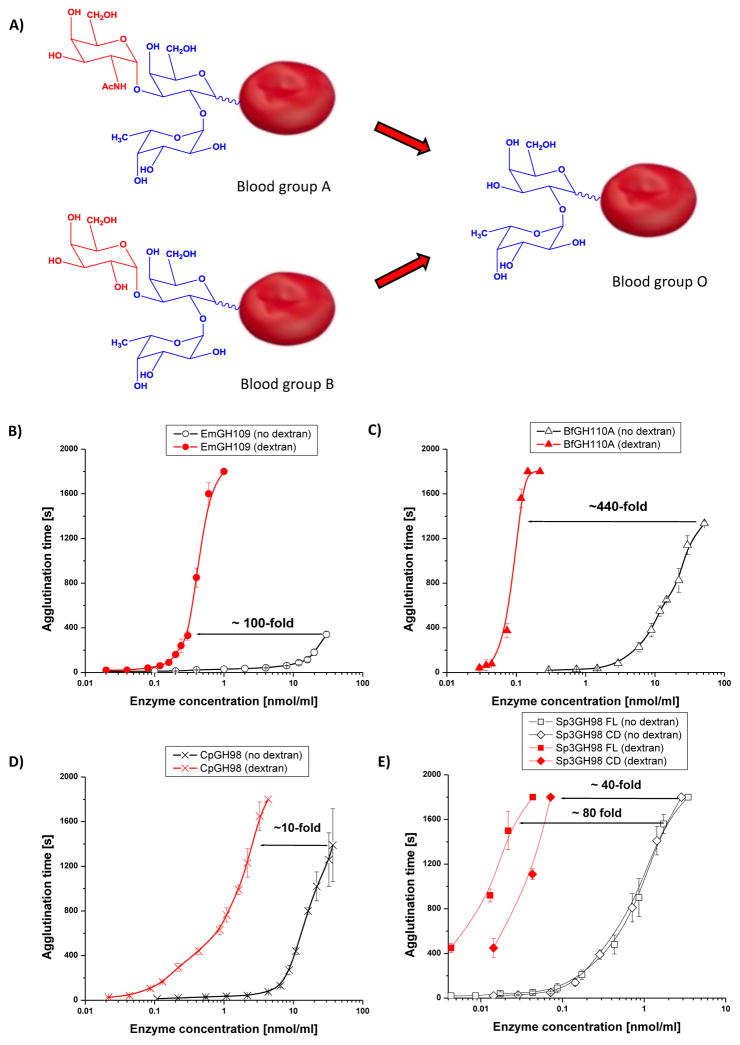
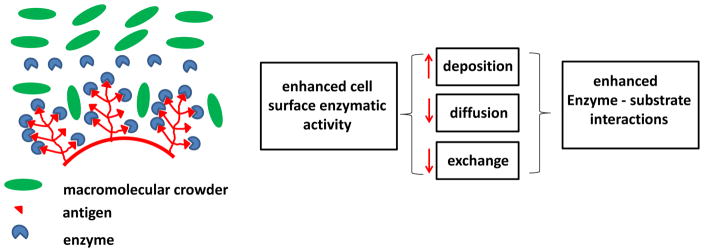
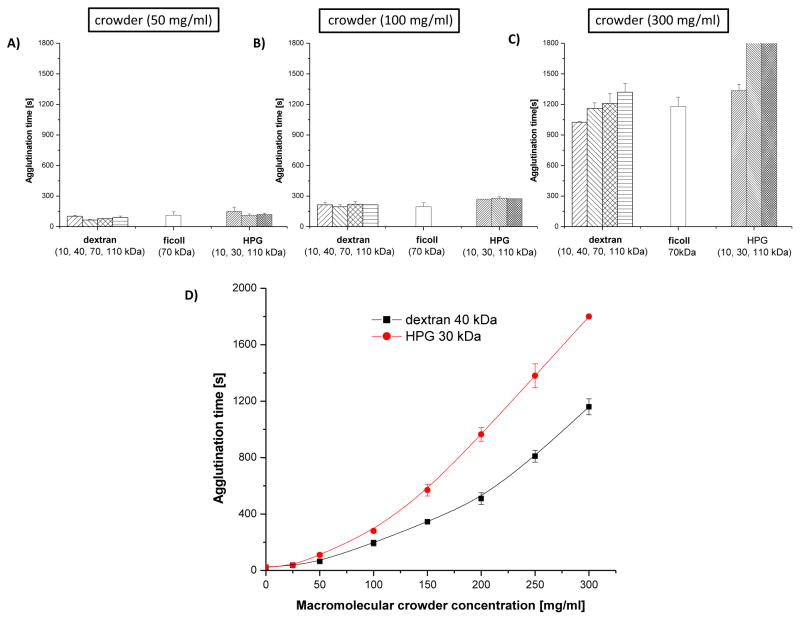
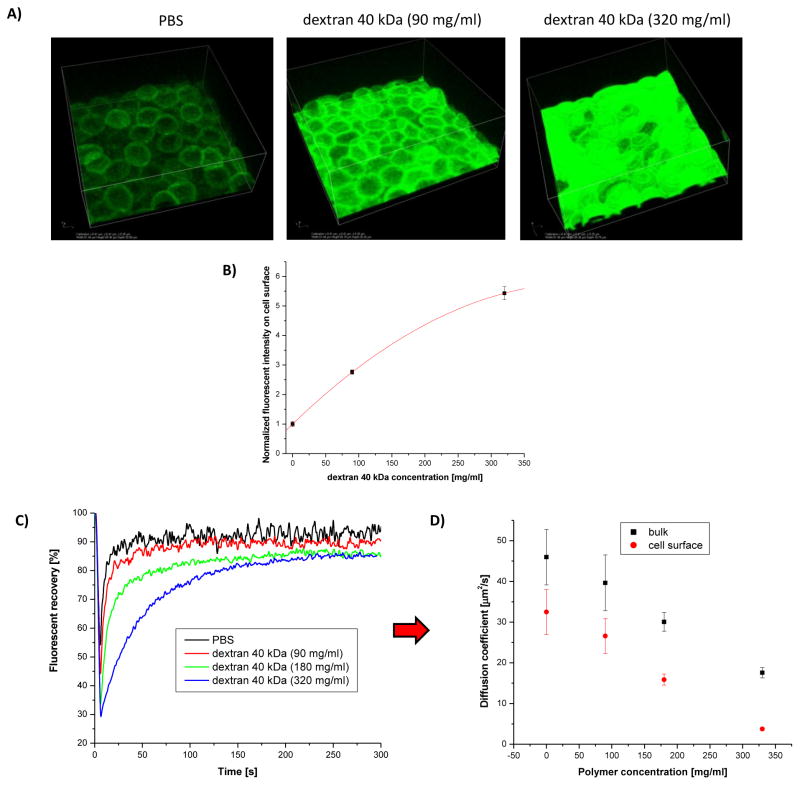
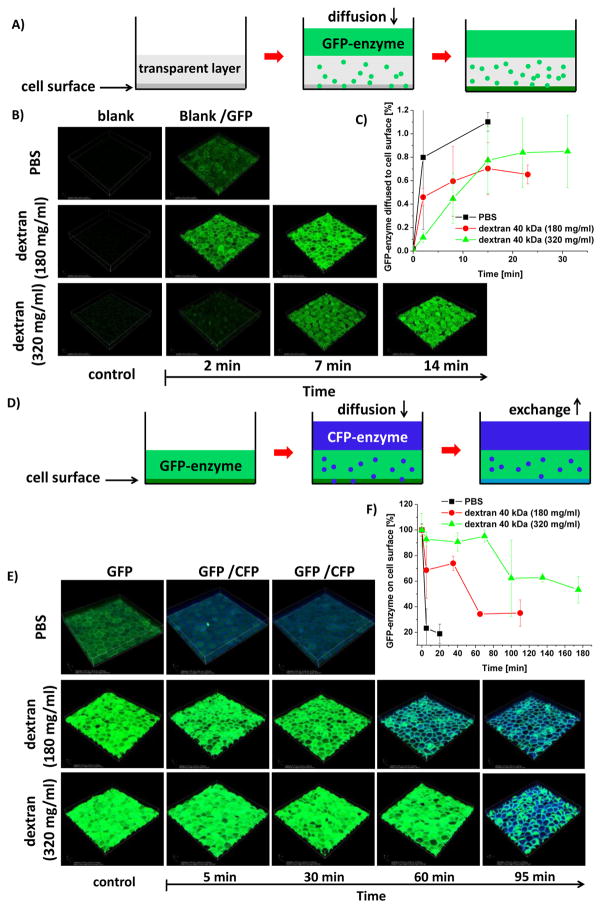
The reaction of macromolecules such as enzymes and antibodies with cell surfaces is often an inefficient process, requiring large amounts of expensive reagent. Here we report a general method based on macromolecular crowding with a range of neutral polymers to enhance such reactions, using red blood cells (RBCs) as a model system. Rates of conversion of type A and B red blood cells to universal O type by removal of antigenic carbohydrates with selective glycosidases are increased up to 400-fold in the presence of crowders. Similar enhancements are seen for antibody binding. We further explore the factors underlying these enhancements using confocal microscopy and fluorescent recovery after bleaching (FRAP) techniques with various fluorescent protein fusion partners. Increased cell-surface concentration due to volume exclusion, along with two-dimensionally confined diffusion of enzymes close to the cell surface, appear to be the major contributing factors.
酶和抗体等大分子与细胞表面的反应通常是一个效率低下的过程,需要大量昂贵的试剂。在此,我们报告一种基于用一系列中性聚合物进行大分子拥挤效应的通用方法,以增强此类反应,使用红细胞(RBCs)作为模型系统。在拥挤剂存在的情况下,通过用选择性糖苷酶去除抗原性碳水化合物,将A型和B型红细胞转化为通用O型的转化率提高了多达400倍。抗体结合也有类似的增强。我们使用共聚焦显微镜和漂白后荧光恢复(FRAP)技术,与各种荧光蛋白融合伴侣一起,进一步探索这些增强作用背后的因素。由于体积排阻导致的细胞表面浓度增加,以及靠近细胞表面的酶的二维受限扩散,似乎是主要的促成因素。