Department of Materials Science and Engineering, Massachusetts Institute of Technology, Cambridge, Massachusetts, United States of America.
PLoS One. 2012;7(5):e37904. doi: 10.1371/journal.pone.0037904. Epub 2012 May 23.
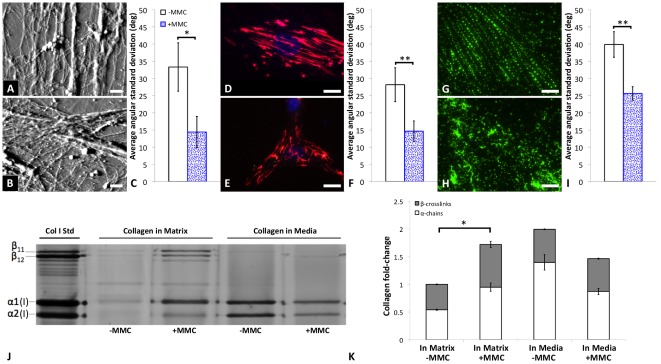
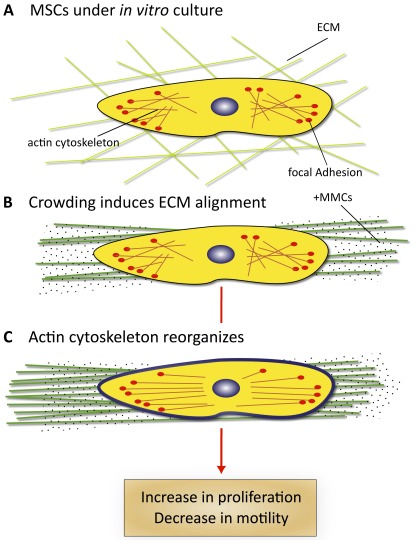
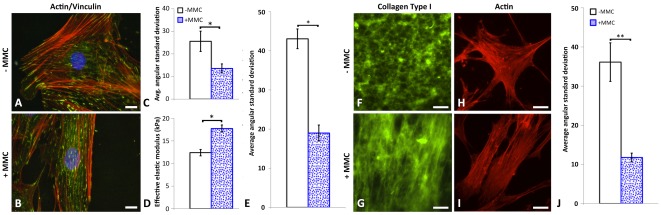
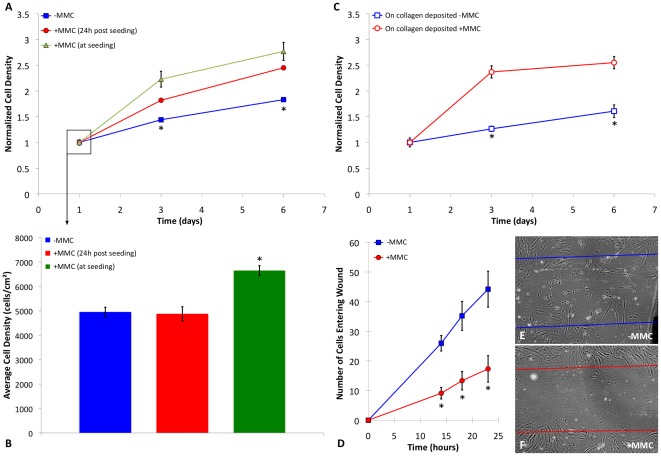
Microenvironments of biological cells are dominated in vivo by macromolecular crowding and resultant excluded volume effects. This feature is absent in dilute in vitro cell culture. Here, we induced macromolecular crowding in vitro by using synthetic macromolecular globules of nm-scale radius at physiological levels of fractional volume occupancy. We quantified the impact of induced crowding on the extracellular and intracellular protein organization of human mesenchymal stem cells (MSCs) via immunocytochemistry, atomic force microscopy (AFM), and AFM-enabled nanoindentation. Macromolecular crowding in extracellular culture media directly induced supramolecular assembly and alignment of extracellular matrix proteins deposited by cells, which in turn increased alignment of the intracellular actin cytoskeleton. The resulting cell-matrix reciprocity further affected adhesion, proliferation, and migration behavior of MSCs. Macromolecular crowding can thus aid the design of more physiologically relevant in vitro studies and devices for MSCs and other cells, by increasing the fidelity between materials synthesized by cells in vivo and in vitro.
生物细胞的微环境在体内主要由大分子拥挤和由此产生的排除体积效应所主导。这种特征在稀细胞体外培养中是不存在的。在这里,我们通过在生理体积占有率分数下使用纳米级半径的合成大分子球体在体外诱导大分子拥挤。我们通过免疫细胞化学、原子力显微镜(AFM)和 AFM 纳米压痕技术定量分析了诱导拥挤对人骨髓间充质干细胞(MSCs)的细胞外和细胞内蛋白质组织的影响。细胞外培养基中的大分子拥挤直接诱导细胞分泌的细胞外基质蛋白的超分子组装和排列,这反过来又增加了细胞内肌动蛋白细胞骨架的排列。由此产生的细胞-基质互惠作用进一步影响了 MSCs 的黏附、增殖和迁移行为。因此,通过增加细胞在体内和体外合成材料之间的保真度,大分子拥挤可以帮助设计更符合生理相关性的体外研究和 MSC 及其他细胞的设备。