Yeh Kuang-Ting, Yu Tzai-Chiu, Chen Ing-Ho, Peng Cheng-Huan, Liu Kuan-Lin, Lee Ru-Ping, Wu Wen-Tien
J Orthop Surg Res. 2014 Aug 21;9:49. doi: 10.1186/s13018-014-0049-8.
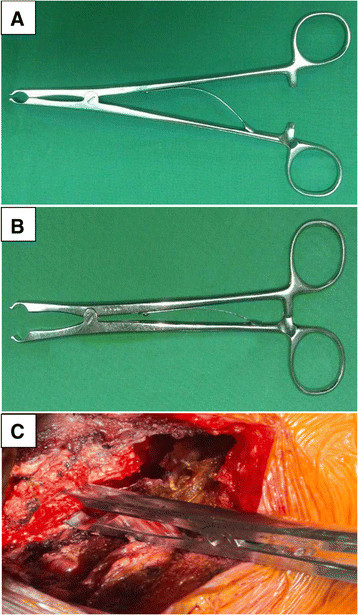
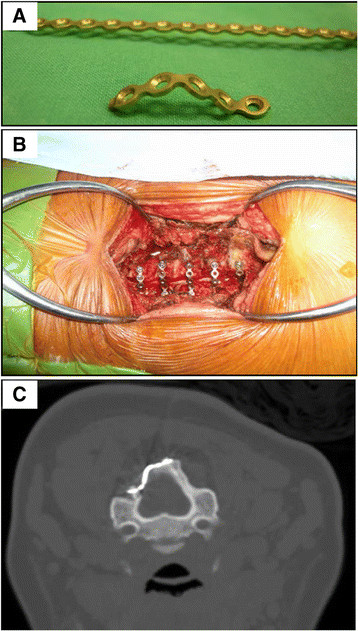
Laminoplasty is an effective procedure for treating cervical spondylotic myelopathy (CSM). Little information is available regarding the surgical outcomes of expansive open-door laminoplasty (EOLP) when securing with titanium miniplates without bone grafting. This study is aimed to elucidate the efficacy of and problems associated with EOLP secured with titanium miniplates without bone grafting, thereby enhancing future surgical outcomes.
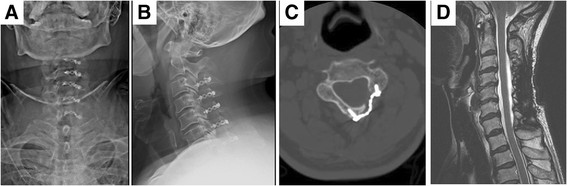
This is a retrospective study. The study participants comprised 104 patients who underwent cervical EOLP secured with titanium miniplates without bone graft for CSM treatment between August 2005 and March 2011. The clinical results were evaluated based on the Japanese Orthopedic Association (JOA) and Nurick scores. The radiographic outcomes were determined based on plain film and magnetic resonance imaging findings, which were assessed and compared.
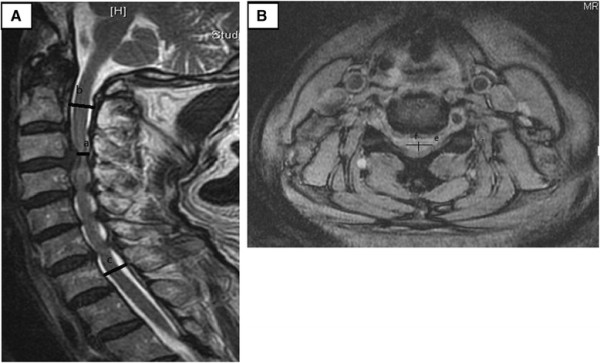
Lateral cervical spine X-rays exhibited improvement in the Pavlov ratio of the spinal canal at 1 day postoperation, and this ratio did not change at 1 year postoperation. The mean cervical curvature from C2 to C7 decreased 0.21° ± 10.09° and the mean cervical range of motion was deteriorated by 35% at 12 months (P < 0.05). The Nurick score improved from 3.19 ± 1.06 to 0.92 ± 1.32 (P < 0.05). The mean JOA recovery rate was 75% ± 21.1% at 1 year. The mean level of postoperative neck pain at 3 months was 3.09 ± 2.31, as determined using the visual analogue scale (VAS). Increased age, concomitant thoracolumbar stenosis, depression disorder, and preexisting myelomalacia negatively affected the JOA recovery rate (P < 0.05). A decreased preoperative Nurick score and superior sensory function in the upper extremities were powerful predictors of an enhanced JOA recovery rate. The postoperative complications involved hematoma formation 0.9%, reversible C5 nerve palsy 2.8%, and moderate to severe neck pain (VAS ≥ 4) 42%. No cases of lamina closure or collapse were observed.
EOLP secured with titanium miniplates without bone grafting is a safe and effective surgical method for treating most patients with CSM.
椎板成形术是治疗脊髓型颈椎病(CSM)的一种有效方法。关于使用钛微型钢板固定且不植骨的扩大开门式椎板成形术(EOLP)的手术效果,目前可用信息较少。本研究旨在阐明使用钛微型钢板固定且不植骨的EOLP的疗效及相关问题,从而改善未来的手术效果。
这是一项回顾性研究。研究对象包括2005年8月至2011年3月期间因CSM接受使用钛微型钢板固定且不植骨的颈椎EOLP手术的104例患者。基于日本骨科协会(JOA)和Nurick评分评估临床结果。根据X线平片和磁共振成像结果确定影像学结果,并进行评估和比较。
颈椎侧位X线片显示术后1天椎管的Pavlov比率有所改善,术后1年该比率未发生变化。C2至C7的平均颈椎曲度在12个月时下降了0.21°±10.09°,平均颈椎活动度恶化了35%(P<0.05)。Nurick评分从3.19±1.06提高到0.92±1.32(P<0.05)。术后1年JOA平均恢复率为75%±21.1%。术后3个月使用视觉模拟量表(VAS)测定的颈部疼痛平均评分为3.09±2.31。年龄增加、合并胸腰椎管狭窄、抑郁症以及术前存在脊髓软化症对JOA恢复率有负面影响(P<0.05)。术前Nurick评分降低和上肢感觉功能较好是JOA恢复率提高的有力预测因素。术后并发症包括血肿形成0.9%、可逆性C5神经麻痹2.8%以及中度至重度颈部疼痛(VAS≥4)42%。未观察到椎板闭合或塌陷的病例。
使用钛微型钢板固定且不植骨的EOLP是治疗大多数CSM患者的一种安全有效的手术方法。