Mudhasani Rajini, Kota Krishna P, Retterer Cary, Tran Julie P, Whitehouse Chris A, Bavari Sina
Molecular and Translational Sciences Division, United States Army Medical Research Institute of Infectious Diseases, Frederick, Maryland, United States of America.
PLoS Negl Trop Dis. 2014 Aug 21;8(8):e3095. doi: 10.1371/journal.pntd.0003095. eCollection 2014 Aug.
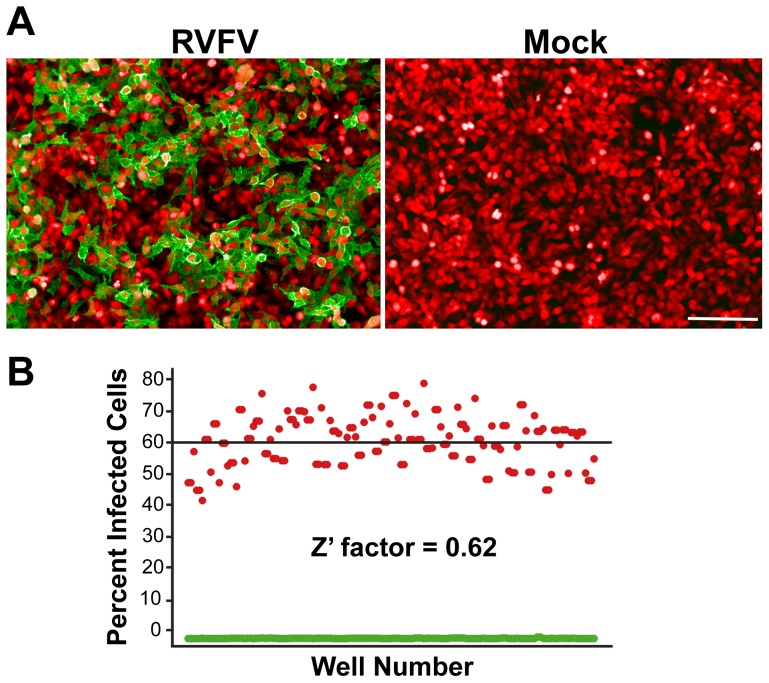
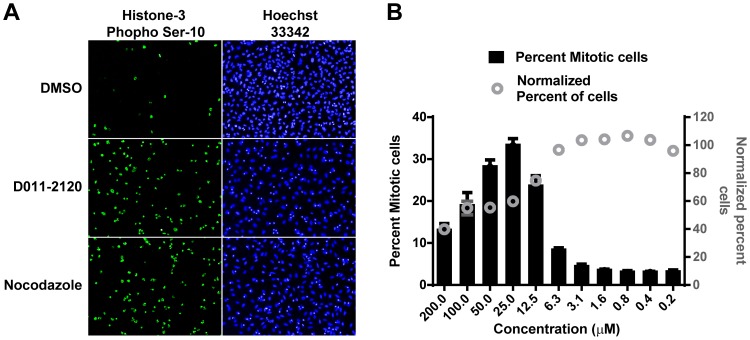
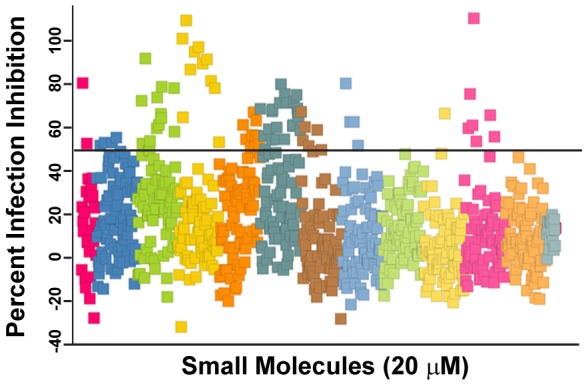
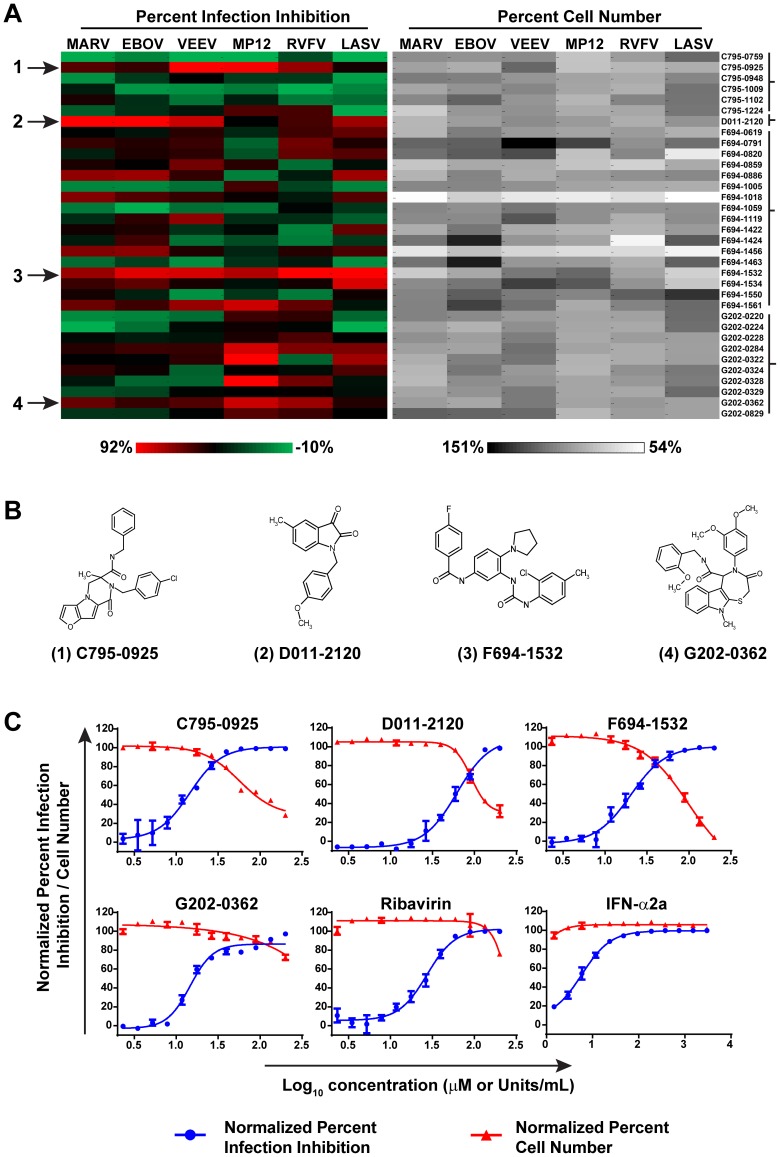
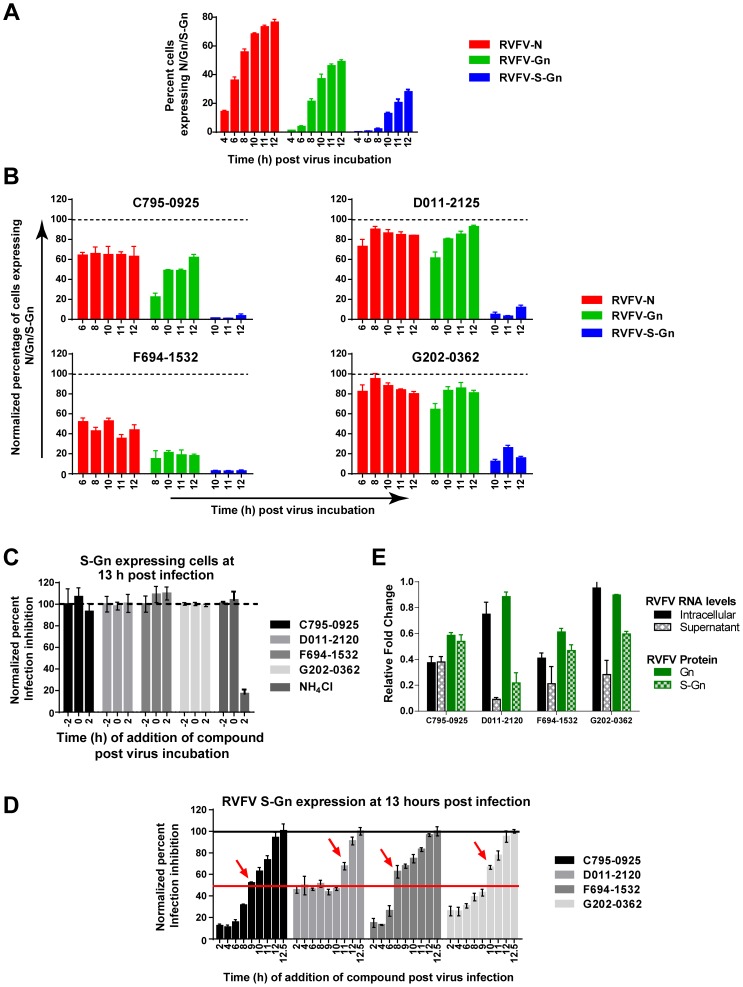
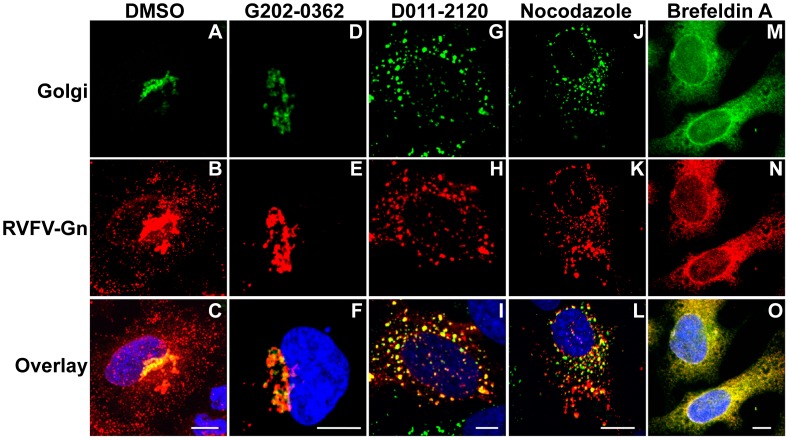
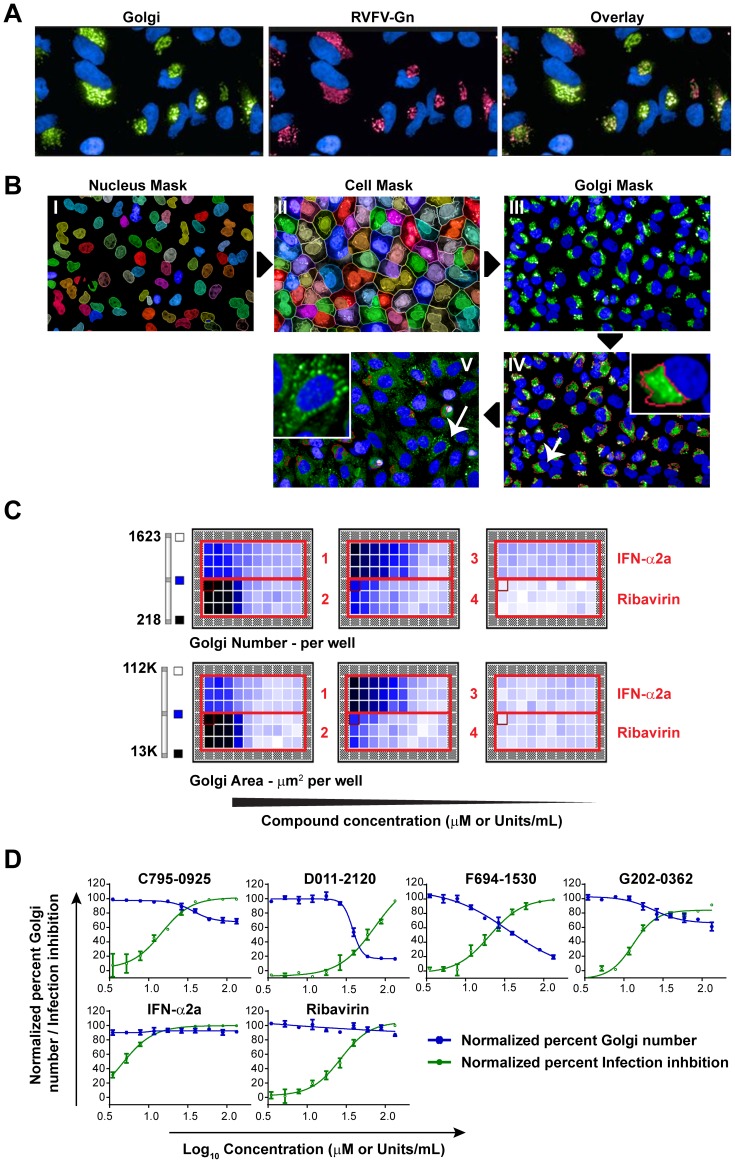
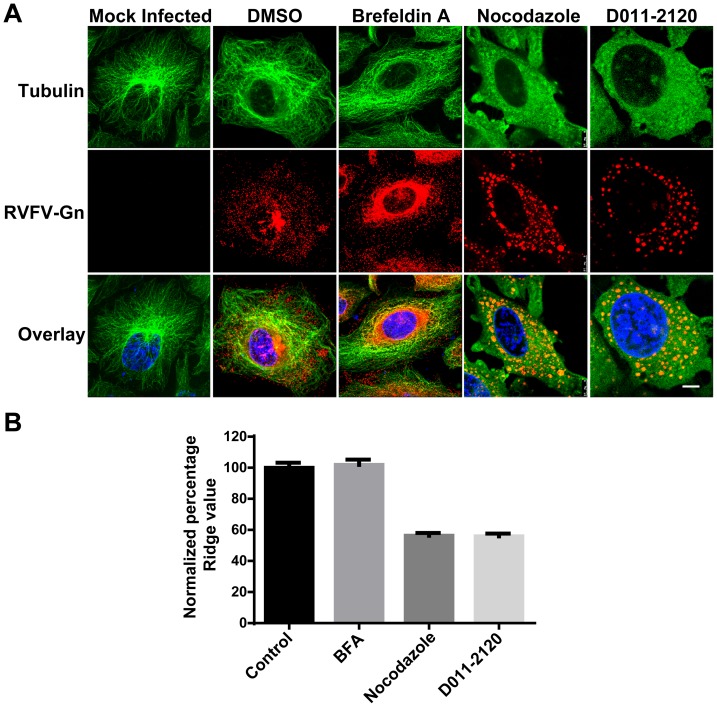
High content image-based screening was developed as an approach to test a protease inhibitor small molecule library for antiviral activity against Rift Valley fever virus (RVFV) and to determine their mechanism of action. RVFV is the causative agent of severe disease of humans and animals throughout Africa and the Arabian Peninsula. Of the 849 compounds screened, 34 compounds exhibited ≥ 50% inhibition against RVFV. All of the hit compounds could be classified into 4 distinct groups based on their unique chemical backbone. Some of the compounds also showed broad antiviral activity against several highly pathogenic RNA viruses including Ebola, Marburg, Venezuela equine encephalitis, and Lassa viruses. Four hit compounds (C795-0925, D011-2120, F694-1532 and G202-0362), which were most active against RVFV and showed broad-spectrum antiviral activity, were selected for further evaluation for their cytotoxicity, dose response profile, and mode of action using classical virological methods and high-content imaging analysis. Time-of-addition assays in RVFV infections suggested that D011-2120 and G202-0362 targeted virus egress, while C795-0925 and F694-1532 inhibited virus replication. We showed that D011-2120 exhibited its antiviral effects by blocking microtubule polymerization, thereby disrupting the Golgi complex and inhibiting viral trafficking to the plasma membrane during virus egress. While G202-0362 also affected virus egress, it appears to do so by a different mechanism, namely by blocking virus budding from the trans Golgi. F694-1532 inhibited viral replication, but also appeared to inhibit overall cellular gene expression. However, G202-0362 and C795-0925 did not alter any of the morphological features that we examined and thus may prove to be good candidates for antiviral drug development. Overall this work demonstrates that high-content image analysis can be used to screen chemical libraries for new antivirals and to determine their mechanism of action and any possible deleterious effects on host cellular biology.
基于高内涵图像的筛选技术被开发出来,用于测试蛋白酶抑制剂小分子文库对裂谷热病毒(RVFV)的抗病毒活性,并确定其作用机制。RVFV是非洲和阿拉伯半岛人类和动物严重疾病的病原体。在筛选的849种化合物中,有34种化合物对RVFV表现出≥50%的抑制作用。根据其独特的化学骨架,所有命中的化合物可分为4个不同的组。其中一些化合物还对包括埃博拉病毒、马尔堡病毒、委内瑞拉马脑炎病毒和拉沙病毒在内的几种高致病性RNA病毒表现出广泛的抗病毒活性。选择了四种对RVFV活性最高且具有广谱抗病毒活性的命中化合物(C795-0925、D011-2120、F694-1532和G202-0362),使用经典病毒学方法和高内涵成像分析对其细胞毒性、剂量反应曲线和作用模式进行进一步评估。RVFV感染的添加时间试验表明,D011-2120和G202-0362靶向病毒释放,而C795-0925和F694-1532抑制病毒复制。我们发现,D011-2120通过阻断微管聚合发挥其抗病毒作用,从而破坏高尔基体复合体,并在病毒释放过程中抑制病毒向质膜的运输。虽然G202-0362也影响病毒释放,但其作用机制似乎不同,即通过阻断病毒从反式高尔基体出芽。F694-1532抑制病毒复制,但似乎也抑制整体细胞基因表达。然而,G202-0362和C795-0925并未改变我们检测的任何形态学特征,因此可能被证明是抗病毒药物开发的良好候选物。总体而言,这项工作表明,高内涵图像分析可用于筛选化学文库以寻找新的抗病毒药物,并确定其作用机制以及对宿主细胞生物学的任何可能有害影响。