Luo Jie, Shen Li, Zheng Di
1] Department of Medical Oncology, Shanghai Pulmonary Hospital, Tongji University School of Medicine, 507 Zhengmin Road, 200433 Shanghai, China [2].
Department of Medical Oncology, Shanghai Pulmonary Hospital, Tongji University School of Medicine, 507 Zhengmin Road, 200433 Shanghai, China.
Sci Rep. 2014 Aug 22;4:6161. doi: 10.1038/srep06161.
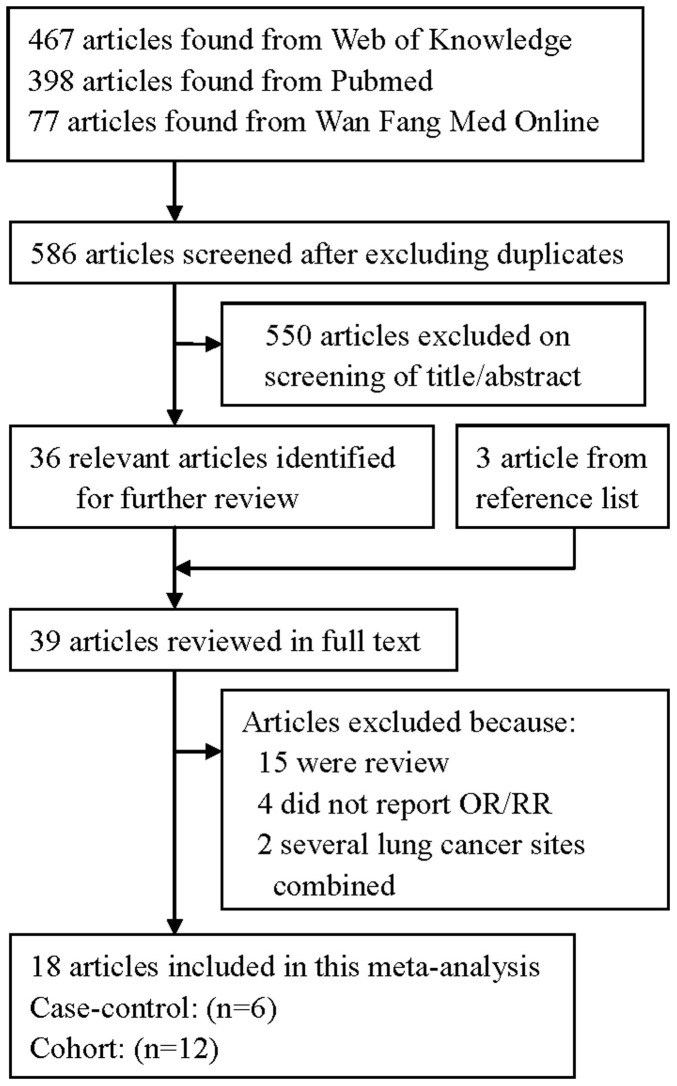
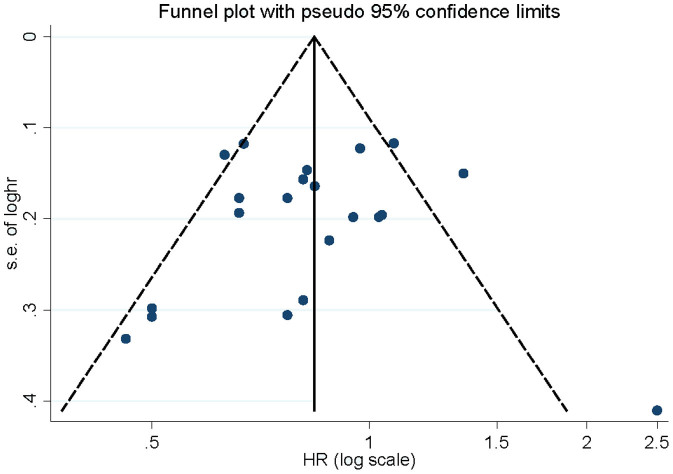
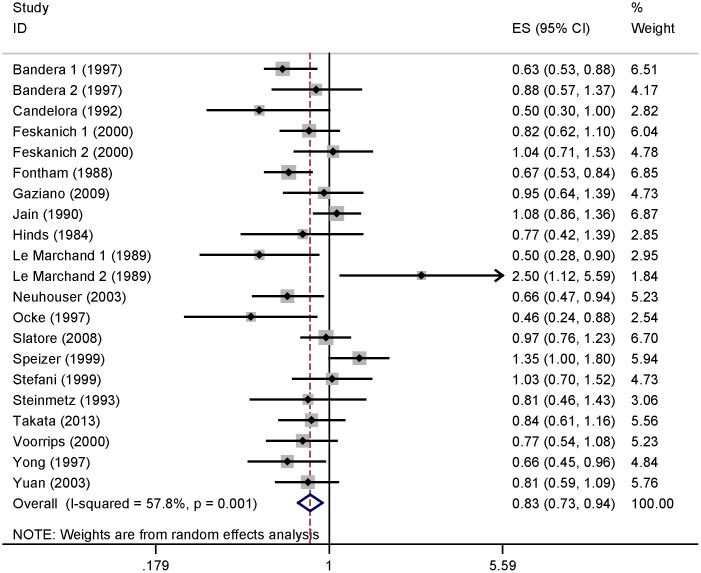
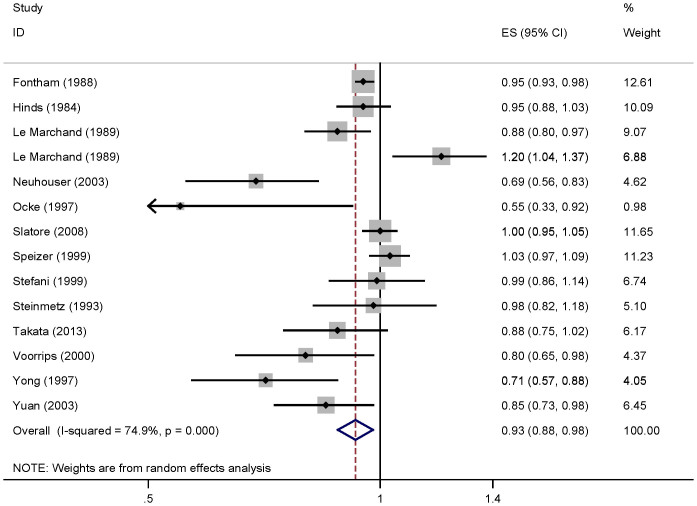
Epidemiological studies evaluating the association between the intake of vitamin C and lung cancer risk have produced inconsistent results. We conducted a meta-analysis to assess the association between them. Pertinent studies were identified by a search of PubMed, Web of Knowledge and Wan Fang Med Online through December of 2013. Random-effect model was used to combine the data for analysis. Publication bias was estimated using Begg's funnel plot and Egger's regression asymmetry test. Eighteen articles reporting 21 studies involving 8938 lung cancer cases were included in this meta-analysis. Pooled results suggested that highest vitamin C intake level versus lowest level was significantly associated with the risk of lung cancer [summary relative risk (RR) = 0.829, 95%CI = 0.734-0.937, I(2) = 57.8%], especially in the United States and in prospective studies. A linear dose-response relationship was found, with the risk of lung cancer decreasing by 7% for every 100 mg/day increase in the intake of vitamin C [summary RR = 0.93, 95%CI = 0.88-0.98]. No publication bias was found. Our analysis suggested that the higher intake of vitamin C might have a protective effect against lung cancer, especially in the United States, although this conclusion needs to be confirmed.
评估维生素C摄入量与肺癌风险之间关联的流行病学研究结果并不一致。我们进行了一项荟萃分析以评估二者之间的关联。通过检索PubMed、Web of Knowledge和万方医学网,截至2013年12月确定了相关研究。采用随机效应模型合并数据进行分析。使用Begg漏斗图和Egger回归不对称检验评估发表偏倚。本荟萃分析纳入了18篇文章,报告了21项研究,涉及8938例肺癌病例。汇总结果表明,维生素C摄入量最高水平与最低水平相比,与肺癌风险显著相关[汇总相对风险(RR)=0.829,95%置信区间(CI)=0.734 - 0.937,I² = 57.8%],尤其是在美国以及前瞻性研究中。发现了线性剂量反应关系,维生素C摄入量每增加100 mg/天,肺癌风险降低7%[汇总RR = 0.93,95%CI = 0.88 - 0.98]。未发现发表偏倚。我们的分析表明,较高的维生素C摄入量可能对肺癌有保护作用,尤其是在美国,尽管这一结论需要得到证实。