Li Hao-Rong, Habasi Maidina, Xie Lian-Zhen, Aisa Haji Akber
The Key Laboratory of Plant Resources and Chemistry of Arid Zone, Xinjiang Technical Institute of Physics and Chemistry, Chinese Academy of Sciences, Urumqi 830011, China.
Molecules. 2014 Aug 25;19(9):12940-8. doi: 10.3390/molecules190912940.
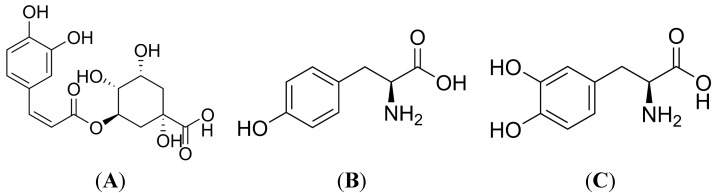
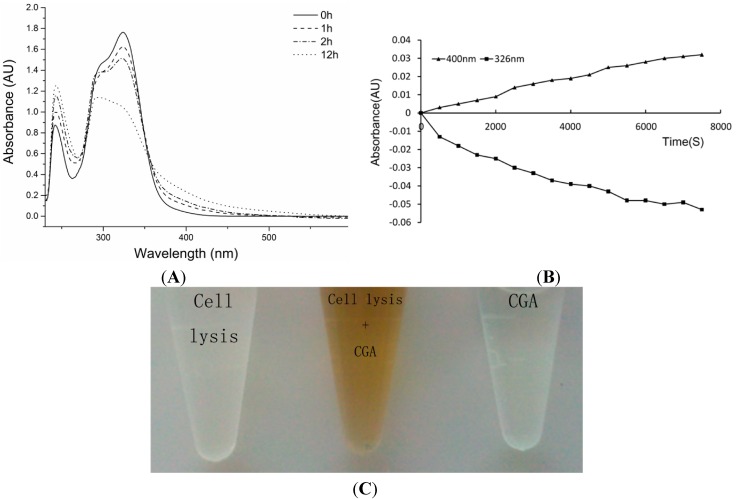
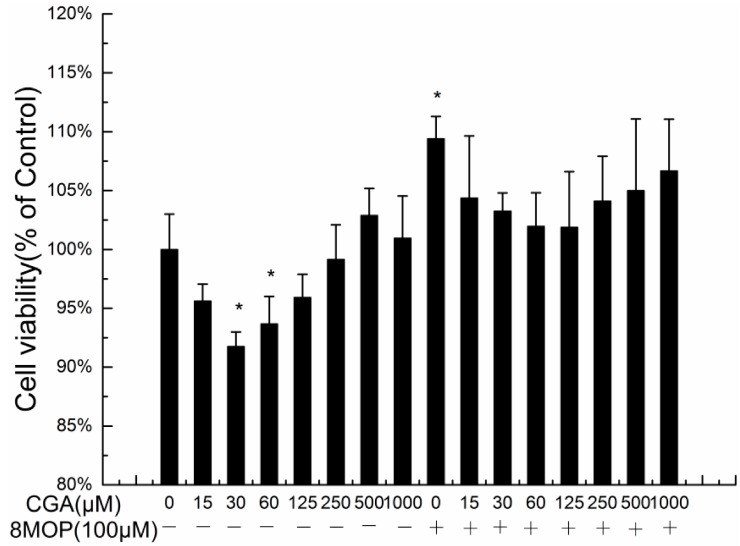
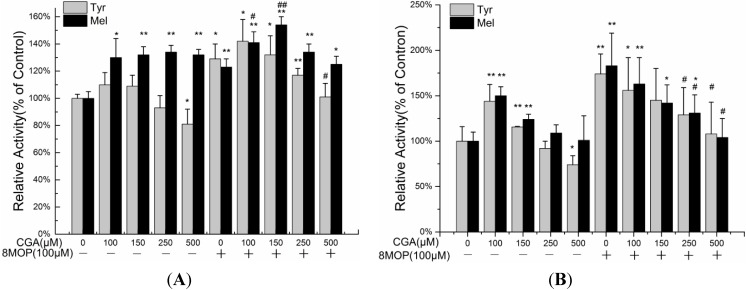
Chlorogenic acid (CGA), the ester formed between caffeic acid and l-quinic acid, is a widespread phenolic compound. It is part of the human diet, found in foods such as coffee, apples, pears, etc. CGA is also was widely used in cosmetics, but the effects of CGA on melanogenesis are unknown. In this study, we analyzed the effects of CGA on cell proliferation, melanin content and tyrosinase of B16 murine melanoma cells. Additionally, the enzymatic reactions of CGA in B16 melanoma cells lytic solution were detected by UV spectrophotometry. Results showed CGA at 30 and 60 μM significantly suppresses cell proliferation. 8-MOP at 100 μM significantly promotes cell proliferation, but CGA can counter this. Incubated for 24 h, CGA (500 μM) improves melanogenesis while suppressing tyrosinase activity in B16 melanoma cells or 8-methoxypsoralen (8-MOP) co-incubated B16 melanoma cells. After 12 h, B16 melanoma cell treatment with CGA leads to an increase in melanin accumulation, however, after 48 h there is a decrease in melanin production which correlates broadly with a decrease in tyrosinase activity. CGA incubated with lytic solution 24 h turned brown at 37 °C. The formation of new products (with a maximum absorption at 295 nm) is associated with reduction of CGA (maximum absorption at 326 nm). Therefore, CGA has its two sidesroles in melanogenesis of B16 melanoma cells. CGA is a likely a substrate of melanin, but the metabolic product(s) of CGA may suppress melanogenesis in B16 melanoma cells by inhibiting tyrosinase activity.
绿原酸(CGA)是咖啡酸与L-奎尼酸形成的酯,是一种广泛存在的酚类化合物。它是人类饮食的一部分,存在于咖啡、苹果、梨等食物中。CGA也被广泛应用于化妆品中,但其对黑色素生成的影响尚不清楚。在本研究中,我们分析了CGA对B16小鼠黑色素瘤细胞的细胞增殖、黑色素含量和酪氨酸酶的影响。此外,通过紫外分光光度法检测了CGA在B16黑色素瘤细胞裂解液中的酶促反应。结果表明,30和60μM的CGA显著抑制细胞增殖。100μM的8-甲氧基补骨脂素(8-MOP)显著促进细胞增殖,但CGA可抵消这种作用。在B16黑色素瘤细胞或与8-甲氧基补骨脂素(8-MOP)共孵育的B16黑色素瘤细胞中孵育24小时后,500μM的CGA在抑制酪氨酸酶活性的同时促进黑色素生成。培养12小时后,用CGA处理B16黑色素瘤细胞会导致黑色素积累增加,然而,48小时后黑色素生成减少,这与酪氨酸酶活性的降低大致相关。在37℃下,CGA与裂解液孵育24小时后变成棕色。新产物(在295nm处有最大吸收)的形成与CGA的减少(在326nm处有最大吸收)有关。因此,CGA在B16黑色素瘤细胞的黑色素生成中具有双重作用。CGA可能是黑色素的底物,但其代谢产物可能通过抑制酪氨酸酶活性来抑制B16黑色素瘤细胞中的黑色素生成。